Editor

Editor

News

School Streets consultation responses under review

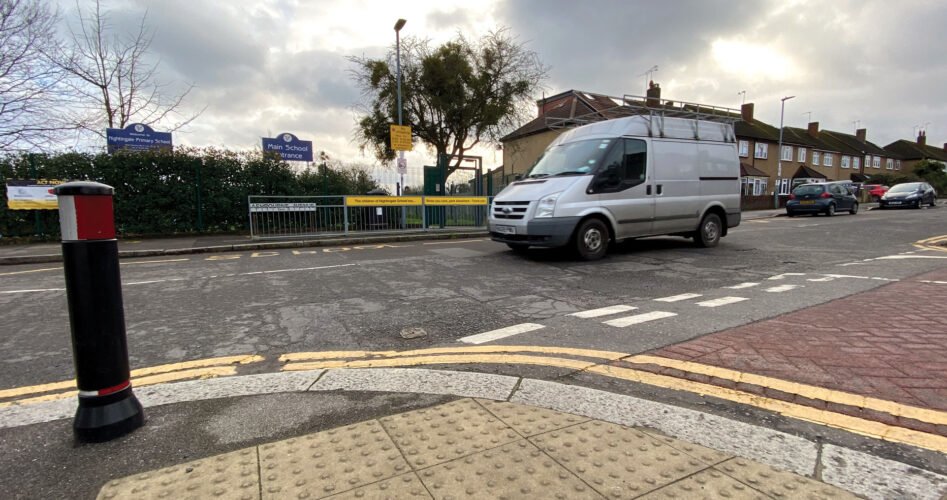
IMG_5334-2Outside Nightingale Primary School on Ashbourne Avenue

Redbridge Council is analysing responses to its School Streets consultation.

If the initiative is implemented, it will see non-residential traffic banned from certain streets near schools – including Oakdale, Snaresbrook and Nightingale Primary Schools – for an hour at the start and end of each school day.

“We are grateful to all who took the time to input into the consultation. We are now considering the responses as we decide how to proceed,” said Councillor Jo Blackman, Cabinet Member for Environment and Civic Pride.

News

Safer Neighbourhood Team seeking members for South Woodford panel

police-in-high-vis

Local police are seeking new members to join the South Woodford ward panel.

“In order to ensure the work of each Safer Neighbourhood Team (SNT) is focussed on resolving problems in the ward, each ward requires a panel, made up of people whose role is to assess local concerns, identified through community engagement and analysis. The panel gives direction and local advice to the SNT. This allows us to establish priorities for policing in that ward,” said a police spokesperson.

Email SNTJI-South-Woodford@met.police.uk

News

Your local lockdown stories: be part of DD’s Woodford Diary

swvgjulyaug20paintcmyk400©Evelyn Rowland / evelynrowland.co.uk

South Woodford Village Gazette’s resident diarist is keen to hear lockdown stories from local residents.

“Composing 1,000 words gets increasingly tricky under lockdown. Next time round, how about some ‘South Woodford scribbles’ that reflect the spirit of our community? Drop me a line with your stories, your positive strategies that keep you going. I’ll put them in my melting pot and produce a piece to represent more of us. No names, of course,” said DD, whose diary series has been running since 2013.

Email dd@swvg.co.uk

News

Police message for South Woodford residents

The police have issued a message for residents.

“The South Woodford area has seen a recent spike in overnight burglaries. In a lot of cases, entry to properties has been made through the front door, where occupants have either failed to lock the door at all, or in the case of UPVC doors, they have not been double-locked from within. Residents are urged to securely lock all doors and windows, including porches,” said a police spokesperson.

News

South Woodford Society raising funds to install two village signs in local area

signm-2-copyDesign ideas include a tribute to former South Woodford resident and textile designer William Morris

The South Woodford Society is raising funds to erect two village signs in the local area.

“Hopefully, this will make South Woodford a more defined area, create an even better community feel and be good for our businesses… We are applying for funding from various bodies, residents and businesses through the Spacehive crowdfunding platform,” said a spokesperson.

A number of materials are being considered, including traditional wooden signs, as found in Wanstead and Woodford Green – which cost upwards of £10,000 each – and cheaper aluminium signs (the group’s preferred option at around £1,000 each).

“Possible sites include opposite the Railway Bell pub, on the island at the top of George Lane or outside the Co-op, George Lane East.”

Community input will be sought for design ideas.

Visit swvg.co.uk/sign

Features

Winter hues

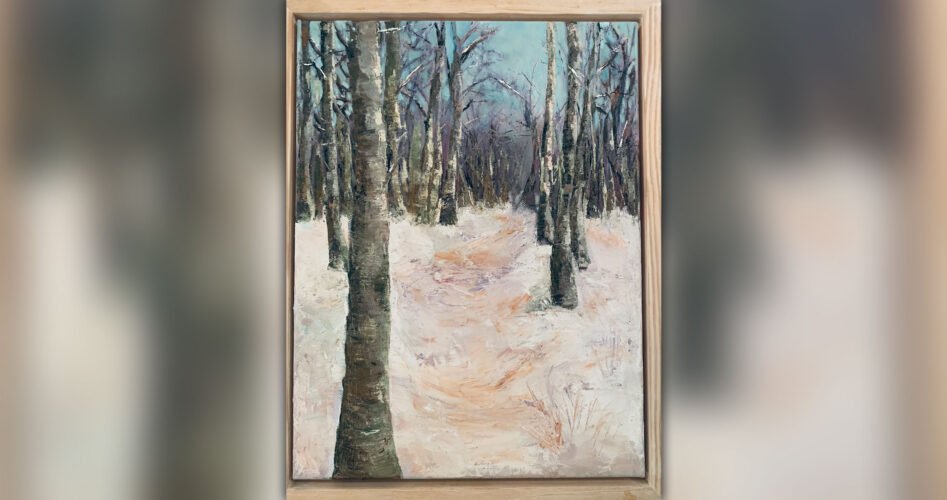
aIMG_8407-1

Woodford Arts Group founder Julia Brett reflects on the winter blues and the seasonal ups and downs of creative motivation

Winter is often considered by artists as the most difficult season to depict. This is possibly true for those artists who prefer to work en plein air, but you do not need to have your feet buried in snow to convey the spirit of a place. For me, it’s the forest and woods surrounding us. The atmosphere and beauty are revealed through trees and branches stripped of their leaves. 

The winter scene shows itself at its most dramatic. The soft greens of summer foliage and the golden cloak of autumn leaves are all gone, revealing each tree’s individual characteristics. Of course, ideally, drawing these trees and the landscape provides great source material, but cameras are also invaluable as aide memoirs. The reality is, at this time of the year, most artists are working in warm studios or cosy dens.

Blue is often the colour most associated with winter, which many artists convey through snow scenes. There is a scientific explanation for why snow appears to be blue, but suffice to say, snow, like the sky, is not white but clear, and generally reflects the colours around it. Two of the most famous works of art which illustrate this are Bruegel’s Hunters in the Snow and Kandinsky’s very colourful Winter Landscape.

My own work from the forest ranges from Winter Glade in watercolour, Knighton Birches in oils to Forest Shadows in acrylic. The former two works show the contrast in the depiction of snow, whilst Forest Shadows was actually painted in snow but left open to interpretation.

Winter, with all its difficulties, is still a very beautiful season – if desolate at times – and especially at this juncture, perhaps we are all looking for something to give us some optimism. That is very true for many artists at present who are lacking in creative motivation.

But now may be the perfect time for us all to look for that beauty which we often ignore but is right here on our doorstep.


To view more winter-themed work by members of Woodford Arts Group, visit swvg.co.uk/winterart

Features

Trust in your Trustees

A trust allows you to place assets under the control of chosen trustees, either during your lifetime (by deed) or on your death (by will). Hollie Skipper from local solicitors Wiseman Lee explains

A Discretionary Trust allows you to leave a portion of your assets under the control of your trustees. These should be people that you trust implicitly, such as friends, family or professional advisers, who may also be the executors of your will.

You will choose exactly who the beneficiaries of the trust are and exactly how much the fund will be. You can create a trust over a percentage of your assets, over a specific sum of money or over your entire estate. The fund can be held in a simple bank account or invested.

Your beneficiaries are not entitled to any part of the fund until your trustees decide. Their decision will likely be based on the needs of the beneficiary. Your trustees will have the discretion to decide how much your beneficiaries receive and when, and payments can be small and regular or in lump sums. You are able to leave some written guidance to your trustees, although they are not bound to follow this.

Why create a trust?

  • Future flexibility: you may be unsure how you would like your assets to be distributed in years to come, so leaving this to your trustees to consider in the future may be more practical.
  • Beneficiary receiving benefits: if your beneficiary receives an inheritance, this could be considered when they are financially assessed and mean they lose some, or all, of their state benefits. Your trustees can pay your beneficiaries just enough money to ensure their benefits are not affected.
  • A beneficiary unable to manage their own affairs: your trustees could use the trust fund to ensure your beneficiary is cared for during their lifetime. If your beneficiary has lost capacity and does not have an attorney or deputy appointed, then the trust arrangement could prove beneficial.
  • Concerns about a beneficiary receiving a large sum of money: whether it is a young or irresponsible beneficiary, a beneficiary who may be vulnerable or subsequently needs to move into care, you may decide it is not sensible for them to be given their inheritance in one go or be immediately entitled to the money.
  • Protecting the money from creditors: as your beneficiary will not be absolutely entitled to the funds until your trustees decide, the money is protected in the event of bankruptcy.

Depending on how much you settle into trust and when, there will be potential inheritance tax consequences or benefits. Specialist advice is needed.


Wiseman Lee is located at 9–13 Cambridge Park, Wanstead, E11 2PU. For more information, call 020 8215 1000

News

COVID-19 vaccine survey

woman-5829666_1920

Healthwatch Redbridge is asking people to complete a survey about COVID-19 vaccines.

Two vaccines have now been produced and approved for emergency use and the NHS has begun vaccinating people against coronavirus at numerous hospital hubs in the country’s biggest immunisation programme in history.

“We are aware that some communities and individuals are slightly reticent about having a vaccination. With this in mind, we are currently asking people to tell us if they were offered the vaccination would they have it, and if not, why not? Once you have completed the survey, we would appreciate if you could share the link with people you are in contact with, including colleagues, family and friends in order for us to understand where there might be concerns and to ensure we can provide specific information for individuals to make informed choices on being immunised,” said a Healthwatch Redbridge spokesperson.

The survey itself is anonymous and has an optional section where you can leave your contact details if you wish to say more on the topic.

“We feed back information to NHS and care providers to ensure they understand the issues that local people face.”

The survey takes about four minutes to complete.

Click here to take part.


Do not contact your GP for a COVID-19 vaccine. The NHS will contact people directly and there will be extensive public information announcements about how, where and when you can get vaccinated. 

Features

A new Regency era

DSCF4140©Geoff Wilkinson

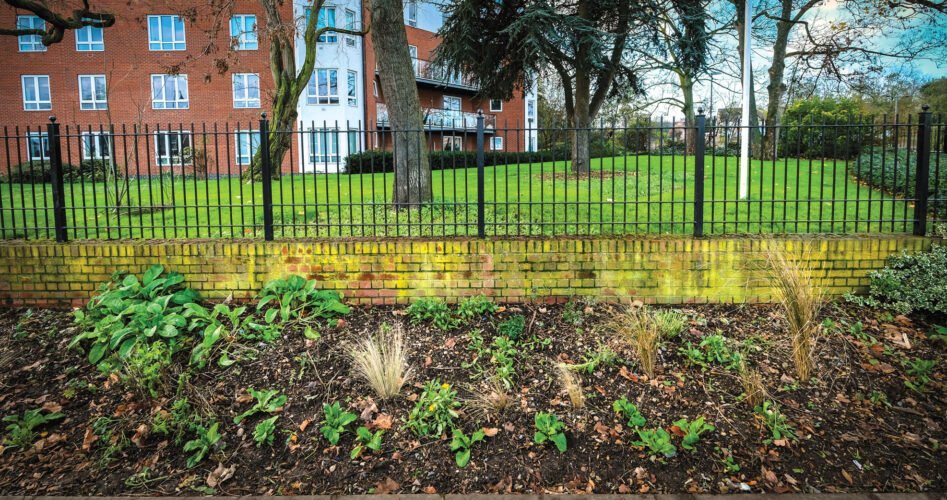
Our community gardeners have been at it again, this time applying their magic to the beds in front of Regency Court on the High Road. And the work will continue throughout winter, says Judy Noble. Photo by Geoff Wilkinson

Who said your community gardeners would be defeated by a long, hot summer, the dreaded Covid or by the current soaking downpours?

No, we’ve been out in force again, and plan to go on through the winter. It’s easy to keep apart, and working the gardens cheers us all up. Going by your comments, when we’re at it, it cheers you up too! We love it when you come up and tell us how much pleasure you get from these gardens, their shapes and colours changing through the seasons.

Through the hot summer, the soil in the beds we care for in George Lane and on the bridge over the North Circular was often too hard, but by the end of lockdown they needed care, and we needed company! You will see a lovely flowering of bulbs come the spring.

Once these were tidied, ready for winter, we looked around.

The Regency beds running along the High Road opposite the top of George Lane have long been neglected. Neither the developers nor the council agree who has responsibility for their maintenance.

Originally well planted, now there were bushes pushing over on to the quite narrow pavement. You could see people with children and prams or those in wheelchairs struggling to pass. So, we decided to give it a haircut, clear out the weeds that blow thousands of seeds over other gardens and plant it.

We wanted to create a strip of garden that gladdens your eye as you pass, and encourages insect life. Insects play a key role in the plant and animal environment, providing food for birds and pollinating flowers and fruit.

We hope, too, seeing the garden cared for will reduce rubbish, though we know this has often blown in from somewhere else. Still, we ask you to help keep an eye on that.

We’ve given you the pavement back. We’ve cleared the very weedy areas, planting bright marigolds, bulbs and a mix of wild seed and other plants, begged, borrowed and given.

Every year Redbridge Council gives us some bulbs, and our friends from the Wanstead Community Gardeners have given us many small plants for ground cover. These will put down good roots over the winter and we hope you’ll see a bright showing soon.

We’re always open to being given plants you don’t want. There’s plenty of space. Plants that thrive through long periods of heat and drought do best. Or just come and say hello! We’re always glad of a break.

So, throughout the winter, we’ll be out there, and hope to see you there, too.


For more information on the South Woodford Gardeners, email southwoodfordgardeners@gmail.com

Features

Home of history

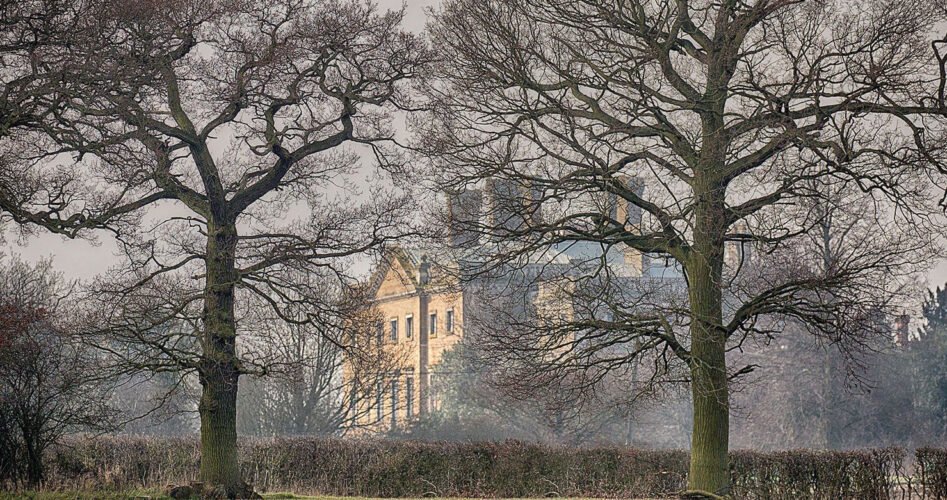
about_us_misty_ch-b3c9b62c

Woodford and District National Trust Chairman Richard Speller explains why – in normal times – Copped Hall is well worth a visit. It tells a story of history, restoration and engagement

Copped Hall is one of the very few mansions in our local area. It is an 18th-century estate near Epping, situated on high ground at the end of a ridge surrounded by 1,000 acres of landscaped parkland. The overall estate once comprised 4,000 acres!

The abbots of Waltham Abbey held the property from 1350. In 1537, Henry Vlll confiscated the estate and later, Elizabeth I gave it to Sir Thomas Heneage, who built a substantial mansion in 1567. Almost all of this structure was demolished in 1748 before the present house was built by Sir John Conyers in 1753. In the late-19th century, ownership passed to the Wythes family who made their fortune in the railways, and they greatly extended the buildings and grounds.

In 1917, a disastrous fire gutted the main part of the mansion. Although the gardens continued to be maintained, the mansion was not restored. By 1950, practically everything of value was stripped from the site or demolished. It was then used as a mushroom farm and pigsty.

With the coming of the M25, Copped Hall became visible and accessible, especially as it was relatively close to London and Stansted Airport. In 1986, three aggressive development proposals, which would have destroyed the concept of Copped Hall, came before the planning authorities. In order to combat this application, representatives of the local conservation societies formed a committee called the Friends of Copped Hall.

Two further development proposals were put forward in 1988 and 1990; both involved building hotels and the latter a golf course as well. Two things happened, however, in 1992. The Conservators of Epping Forest (City of London Corporation) purchased the parkland, thus extinguishing the golf course proposal. And the other developer went bankrupt.

In 1993, the Copped Hall Trust was formed, and as a result, the house, along with 24 acres of gardens, was saved for the purposes of education, culture, local community activities and recreation. The restoration programme continues to this day. This wonderful project is run by over 100 volunteers, dedicated to the restoration and future of the project. Much work has been carried out clearing the gardens of non-original vegetation. Replacement trees have been planted and lawns reseeded. Internally, the mansion is to be restored to its 1750s form, and since 2001, some of the roof and floor structures have been reinstated and essential structural repairs carried out.

In more normal times, guided tours are conducted every third Sunday of the month, together with a host of activities and events.


For more information on Copped Hall and future events and tours, visit coppedhalltrust.org.uk

Features

DD’s 45th Woodford Diary

swvgDDjanfebcmyk400jpg---Copy©Evelyn Rowland evelynrowland.co.uk

Some South Woodford scribbles from DD, our resident diarist, commentator and observer of all things local

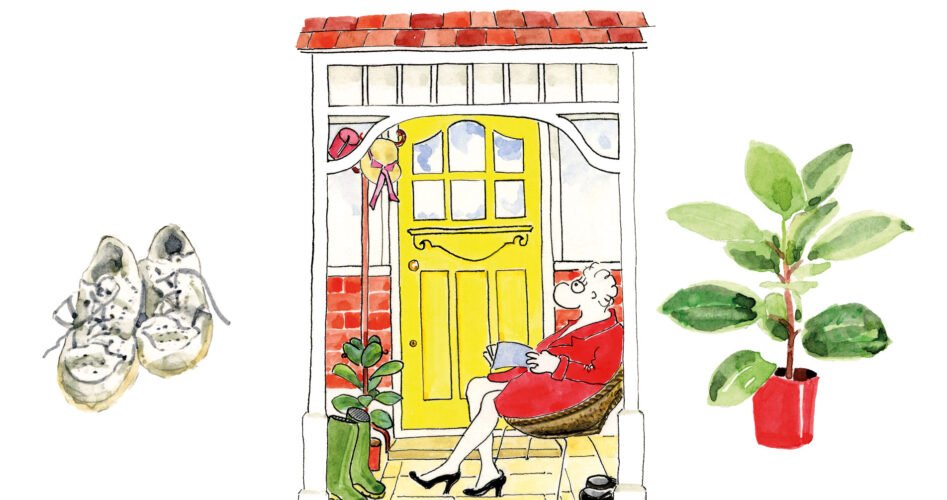
I wonder who invented porches. Was it the Romans? According to Wikipedia, the word comes from the Latin porticus, ‘a colonnade’. Nothing posh like that round here. Porches are so sensible. Places to pause before entering, out of the wind and rain. Places of greeting and welcome. Places offering clues about the residents of the house. Walk along your road and enjoy their infinite variety. Some are heaped up randomly with cast-off boots and shoes. Relaxed and endearing. (You can almost hear the voices of schoolkids arriving home: “Hi Mum, what’s for tea?”) Some are home to exotic plants in elegant pots. Others contain a small picture gallery. In my porch, I’ve got one of those curvy hat racks. I saw it in a charity shop and loved the sculptural shape. A bit like the horns of a regal deer. But the hats are far from regal: one is a crimson, cardboard fez and another is a child’s straw hat with pink ribbons.

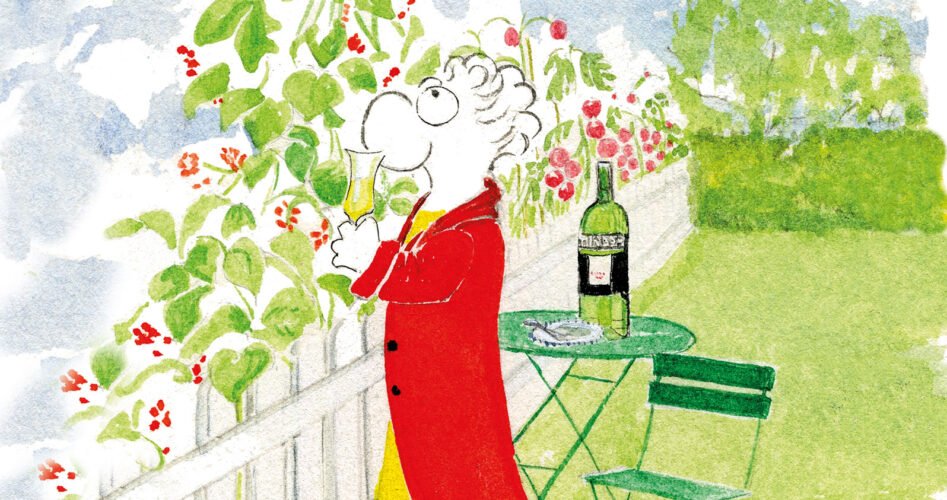
Now, I guess you are wondering why we are talking about porches at all. Look: just this week we had the best news for months, a hint of a light at the end of the lockdown tunnel. Encouraging results about vaccines. There is reason at last for cautious hope that before too long I may be able to resume my scribbles out there rather than in here. So, I thought it seemed permissible to chat a bit about “in here” before that happens. And the porch was the obvious place to start.

I grew up in this house from the age of 13. My older brother had the room over the garage. I envied him because it had windows at both ends. But I don’t remember ever questioning his right to it. The oldest child, and a boy. I still regard him as ‘the head of the family’. How old-fashioned is that. The twins came six years after me. A red letter day! Now, when they visit, they are quite likely to stroll through to the fridge and help themselves to a glass of wine, so strong is the sense of returning to their family home. That garage room now houses four bunk beds I assembled – with some help – for my grandchildren. Only one (grandchild) had arrived at that point. But I was hoping for four and was not disappointed.

There’s a large bathroom off the kitchen, with plenty of room for the ironing board and the clothes rack and shelves where my biography section lives. You can linger on the loo in the company of Richard Branson or Felicity Kendal. Ronnie O’Sullivan is there too, or you can dip into Jeffrey Archer’s extraordinary prison diaries. It’s on the west side of the house and floods with pink when there’s a spectacular sunset.

From my back bedroom, you can see Canary Wharf and the mushrooming cluster of buildings all around. In the seven years before he died, when my husband was paralysed and in a wheelchair and needed all-night care, I used to say goodnight and leave him with his carer downstairs and go upstairs and stand at the window and gaze at the mass of lights in Docklands. It was reassuring to observe the signs of the hurly-burly of ‘normal’ life that we had left behind. Clearly, it still existed. This room is crammed with family photographs. Recently, one of my young granddaughters commented – over the phone – “I suppose you just have to chat to our pictures when you go to bed during lockdown.”

The living room is where my fiction occupies a floor-to-ceiling bookcase. I can’t think why it’s called ‘fiction’ when there is often more truth about the human race in novels than in ‘factual’ histories. Yes, Dickens is there and Austen, Bronte and Trollope. Intriguing crime stories and whodunnits too. Rankin and Rendell and James (P.D.) and Simenon; writers old and new daring to delve into the depths and heights of what makes us human. Picoult, Tremain, McEwan, Greene. A reading-list for your next trip to the library? But before that, you can enjoy dialling up quotations on the web. “When an idea comes, spend silent time with it,” (Tremain). “I think to be driven to want to kill must be such a terrible burden,” ( Rendell). “There is always one moment in childhood when the door opens and lets the future in,” (Greene).

I was standing in a long, socially-distancing queue outside the bank yesterday in brass-monkey temperatures. (A brief ‘permitted’ outing). Ashamed of myself for feeling annoyed when the person in front of me invited a new arrival to take a slot ahead of her. Even more ashamed when it crossed my mind that I, too, could try turning up with a walking stick. Are you shocked? My mind wandered away (far, far away from masks and viruses and quarantine) to another bank: a bank of memories of some very special holidays recorded in earlier diaries and stored in a cupboard in the dining room: Breakfast in a small pavement café in Seville. Flamenco demonstration this evening… The highlight of the day: our visit to the Amber Fort, east of Jaipur… Today it’s a polo match, at Holders House near Bridgetown; Barbados v. the US… Our first evening in Oslo. A ‘reserved’ table immediately offered to us, overlooking the city, in the heated arcade around the Cathedral Café… Time to relax on the Una Watuna beach after the long, clattering bus ride from Colombo down to Galle.

Next, please – I’d reached the head of the queue.

What a wonderful world ‘out there’! But I think those wheelchair years, confined at home, may have unknowingly prepared me for the situation we are all sharing now. My admiration for NHS staff in particular has soared sky high. They really are ‘out there’ and if my contribution is simply to stay ‘in here’, I say THANK YOU with all my heart.