
Editor

Editor

News

Redbridge’s Got Talent: last chance to enter

karan2Karan’s Bollywood Masterclass, overall winners of last year’s show

There is still time to apply to compete in this year’s Redbridge’s Got Talent, which is being held to raise funds for the Redbridge Mayor’s Charity Appeal.

“All ages and talents are welcome to apply. The show will be held at the Sir James Hawkey Hall in Woodford Green on 26 April from 5pm. All proceeds from the show will go to two brilliant local charities, Healthy Living Projects– which works with homeless people to get their lives back on track – and Imagine Independence – which works with people with mental health issues,” said a spokesperson for the event.

There is no charge to enter the competition and the overall winner will receive a £500 prize.

Call 07712 516 424 or email redbridgesgottalent@gmail.com by 7 March.

Last year’s event raised over £25,000 and was won by Karan’s Bollywood Masterclass.
News

Join 241 (Wanstead and Woodford) Squadron

241-1

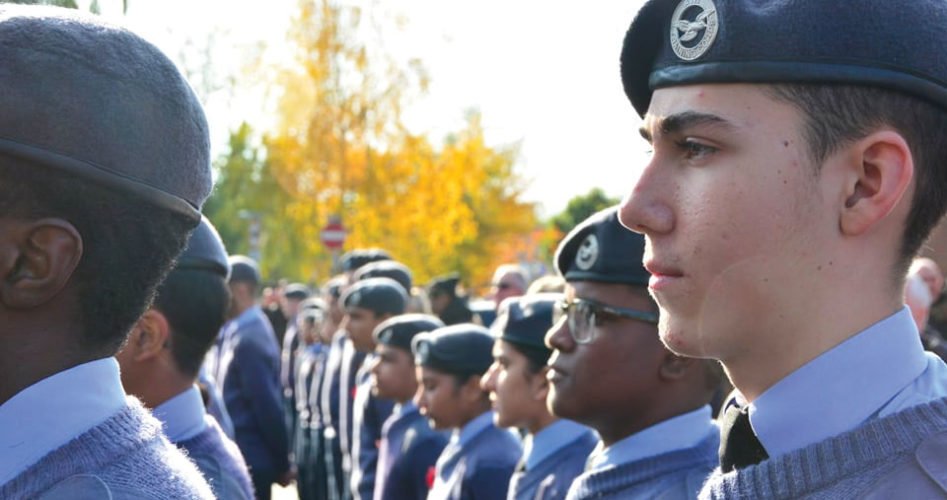
Youngsters interested in becoming a Royal Air Force cadet are invited to join a new recruit course at 241 (Wanstead & Woodford) Squadron, starting on 4 March.

“On the night there will be a presentation on the opportunities that the squadron provides for cadets, a separate briefing for parents… and a tour of the premises… The cost of the course is £30, which is refundable if you do not join at the end of the course, which is eight Wednesdays long, and gives you a chance to see if you like the squadron,” said Squadron Leader Jerry Godden.

Cadets can expect to take part in a wide range of activities, including flying, gliding and shooting. The cadet centre is located at the rear of 85–87 Finchingfield Avenue in Woodford Green. All new recruits need to be in Year 8 or above.

Visit swvg.co.uk/241

News

Tinnitus expert addresses local support group

me-100-groups2Colette Bunker

An expert from the British Tinnitus Association (BTA) attended the February meeting of the Redbridge Tinnitus Support Group – which meets in Woodford Green – to answer questions and discuss the latest research into the condition.

“Tinnitus can be an isolating condition, and we’re keen to spread the word that there are management techniques that can help a person lead the best life they can, and to reduce the burden of living with this problem,” said BTA volunteer Colette Bunker. Around one in eight people suffer from persistent tinnitus, which is defined as the experience of sounds with no external source, most commonly ringing or buzzing.

The Redbridge Tinnitus Support Group meets on the last Monday of every month.

Call 020 8551 7700

News

South Woodford Society’s Neighbourhood Area and Forum approved by council

L1220517The Shrubberies, South Woodford. ©Geoff Wilkinson

The South Woodford Society’s proposed Neighbourhood Area and Forum – a body to organise the creation of a Neighbourhood Plan, which puts the planning of new developments in the hands of the community – has been approved by Redbridge Council.

During a consultation, comments from the public suggested changes, including removing the Maybank area and the Woodford Trading Estate from the region covered by the plan and adding in Empress Avenue and the Laings Estate. “The Maybank Community Association covers a sizable area and intends to work on its own Neighbourhood Plan application later this year,” said a spokesperson. Councillor Beverly Brewer added: “This is excellent news for South Woodford. Thanks to the hard work of the South Woodford Society, local people now have a great opportunity to influence the future of our local area.”

The next steps in producing the Neighbourhood Plan will be discussed at the South Woodford Society’s AGM on 25 March.

Email e18society@gmail.com

Features

Future for Whipps

In the fourth of a series of articles looking at the redevelopment of Whipps Cross Hospital, Gordon Drakes is pleased to report that being environmentally friendly will be a key design principle in the new build

Campaigners were informed last month that an environmentally friendly hospital and the lowest possible carbon footprint will be a key design principle in the new Whipps Cross Hospital, and that the redevelopment team want this to go further and enable the whole of the site to achieve a carbon neutral footprint.

To cover additional costs, a 3% uplift to the capital bid for building the hospital is to be included. They are aiming to achieve the ‘Excellent’ level of BREEAM (Building Research Establishment Environmental Assessment Method). Alastair Finney, the Whipps Redevelopment Director, said they will appoint a dedicated sustainability consultant to the team for the next phase: “We will also make sure there are opportunities for expert stakeholders and local people to be engaged and involved in the work as it progresses.”

The recent election has demonstrated that, aside from the ‘B’ word, securing a sustainable future for the NHS and the planet are perhaps the two most important issues for the British public. So, this is welcome news indeed.

In the summer of 2019, the government enshrined into law a commitment to reach net zero carbon by 2050 (not soon enough, but a positive starting point), and it is clear that if governments of the future are to achieve this target, it will be because of action taken now and over the coming years. Given the scale of the task, the principle of net zero carbon needs to infuse and influence all government decision-making going forward.

How the government spends tax revenue on large-scale land development projects must surely be a prime area for implementing this new environmental modus operandi. Indeed, in the government’s response to a recent report issued by the Climate Change Commission, it acknowledged that the built environment accounts for 40% of national energy use and around one-third of emissions.

Whipps Cross is one of the six hospital developments the government has announced will benefit from a share of a £2.7bn funding allocation. The plans are still in flux and the amount of funding for Whipps is still not confirmed – do sign and share the Waltham Forest Save Our NHS petition to the Secretary of State for Health, which is to be handed in on 14 February. But by putting the environment at the centre of the plans, there is an opportunity to reap many benefits.

Members of Wanstead Climate Action (WCA)joined with local health campaigners to urge Barts Health Trust to ensure that low carbon or net zero carbon is a core principal of the Whipps redevelopment plans. Now that we have a positive response to this plea, we need to keep on the case. There are many hurdles to go through yet.

For information on the future of Whipps, visit wnstd.com/whipps. To view the petition, visit wnstd.com/wxp. For information on WCA, visit wnstd.com/wca
Features

Time to go digital

If the computing world has left you offline, make time for some digital discovery at Wanstead Library next month, says Rose Meredith, Development Librarian at Vision RCL

“I just can’t do that!” “That digital stuff isn’t for me, I can’t understand it.” “I’m a total failure at downloading.” “I can’t change!”

Do you sometimes feel the digital world has gone on without you and that you will never have a chance to get on board the digital highway? Ever found yourself declaring a story of your fate that cannot alter? Do you feel sure the digital world is really not a place for you?

Libraries have altered people’s perceptions throughout time, enabling people to access all kinds of information and participate in new worlds of knowledge. Public libraries have been in the forefront, more recently, in enabling anyone in the community to walk down the information super-highway, accessing books and knowledge, ideas and learning – for all age groups, no matter background or circumstances.

Stories are part of the human experience – shared in all kinds of ways amongst friends and families. At every point in the history of humanity, we have wanted to create new stories, travelling into a brave new world of knowledge. Today, the stories are changing.

Knowledge can extend into an untouchable digital world with a stroke on a computer – bringing to life books, images, maps, learning, movies, TV, radio, cartoons, drawing and art as well as bringing to our homes travel around the globe and indeed the universe, and allowing us to see the combined worlds of great libraries and famous museum collections (oh – and the very smallest local collections too!).

We can access a world of TV, music and entertainment from every part of the globe. The digital world introduces new ways of learning and discovering and using resources like online catalogues, biographies, art and dictionaries, as well as allowing us to socialise and meet new people, join groups and participate in our local communities. The internet enables us to reach out, have fun and build our knowledge in every aspect of human endeavour, culture and history.

Redbridge Libraries wants you to be part of this new digital world! To help you, we will be delivering sessions throughout February during Digital Discovery Time.

Having problems with accessing our online resources? Not quite sure where to start? We invite you to drop into one of our sessions and ask our friendly staff. They can show you our exciting and amazing range of digital resources. Let’s get digital!

Digital Discovery Time sessions will take place at Wanstead Library on 6 and 13 February from 11am to 12 noon (free; booking required; bring your own digital devices). For more information, call 020 8708 7400. To find out more about the digital services available at Redbridge Libraries, visit visionrcl.org.uk/digital
Features

Photo Story: Jim Williams

Stairway-to-Heaven©Jim Williams

In the third of a series of articles by members of the Woodford and Wanstead Photographic Society, Jim Williams tells the story behind this image taken on his way home from work.

This picture may be nothing special to most photographers, but to me it was a breakthrough, realising I had recognised the possibility of getting this shot.

I have been a regular member of Woodford and Wanstead Photographic Society for just under three years but still consider myself a novice when I compare myself to other members I admire. Some people just have the knack of finding the right angle to make an average image great. I often wonder how they see what I don’t and whether you can teach someone creativity or if it’s something you just have or you don’t.

I must say, since joining Woodford and Wanstead Photographic Society, I have started to continually look at my surroundings to see if there is a potential photograph within my sights. I now look skyward as much as down and left or right.

Leaving my office in Fitzrovia at 4.30pm daily, and walking the same route to Tottenham Court Road Tube station, I noticed this facade in Percy Street showing a reflection of a few clouds with the staircase visible through the glazing. I immediately realised that with the right weather conditions the staircase would look like it was passing through the clouds. Camera in hand every afternoon I left work, my journey down Percy Street was finally rewarded with ideal conditions – a very bright sunny afternoon with plenty of fluffy clouds in the sky. This gave a great reflection with the staircase clearly visible.

A bit of teasing with the detail extractor filter from the Nik Collection bolt-on to Photoshop gave me an image that achieved first place in a club competition. A pleasing result, but not as pleasurable as knowing I had imagined the picture before I had actually seen it.

To find out more about the Woodford and Wanstead Photographic Society visit swvg.co.uk/wwps
Features

Training your friend

0e4add37-f946-4ba9-b43d-14082d4ac2af

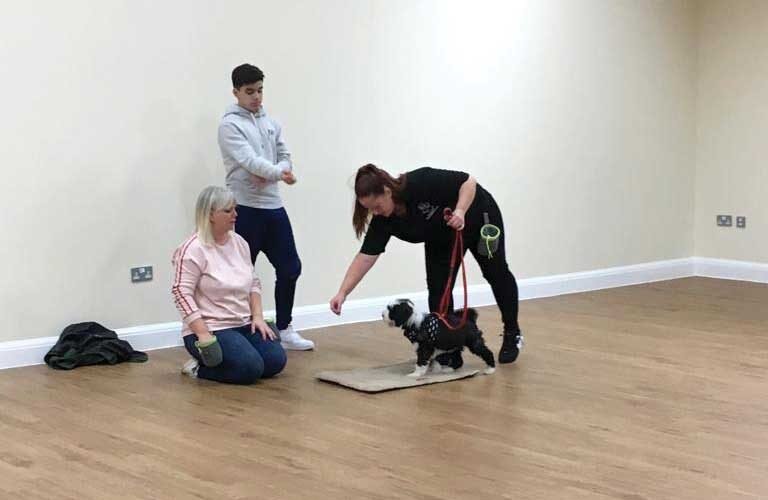
Colin Spence runs dog training classes in Snaresbrook and has been using force-free methods to discipline man’s best friend – and their owners – for 23 years. Here he explains why training classes are important.

In my view, a vital aspect of dog ownership should include responsibility for not only the animal’s welfare and wellbeing but also for their training needs. Most dog owners do train their dogs in their home and – as best as they can – in the outside environment as well. This is very good, in my opinion; at least they have done something to improve the diligence of their pet.

But training a dog is not as clear-cut as some might think. To get dogs to fulfil good, solid and trusted behaviours, we first need to understand how dogs actually think and learn how the environment plays a part in influencing the behaviour of every dog, no matter where that environment may be, indoors or outdoors.

Only when owners truly understand how easily dogs are influenced by – and how they learn from – the environment will they be closer to understanding how to add on the training side (operant conditioning). Dog trainers that are qualified and certified have invested time in their own education. Those that use humane training methods are the type of trainer all dog owners need, as they can rest assured they will get sound advice along with productive training for their dogs. Look for a trainer that runs structured classes with schedules each week.

Training classes offer dogs a safe environment in which to learn. As the owner, you too will learn how to use distractions and how to use the environment to your advantage. Ultimately, you will learn how to train your dog to be focused on you during the session.

This is incorporated with your dog’s development around other dogs, learning how to be calm and sociable and able to relax while there is movement around them.

The trainer should be able to guide everyone in how to be consistent, including the tools owners should have to ensure the session runs smoothly, such as having the right type of harness that fits correctly and suits the individual dog.

Dog training also provides an education in the laws that come with owning such a special pet, and what that means to all that have a dog in their care.

Classes provide the social network all dogs need, but they also teach the owner how to get the very best from their dog, by learning various training methods that are science-based and humane, and that reinforce good behaviours.

Colin’s K9 Training Services holds classes on Wednesday evenings (6.30pm and 7.30pm) at the Scout Hut at 72 Hollybush Hill in Snaresbrook (£10 per class). For more information, call 07931 460 451
Features

The Putt Project

Aarmistice-2019-120Robert Putt

Robert Putt, who attended Woodbridge High School 80 years ago, is collaborating with the school’s History Department to document his memories of the area. In the first of a series of articles, Robert talks to Headteacher Steven Hogan about World War Two.

We were so excited and privileged to receive a visit from an ex-student at the end of last year who attended the school during the Second World War. Robert Putt, now an incredibly young-looking 90 years of age, was a student here from September 1940 to December 1943, when the school was known as St Barnabas School for Boys.

Robert emailed us to ask if we had any records dating back to those times. Sadly, we don’t have many at all, but we invited him in to see what we do have and to share some of his memories. Happily for us, Robert agreed and came to meet with staff, governors and students. It was a wonderful couple of hours, although we could easily have listened to him all day.

When Robert joined the school in 1940, it had only been open for three years and was located in the brand new Mallards building, which was split into separate boys’ and girls’ schools. As we walked with Robert around the site, he recalled the 17-foot chain-link fences that divided the grounds at the front and back into two schools. He clearly remembered how it was forbidden for the boys and girls to have any contact with one another whatsoever. He laughed that there was even a demilitarised zone (DMZ) between the two schools! Punishment for breaking this rule was the cane for the boys and usually detention for the girls. Robert explained that: “The boys preferred the cane as our parents didn’t get to find out about it, whereas the girls’ parents would be informed about the detention as they had to be kept after school.” Talking to the girls was a most serious offence, the punishment being the same as that for getting caught playing on the railway line!

One of the records we do have from the time is the school punishment book. This log recorded when a child was given the cane, how many strokes, whether on the hand or on the ‘seat’ and the reason why. We couldn’t find Robert in there, although he does remember receiving the cane on a regular basis, but we did find one of his close friends, George, who received two strokes on the hand for fighting in the playground; Robert was not surprised!

Some other reasons recorded for receiving the cane include ‘stealing garden lettuces and selling them’, ‘riding other boys’ cycles in the playground’, ‘gambling with coins’, ‘misuse of telephone box’ as well as the more familiar ‘truanting’, ‘fighting’ and ‘talking in lesson’; some things never change.

Robert remained close friends with George and with three other students for very many years after they left school, but sadly, the others have now passed on. His sister, three years younger, attended the girls’ school and, like Robert, is still going strong.

It was fascinating to hear Robert describe his experience of being at school during the war. He talked about the almost daily trips to the basement during the air raids, hearing the planes overhead, the machine guns firing and the bombs dropping. He explained how the boys were all experts at identifying the different aeroplanes and loved to look up and watch the dog fights between the Spitfires and Hurricanes and the Luftwaffe.

At night, they could see the glow in the sky from the docks which were regularly bombed. When asked by one of our current students if it was very difficult, he said: “Not really, because we were young, we just adapted to it. I was born 11 years after the First World War and 10 years before the Second World War. I lost four uncles in the first war, and when the second happened, we were evacuated and I went to four different schools in a year. Then we came to Woodford and I started here in 1940.” Robert was asked if he ever got scared and he said: “Yes, of course, the whistling sound the bombs made was terrifying.”

Woodbridge High School is located on St Barnabas Road, Woodford Green. For more information, visit woodbridgehigh.co.uk

If you attended the school during this era and would like to share your story, email ContactComms@woodbridge.redbridge.sch.uk

Features

Good Neighbours

91913690_m

Helping others can be both fulfilling and fun, says Ron Jeffries of Redbridge Voluntary Care, a good neighbour scheme that has been running for over 40 years and is in need of volunteers in Woodford.

From time to time, most people will know someone who needs help with transport to a hospital, the doctors, a clinic or the dentist. You may be aware of someone who is lonely, sick or elderly, someone who would welcome the company of a visitor.

You may have wondered if you might be able to help but are unsure how to go about it. If so, help is at hand! And it will be both fulfilling and fun for you, and a lifeline for someone who needs your support.

Redbridge Voluntary Care (RVC) is a good neighbour scheme and registered charity which started in 1973 and offers help to any resident of the London Borough of Redbridge. We help residents in many ways, by visiting lonely people, sitting with the sick or elderly when their carers go out or providing transport for people to attend medical appointments. We also take people to hospital to visit their partners or relatives. This can be a one-off visit or a regular commitment. In an emergency, RVC can get shopping or collect prescriptions. We also have volunteers who are willing to act as escorts during a visit to the doctors. This can be of benefit to patients who are hard of hearing, visually impaired or just nervous.

We have a small band of volunteers able to change light bulbs, check batteries, carry out small repairs, sort out bills or move furniture. However, what we cannot do is gardening, decorating, regular shopping or housework, or transport people who cannot get into an ordinary car.

At present, we have over 100 volunteers. Some act as duty officers, working from their homes for a day once a month or so. A dedicated telephone line is transferred to the home, taking calls from residents who need help. The duty officer has a contact list of volunteers who are able to assist when needed. When a request for help comes in from a client, carer, Age UK or social worker, the duty officer has to match up volunteers to the request and see who is available for the required task.

New volunteers in the Wanstead and Woodford area are always welcome, and we also need more duty officers. The work is rewarding in that we are able to offer help to those who are vulnerable and who need our assistance.

Volunteers meet from time to time to share experiences, and so RVC is also a means of getting to know members of your local community.

Are you up for it? Can you spare an hour or so now and then to help someone who is lonely or vulnerable? If you are interested in finding out more, please get in touch. You will be warmly welcomed.

For more information on Redbridge Voluntary Care, call 020 8514 0980 or visit redbridgevoluntarycare.co.uk
Features

History & Enthusiasm

image001David Williams in the churchyard of St Anne’s Church in Soho, alongside a plaque for his namesake, the founder of The Royal Literary Fund

In the second of two articles by former local resident David Williams, the journalist-turned-tour guide and lecturer explains why he often returns to the area to give talks to local groups.

I am not a genealogist but my interest in social and oral history has intrigued me for the past 15 years. After retiring from a career in print journalism and the film and television industry, I was keen to find something which would occupy my time. A casual search on the City of London Corporation website revealed they were inviting applications from people to become tour guides and lecturers. That was for me!

After qualifying as a guide in 2005, I went on a number of short courses about various aspects of London’s rich heritage. So, it was on to Birkbeck, University of London, to complete four years of part-time study in the evenings to earn a Bachelor of Arts degree in history. The journey continued by spending two years distance learning to get a Master’s degree in Sport History and Culture at De Montfort University, Leicester, and finally, a second Master’s degree in Heritage Studies at the University of East London.

At school, history was all about kings and queens, politicians, dates of battles won and lost, the Empire, rebellions… and so the list goes on. Do I get an extra mark if I remember the date of the Battle of Waterloo? I passed the subject at GCE O level but that was all. Yet, here I am, almost 60 years later, living and breathing history, going around the Home Counties talking about London, its people, heritage, status, social development, influence and reputation over many centuries. I am fortunate to meet so many people who share my enthusiasm.

Without doubt, my journalistic background, including a year-long period as a cub reporter on the Woodford Times, has sharpened my instincts for investigation and research and confirmed a long-held theory that everyone has something to contribute to the social mix of how we live our lives now, in the recent past, and even long after people have gone to meet the grim reaper!

My talk this January is entitled Pounds, Shillings and Poverty and will explore London in the 19th century, which was an age of invention, mechanisation, railway building and urbanisation. Fortunes were made – and lost. Squalid living conditions added to the misery of those who also struggled against disease and rising crime. But there were also those who devoted their lives to improving the conditions.

Whether I am giving an illustrated historical presentation on a cruise ship or talking to a small group in a village hall, the message, whatever the theme, is that London has a rich vein of history, good and bad. It’s always worth talking about.

David will be giving a talk for the East of London Family History Society at Wanstead Library on 22 January from 7.30pm (visitors: £1.50; call 020 8554 8414). For more information on David’s guided walks and talks, visit londonfootsteps.co.uk
Features

The old East End

SCF5868©Geoff Wilkinson

In the second of two articles, local photographer Geoff Wilkinson discusses his new exhibition – entitled ‘Quick! Before it goes’ – depicting London’s East End, an area which resonates with many residents here.

A walk around London’s East End is now a fascinating experience. The changes are enormous, as I have discovered on this latest photographic odyssey for my current exhibition. Buildings and whole streets have disappeared, often replaced with modern glass and steel structures our parents and grandparents would never recognise.

Visitors to my photography gallery in Wanstead had talked about their parents’ lives and childhood memories of playing on the streets of Bethnal Green, Bow, Mile End and other parts of the East End.

It was the night I got off the DLR at Canning Town station to take some more photographs that it suddenly became a more personal journey. My grandfather’s house, now long gone, on Bidder Street was next to the railway line and what was known at that time as ‘Peggy Leggy Steps’, the pedestrian footbridge over the railway. This was part of my East End playground when we visited him and my grandmother. The ‘Steps’ have been replaced by Star Lane DLR station. When lit at night, it acts as a beacon for shift workers finishing in the darkness. The Woolwich ferry, connecting the north and south of the River Thames, was always a Sunday morning treat with my grandfather. Being on the boat as it moved through the river those few hundred yards was a real adventure. It was that memory which led me to take the photograph on this page of the ferry named the Dame Vera Lynn.

This photograph, although not what you might think of as a typical east London scene, sums up everything for me, with the new East End (Canary Wharf) behind the ferry and the old dock cranes on the right symbolising the past.

Geoff’s exhibition of East End photographs runs until 1 March at Gallery 84 on Nightingale Lane, Wanstead, E11 2EZ. For more information, call 020 8530 1244 or visit swvg.co.uk/gw