Editor

Editor

Features

A new Regency era

DSCF4140©Geoff Wilkinson

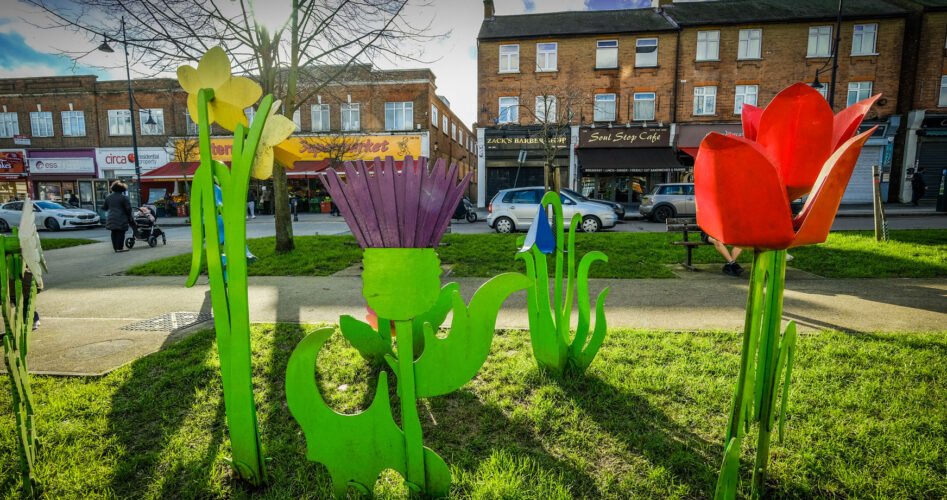
Our community gardeners have been at it again, this time applying their magic to the beds in front of Regency Court on the High Road. And the work will continue throughout winter, says Judy Noble. Photo by Geoff Wilkinson

Who said your community gardeners would be defeated by a long, hot summer, the dreaded Covid or by the current soaking downpours?

No, we’ve been out in force again, and plan to go on through the winter. It’s easy to keep apart, and working the gardens cheers us all up. Going by your comments, when we’re at it, it cheers you up too! We love it when you come up and tell us how much pleasure you get from these gardens, their shapes and colours changing through the seasons.

Through the hot summer, the soil in the beds we care for in George Lane and on the bridge over the North Circular was often too hard, but by the end of lockdown they needed care, and we needed company! You will see a lovely flowering of bulbs come the spring.

Once these were tidied, ready for winter, we looked around.

The Regency beds running along the High Road opposite the top of George Lane have long been neglected. Neither the developers nor the council agree who has responsibility for their maintenance.

Originally well planted, now there were bushes pushing over on to the quite narrow pavement. You could see people with children and prams or those in wheelchairs struggling to pass. So, we decided to give it a haircut, clear out the weeds that blow thousands of seeds over other gardens and plant it.

We wanted to create a strip of garden that gladdens your eye as you pass, and encourages insect life. Insects play a key role in the plant and animal environment, providing food for birds and pollinating flowers and fruit.

We hope, too, seeing the garden cared for will reduce rubbish, though we know this has often blown in from somewhere else. Still, we ask you to help keep an eye on that.

We’ve given you the pavement back. We’ve cleared the very weedy areas, planting bright marigolds, bulbs and a mix of wild seed and other plants, begged, borrowed and given.

Every year Redbridge Council gives us some bulbs, and our friends from the Wanstead Community Gardeners have given us many small plants for ground cover. These will put down good roots over the winter and we hope you’ll see a bright showing soon.

We’re always open to being given plants you don’t want. There’s plenty of space. Plants that thrive through long periods of heat and drought do best. Or just come and say hello! We’re always glad of a break.

So, throughout the winter, we’ll be out there, and hope to see you there, too.


For more information on the South Woodford Gardeners, email southwoodfordgardeners@gmail.com

Features

Home of history

about_us_misty_ch-b3c9b62c

Woodford and District National Trust Chairman Richard Speller explains why – in normal times – Copped Hall is well worth a visit. It tells a story of history, restoration and engagement

Copped Hall is one of the very few mansions in our local area. It is an 18th-century estate near Epping, situated on high ground at the end of a ridge surrounded by 1,000 acres of landscaped parkland. The overall estate once comprised 4,000 acres!

The abbots of Waltham Abbey held the property from 1350. In 1537, Henry Vlll confiscated the estate and later, Elizabeth I gave it to Sir Thomas Heneage, who built a substantial mansion in 1567. Almost all of this structure was demolished in 1748 before the present house was built by Sir John Conyers in 1753. In the late-19th century, ownership passed to the Wythes family who made their fortune in the railways, and they greatly extended the buildings and grounds.

In 1917, a disastrous fire gutted the main part of the mansion. Although the gardens continued to be maintained, the mansion was not restored. By 1950, practically everything of value was stripped from the site or demolished. It was then used as a mushroom farm and pigsty.

With the coming of the M25, Copped Hall became visible and accessible, especially as it was relatively close to London and Stansted Airport. In 1986, three aggressive development proposals, which would have destroyed the concept of Copped Hall, came before the planning authorities. In order to combat this application, representatives of the local conservation societies formed a committee called the Friends of Copped Hall.

Two further development proposals were put forward in 1988 and 1990; both involved building hotels and the latter a golf course as well. Two things happened, however, in 1992. The Conservators of Epping Forest (City of London Corporation) purchased the parkland, thus extinguishing the golf course proposal. And the other developer went bankrupt.

In 1993, the Copped Hall Trust was formed, and as a result, the house, along with 24 acres of gardens, was saved for the purposes of education, culture, local community activities and recreation. The restoration programme continues to this day. This wonderful project is run by over 100 volunteers, dedicated to the restoration and future of the project. Much work has been carried out clearing the gardens of non-original vegetation. Replacement trees have been planted and lawns reseeded. Internally, the mansion is to be restored to its 1750s form, and since 2001, some of the roof and floor structures have been reinstated and essential structural repairs carried out.

In more normal times, guided tours are conducted every third Sunday of the month, together with a host of activities and events.


For more information on Copped Hall and future events and tours, visit coppedhalltrust.org.uk

Features

DD’s 45th Woodford Diary

swvgDDjanfebcmyk400jpg---Copy©Evelyn Rowland evelynrowland.co.uk

Some South Woodford scribbles from DD, our resident diarist, commentator and observer of all things local

I wonder who invented porches. Was it the Romans? According to Wikipedia, the word comes from the Latin porticus, ‘a colonnade’. Nothing posh like that round here. Porches are so sensible. Places to pause before entering, out of the wind and rain. Places of greeting and welcome. Places offering clues about the residents of the house. Walk along your road and enjoy their infinite variety. Some are heaped up randomly with cast-off boots and shoes. Relaxed and endearing. (You can almost hear the voices of schoolkids arriving home: “Hi Mum, what’s for tea?”) Some are home to exotic plants in elegant pots. Others contain a small picture gallery. In my porch, I’ve got one of those curvy hat racks. I saw it in a charity shop and loved the sculptural shape. A bit like the horns of a regal deer. But the hats are far from regal: one is a crimson, cardboard fez and another is a child’s straw hat with pink ribbons.

Now, I guess you are wondering why we are talking about porches at all. Look: just this week we had the best news for months, a hint of a light at the end of the lockdown tunnel. Encouraging results about vaccines. There is reason at last for cautious hope that before too long I may be able to resume my scribbles out there rather than in here. So, I thought it seemed permissible to chat a bit about “in here” before that happens. And the porch was the obvious place to start.

I grew up in this house from the age of 13. My older brother had the room over the garage. I envied him because it had windows at both ends. But I don’t remember ever questioning his right to it. The oldest child, and a boy. I still regard him as ‘the head of the family’. How old-fashioned is that. The twins came six years after me. A red letter day! Now, when they visit, they are quite likely to stroll through to the fridge and help themselves to a glass of wine, so strong is the sense of returning to their family home. That garage room now houses four bunk beds I assembled – with some help – for my grandchildren. Only one (grandchild) had arrived at that point. But I was hoping for four and was not disappointed.

There’s a large bathroom off the kitchen, with plenty of room for the ironing board and the clothes rack and shelves where my biography section lives. You can linger on the loo in the company of Richard Branson or Felicity Kendal. Ronnie O’Sullivan is there too, or you can dip into Jeffrey Archer’s extraordinary prison diaries. It’s on the west side of the house and floods with pink when there’s a spectacular sunset.

From my back bedroom, you can see Canary Wharf and the mushrooming cluster of buildings all around. In the seven years before he died, when my husband was paralysed and in a wheelchair and needed all-night care, I used to say goodnight and leave him with his carer downstairs and go upstairs and stand at the window and gaze at the mass of lights in Docklands. It was reassuring to observe the signs of the hurly-burly of ‘normal’ life that we had left behind. Clearly, it still existed. This room is crammed with family photographs. Recently, one of my young granddaughters commented – over the phone – “I suppose you just have to chat to our pictures when you go to bed during lockdown.”

The living room is where my fiction occupies a floor-to-ceiling bookcase. I can’t think why it’s called ‘fiction’ when there is often more truth about the human race in novels than in ‘factual’ histories. Yes, Dickens is there and Austen, Bronte and Trollope. Intriguing crime stories and whodunnits too. Rankin and Rendell and James (P.D.) and Simenon; writers old and new daring to delve into the depths and heights of what makes us human. Picoult, Tremain, McEwan, Greene. A reading-list for your next trip to the library? But before that, you can enjoy dialling up quotations on the web. “When an idea comes, spend silent time with it,” (Tremain). “I think to be driven to want to kill must be such a terrible burden,” ( Rendell). “There is always one moment in childhood when the door opens and lets the future in,” (Greene).

I was standing in a long, socially-distancing queue outside the bank yesterday in brass-monkey temperatures. (A brief ‘permitted’ outing). Ashamed of myself for feeling annoyed when the person in front of me invited a new arrival to take a slot ahead of her. Even more ashamed when it crossed my mind that I, too, could try turning up with a walking stick. Are you shocked? My mind wandered away (far, far away from masks and viruses and quarantine) to another bank: a bank of memories of some very special holidays recorded in earlier diaries and stored in a cupboard in the dining room: Breakfast in a small pavement café in Seville. Flamenco demonstration this evening… The highlight of the day: our visit to the Amber Fort, east of Jaipur… Today it’s a polo match, at Holders House near Bridgetown; Barbados v. the US… Our first evening in Oslo. A ‘reserved’ table immediately offered to us, overlooking the city, in the heated arcade around the Cathedral Café… Time to relax on the Una Watuna beach after the long, clattering bus ride from Colombo down to Galle.

Next, please – I’d reached the head of the queue.

What a wonderful world ‘out there’! But I think those wheelchair years, confined at home, may have unknowingly prepared me for the situation we are all sharing now. My admiration for NHS staff in particular has soared sky high. They really are ‘out there’ and if my contribution is simply to stay ‘in here’, I say THANK YOU with all my heart.

Features

Zooming in

tea-for-two---alan-simpson© Alan Simpson

Having embraced Zoom for their fortnightly meetings, Woodford & Wanstead Photographic Society member Alan Simpson gives a snapshot of what the historic club offers to the community

Founded in 1893 in the Coffee Tavern beside George Lane (South Woodford) railway station, Woodford Photographic Society added Wanstead to its name in 2005 because that is where, in more normal times, we now meet. As one of the oldest photographic societies in the East Anglian Federation, we celebrated our 125th anniversary in 2018.

Our fortnightly programme of events includes talks, competitions, exhibitions and outings. We also run informal masterclasses to teach Adobe Photoshop and Lightroom basics. We have a wide variety of photographic skill levels and everyone is willing to share his or her knowledge and learn from others. Social nights are held on the second and fourth Monday of each month. These informal meetings take place in the bar area at Wanstead House and give members opportunities to network. The club is also active on Facebook and Instagram, where members and non-members can share images and comments. Visitors and potential new members can attend their first three club meetings free of charge.

Our programme includes talks and demonstrations by guest speakers, some from the local area, and others from further afield. Our competitions are judged by qualified external judges. Under Covid-19 restrictions, we made good use of Zoom and had judges and presenters from across the country.

Our current membership total is approaching 40, and through Zoom, we even recruited a new member in the USA! Several members have gained Royal Photographic Society LRPS and ARPS distinctions. One member has recently gained his FRPS, the club’s first for several years.

Most genres are represented by our members. Our annual print and projected image competitions can attract more than 200 entries. The subjects include landscapes, portraits, sport, street photography, nature and wildlife, with many particularly creative images amongst them.

When the club was formed back in 1893, its aims included ‘the discussion of the subjects connected with photography in a social manner, and the encouragement of photographic research practice among the members by mutual and friendly assistance’, and ‘a desire to do something of value to the community’. Today, we are a friendly club and welcome everyone with a passion for photography, amateur or professional, acknowledged artist or enthusiastic novice.

We hope to continue our mutual and friendly assistance, and to carry on serving the photographic community well into the future.


The Woodford & Wanstead Photographic Society normally meet on the first and third Monday of each month from 7.45pm at Wanstead House. All meetings are currently on Zoom. Annual membership is £55. Visit swvg.co.uk/wwps

Features

The [Insert name] orchard

orchard-1

South Woodford Society member Louise Burgess invites you to help plant – and name – the community orchard, and advises how we can all support the group’s work in 2021

We are pleased to announce that we will be planting out the first fruit trees in the South Woodford Community Orchard (at the corner of Primrose Road and Mulberry Way) in January or February, so please look out for news of the date if you want to help. Apple and cherry trees have been ordered and a black mulberry tree will be planted later in the year.

We also have cardoons, lilies, herbs, a grape vine and soft fruits to plant. The existing greenery will be cut back to make space for the new planting and paths are also planned. A suggested design for the orchard is shown here, with the paths and possible new entrances, created by native north architects.  If you’d like to join us on planting day, please get in touch. The South Woodford Community Orchard is a rather unwieldy name, however, and we are keen to hear suggestions for better monikers. What about Mulberry Gardens? Let us know your ideas for our new forest garden.

The yet-to-be named orchard is one of the Grow Zones (areas where grass is left to grow long over summer and naturalise with wild flowers) identified by Redbridge Council to increase the wildlife and biodiversity of the area. These Grow Zones can help to create wildlife corridors, and the orchard will add to the original zones already established in Wanstead. Redbridge Council is also working on a policy to create a plan for managing and improving greenery across the borough.

Our plans for a recycled container storage on the site, and even more ambitious plans for the regreening of South Woodford (including a green wall beside the bridge over the A406), are other proposals for which we are continuing to raise funds.

One way you can help us raise some funds is to make sure you are a member of the Co-op, and ensure you select South Woodford Society as your local cause – 2p out of every £1 spent now goes into our funding pot, at no cost to shoppers.

You can also help us raise funds by signing up for the new Redbridge Local Lottery. Once you register, you can purchase a monthly amount (or one-off payments from a minimum of five weeks upwards). The Society will receive 60p from every £1 spent, and you are in with a chance of winning £25,000 every month!

Finally, we’ve recently changed our website address, and it now appears as ‘.org’, along with a new design and updated pages. Please have a look and let us know what you think.


For more information on any of these projects and to get involved in future work, contact the South Woodford Society. Email e18society@gmail.com or visit southwoodfordsociety.org

News

Wheelie bins from spring 2021

L1210473-2©Geoff Wilkinson

Most residents in Redbridge will get a new free wheelie bin this year.

“The wheelie bins will be hitting homes across the borough from spring and will help reduce the amount of street rubbish on bin collection day,” said a spokesperson. The roll-out follows a pilot in February 2020, which saw a reduction in household rubbish and an increase in recycling.

Each 180-litre bin holds around three black sacks of rubbish.

Visit swvg.co.uk/wheelie

Features

Hope for 2021

85774031_s

2020 was hard. It’s important to lament all that was lost – livelihoods, lives, opportunities – but as we begin a new year, we can look forward with hope, says Rev Abi Todd of Holy Trinity Church, South Woodford

As we begin a new year, the losses won’t disappear, but we do have the chance to look forward with hope, spotting goodness and beauty where we can. Here are some reasons for hope in 2021.

  1. The days are getting longer. It might still be cold and grey, but there is a little more light every day to wake up to.
  2. South Woodford is brilliant. We live in a wonderfully diverse area, with great shops, cafés, schools and community spirit. Let’s continue to build that sense of community this year, and not lose sight of the neighbourliness that marked 2020.
  3. Vaccines are here. While it will take some time for all of us to be vaccinated, it’s wonderful news that those who have been shielding for many months, and those who have been separated from loved ones in care homes, will be helped first.
  4. Coffee is good for you! Everything in moderation, but for most people, coffee has wide-ranging health benefits. Why not make this the excuse you need for a trip to a SoWo café? Pour me another cup!
  5. We can start afresh every day. Each morning is a new chance to stay hopeful, to live in love and to practise kindness. If you feel like you’re failing with your New Year’s resolutions already (I can relate!), pare them back and start again. As Dory says: “Just keep swimming!”
  6. Tree planting is happening. Planting trees is a simple yet effective way of improving the environment for everyone, and I’m really excited about the community orchard that is planned locally. Contact the South Woodford Society to get involved.
  7. There is beauty in the everyday. Young children are great at enjoying the small things. Beauty can be found in a spider’s web, the curve on concrete, the smile of a stranger. Let’s cultivate a childlike wonder and celebrate beauty wherever we see it.
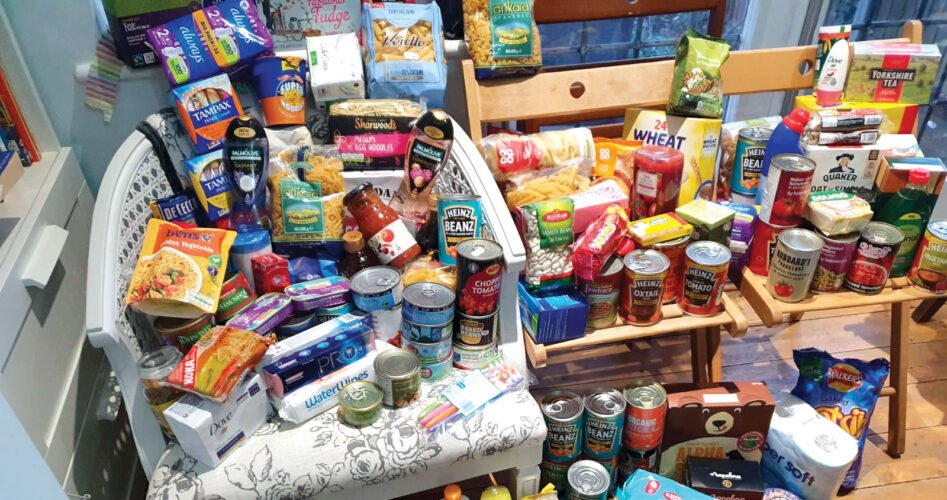
  8. There are a lot of good people around us. 2020 was the year Mutual Aid groups started, foodbanks helped more people than ever, and charities continued their important work. While we can pray for a day when they are not needed, let’s rejoice that so many care and are making a difference.
  9. You are valuable. The world wouldn’t be the same without you! You are special and unique. Your contribution to life is needed.

The Bible says that our hope can be an “anchor for the soul, sure and steadfast”. Even when life is stormy, if we are anchored in hope, we won’t drift too far. Have a happy, hopeful New Year and all best wishes for 2021.


To contact Abi, email abi@asww.org.uk or visit htsw.org.uk

Features

Good neighbours

Screenshot-2020-10-08-at-11.29.09

In the second of two articles, Sadayeen Khan, secretary of Redbridge Neighbourhood Watch (NHW), encourages more residents to report anything suspicious

Redbridge NHW is a registered charity run by volunteers from within the community. Anyone living, working or studying in Redbridge is welcome to become a member (free).

We treat the Redbridge borough as a whole and facilitate coordinators of all wards to work within their areas. Watch coordinators can work on their roads with their related issues, including antisocial behaviour, drug dealing, criminals trying vehicle door handles and locks to watching and checking houses to potentially burgle.

Criminals do not respect geographical or political boundaries, of course, they simply look for opportunities and easy targets. For every secure-looking property, there are, unfortunately, less secure-looking properties. No longer will burglars walk out of the house with large TVs; they take small, valuable items like mobile phones, cash and precious metals. Vehicle thieves will steal small change, expensive sunglasses, branded items, or take the vehicle itself.

We encourage members to report anything suspicious to the police or through Crimestoppers anonymously. This helps authorities to gather intelligence, link crimes with evidence and leads to arrests. Much of this information is never communicated to members of the public but is available to our members.

You may have seen Neighbourhood Watch street signs on lamp posts and in the windows of properties scattered around the borough. Police crime statistics show these signs have a strong impact on lowering crimes in the areas which display them; therefore NHW members have less risk of being a victim.

To establish an NHW presence on your road, please register and show your interest, and invite your neighbours to register as well. Most of our administration is now automated, but there is still an element of the ‘human touch’.

More details about becoming an NHW coordinator are available on our website. Once established, being a coordinator only takes a few hours of your time each month. We have various vacancies dotted around the borough, so please join us and encourage your neighbours, friends, colleagues and family members to do the same.

NHW no longer advertises and we rely on word of mouth. This keeps our costs down and I am pleased to say our membership is growing by the month.


The Redbridge NHW website includes crime prevention advice, discount codes on crime prevention products and useful links to partner organisations. For more information, and to join (free), visit redbridgenhw.info

Features

Restoring Wanstead Park

Wanstead-Park-Lake-stitched©Luciano Ocesca

As plans for restoring Wanstead Park develop, Richard Arnopp of the Friends of Wanstead Parklands explains the latest spanner in the lake restoration works. Photo of Perch Pond by Luciano Ocesca

The Wanstead Park restoration project has always been something of a rollercoaster: nothing much happens for a while, and then developments come thick and fast. There’s quite a lot of news at the moment – some good, some less so.

The single issue that preoccupies the Friends of Wanstead Parklands – and everyone who cares about the park – is the state of the lakes. Created in the first half of the 18th century, the lakes were intended to create vistas of water around three sides of Wanstead House. Originally nine in number, the five survivors (the Basin, Shoulder of Mutton Pond, Heronry Pond, Perch Pond and Ornamental Water) still form one of London’s finest waterscapes and are the park’s defining feature.

Sadly, the lakes are not in good condition. Only one – the Basin, owned by Wanstead Golf Club – seems to have no serious problems. As for the others, the water level in the Shoulder of Mutton Pond fluctuates seasonally, and it would benefit from some de-silting, but it is otherwise fairly stable. However, the other three lakes are in a bad way. The concrete lining of Heronry Pond is completely compromised, and even with constant replenishment via pumping from a borehole, it is impossible to keep it anywhere near full. The neighbouring Perch Pond looks healthy but appears to be heavily dependent on leakage from its western neighbour. Worst of all is the Ornamental Water, which has taken a turn for the worse in recent years for reasons which are not yet fully understood. Water levels have remained persistently low, and even when the lake was flooded by the River Roding in December 2019, immediately began to fall by about 7cm per week until, within a few months, it was back to where it had been before.

Addressing the state of the lake system is one of the central themes of the Parkland Plan (covering restoration and management), which was adopted by the City of London in 2020.

Making plans is all very well but they also need to be paid for. There we have run into a problem. The key to funding the Parkland Plan was that radical works were assumed to be required to the lakes to bring them into line with the Flood and Water Management Act 2010. It was anticipated these modifications could cost up to £10 million, based on what had been spent on a similar project on Hampstead Heath.

This presented an opportunity for Wanstead Park, as the spending would come from central, rather than Epping Forest, budgets, and it would make sense to carry out other improvements and repairs to the lakes at the same time. Any non-statutory element of the work could potentially have been used as match funding for a parallel bid to the National Lottery Heritage Fund to pay for a whole range of improvements to the park.

Unfortunately, the recently published engineer’s recommendations have rather thrown a spanner in the works. He concluded that the works required were far less extensive than had been assumed. Provisionally costed at around £500,000, this is only 5% of the ballpark figure we were working on before. This means the complex funding package for the Parkland Plan will need to be rebuilt from scratch.

We know that Epping Forest is working on new funding options. However, in the meantime, we will be pressing for early implementation of those aspects of its Water Management Strategy that might make an appreciable difference. In our view, the change in funding assumptions for the Wanstead Park project, as well as the worsening state of the lakes, has created a new situation. Most of these options would not be unduly expensive. In our view, they now need to be explicitly decoupled from the main project and expedited as a project in their own right.

Over the last decade, the Friends have been patient and supportive as Epping Forest officials raised awareness within the City of London of the plight of Wanstead Park. Our interventions (notably a 2017 ‘summit’ of stakeholders at the Palace of Westminster) have helped to build a ‘coalition of the willing’ and identify practical ways of doing something about it. Now, we are exploring ways in which we can unlock new sources of grant aid for the park as the requesting charity. We already have some good news where we have been able to do just that for the park’s Grotto. However, as far as the lakes are concerned, the ball is in the City of London’s court. Wanstead Park’s custodian needs to put the current setback behind it and come up with a new funding strategy. The present situation is too dire for action to be delayed much longer.


For more information on Wanstead Park and to become a member of the Friends of Wanstead Parklands, visit wansteadpark.org.uk

News

New Grow Zones to be established in Redbridge, including The Drive

IMG_5009

Redbridge Council has agreed to increase the total area of road verges in the borough that are left to grow wild from 10,000 square metres to 20,000 square metres.

It follows a campaign by Wild Wanstead and biodiversity groups who asked for the Grow Zones project to be expanded in Wanstead and beyond.

However, the expansion will not include any new sites in Wanstead, although the verge along The Drive, heading from Snaresbrook to South Woodford, is set to be reinstated, having become an approved site in 2019.

Features

Miss you, Miss!

jenny-1Miss Brown

Julie Anderson, headteacher at Churchfields Infants’ School, reflects on the 44-year career of much-loved nursery nurse Jenny Brown, who retired from the school last term

Jenny Brown, a local nursery nurse, known to generations of children as Miss Brown, retired from Churchfields Nursery at the end of the autumn term after a staggering 44 years in the job.

Jenny, from Chingford, first started working in the nursery at Churchfields Infants’ School in the spring of 1976 and has seen six headteachers come and go during her time at the school, not to mention generations of children. Indeed, parents of new children at the nursery often tell staff they too were taught by Miss Brown and have fond memories of their time in nursery with her.

While the covid-19 pandemic may have made it impossible to hold a large-scale retirement party, colleagues from throughout her career have expressed their best wishes and recalled memories of working with Jenny in nursery and her caring attitude towards the children, not to mention her enthusiasm and willingness to try new things.

Staff presented Jenny with a special book detailing lots of memories from staff, children and families – past and present. One former student, Poppy, who is currently studying Natural Sciences at Bath University, said: “I have lots of fond memories of Churchfields Nursery and I know the reason I enjoy my studies so much is because Miss Brown helped to develop my love of learning. Thank you for being my first teacher!”

Another parent wrote: “Thank you so much for being a kind and caring teacher, and for looking after our girls. You really helped shape them into who they are today.”

While Jenny will be sorely missed at the nursery, she is not expecting to be idle. She is the carer for her 95-year-old mother as well as being an active member of North Chingford Methodist Church. She likes walking, gardening, theatre and travelling, and has often volunteered for different projects – including being a Games Maker during the 2012 Olympic Games in London and installing the ceramic poppies for the Tower of London art installation in 2014.

I would like to thank Jenny for her hard work, dedication and support during her time here at Churchfields Infants’ School. Jenny is an experienced, caring and much-valued member of our team and we will miss her very much.

I wish her lots of happiness for her well-deserved retirement. Forty-four years working in education is a huge achievement to be proud of. Keep in touch, Jenny!


For more information on Churchfields Infants’ School and Nursery in South Woodford, visit churchfieldsinfant.com

News

From bookmarks to cupcake sales, pupils raise over £1,700 for charity

Screenshot 2020-12-21 at 14.31.57

Pupils from Avon House Preparatory School raised £1,784 for Haven House Children’s Hospice last term.

“Year 6 were challenged to come up with a community enterprise idea to enable them to turn £10 into £150 to donate to charity. Among the projects were personalised bookmarks, cupcake selling, second-hand clothing sales, sponsored dog walking, photo editing, portraits and storytelling. All of the projects were very inventive and well thought through. We are very proud of our entrepreneurial pupils,” said a spokesperson.