Editor

Editor

News

River Roding Project: Woodford community engagement

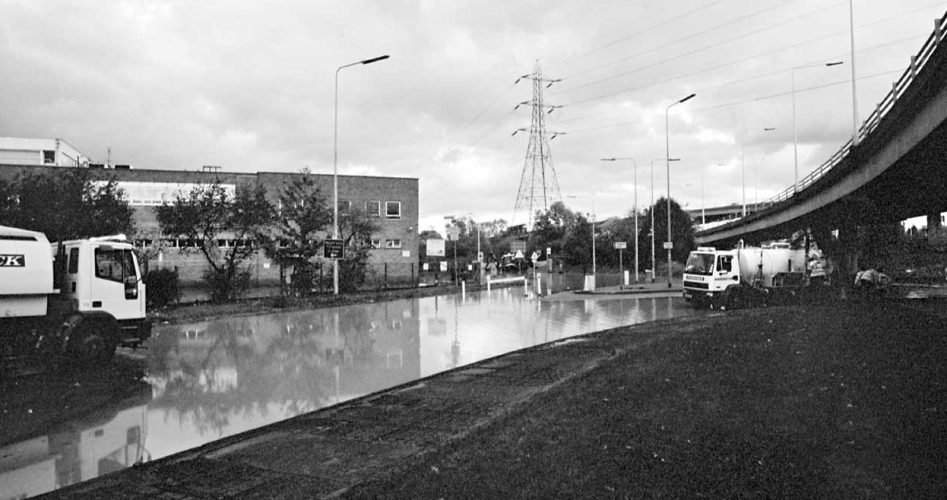
wwps-chigwell-road-floods-20001031-03River Roding flooding at the Charlie Brown’s Roundabout in 2000. Photo kindly supplied by the Woodford & Wanstead Photographic Society

The Environment Agency has announced a day of community engagement in Woodford in connection with the River Roding Project, which aims to improve local river defences.

“Heavy rain has caused the River Roding to flood the area eight times in the past 100 years: 1926, 1939, 1947, 1974, 1988, 1993, 2000 and 2007… Parts of Woodford and Ilford are at high risk of flooding,” said a spokesperson.

The project involves the construction of a flood storage area to hold back high flows upstream in rural Essex. Enhancements along the Roding Valley are also being explored, including riverside landscaping and re-naturalising the river. “This catchment approach will reduce the risk of flooding to more than 600 homes and businesses in the local area.”

Residents are invited to find out more and give their views at Woodford Station, Snakes Lane East on 17 October from 12 noon to 6pm. A similar event will take place on Ilford High Road (opposite The Exchange) on 3 October.

Call 03708 506 506

News

It’s a Knockout: businesses compete for charity

IMG_8256

An It’s a Knockout competition organised by Woodford Green dental practice Improve Your Smile raised £6,800 for Haven House Children’s Hospice at the end of July.

Team Improve Your Smile went head-to-head against six other businesses – Enigma Beauty Salon, Whistle ‘N’ Flute: Laundry Lounge, Oven Clean Chigwell, Vantage VA, Catalyst Design and The Traveller’s Friend – each part of the Haven House 100 Club, having pledged to raise £1,000 each for the hospice this year.

“The day was a great opportunity for all of our businesses to get to know each other whilst having fun, and most importantly raising money for our local children’s hospice,” said Amanda Green, marketing manager at Improve Your Smile. The Whistle ‘N’ Flute team won the challenge.

To donate, visit swvg.co.uk/knockout

News

Reflections: Woodford Arts Group to stage second exhibition at local hotel

PHOTO-2019-08-19-17-07-34©Cheryl Gabriel

Members of Woodford Arts Group will be displaying their work at Packfords Hotel this autumn in what will be the art collective’s second exhibition at the Snakes Lane West venue.

Since their inaugural exhibition in the spring – which attracted nearly 250 visitors to a private viewing – the group has welcomed new members, whose work will be included in the display. On show from 21 to 27 October, the exhibition will have a ‘reflections’ theme.

“Once again, Packfords have very generously agreed to support our event, and they will be opening a pop-up art cafe for the entire week… Our artists will be exhibiting a range of media, including oils, watercolour, sculpture, ceramics, photography and ink. All the art on show will be new work created specifically for this exhibition,” said a spokesperson. The art group – which was founded in 2018 and is open to all Woodford-based artists – plans to continue holding two events annually.

Visit woodfordartsgroup.org

News

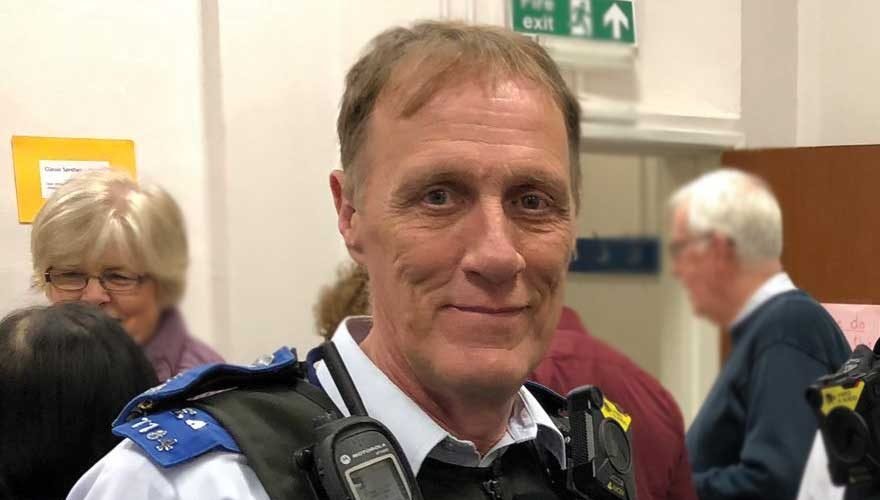
PCSO Farrance retires after a decade of service

pcso-2

A long-serving local Police Community Support Officer has retired.

“PCSO Graham Farrance retired in July after serving the local community for 10 years,” said a spokesperson for the South Woodford Safer Neighbourhoods Team (SNT). PCSO Simon Jones – who previously served in the Monkhams SNT – has since joined the South Woodford SNT, which also includes PC Daniel Thomas, PC Sarah Burke and Sergeant David Lipyeat.

Call 020 8345 3616

News

Recycle and reuse: jumble trail in Woodford

jt-1

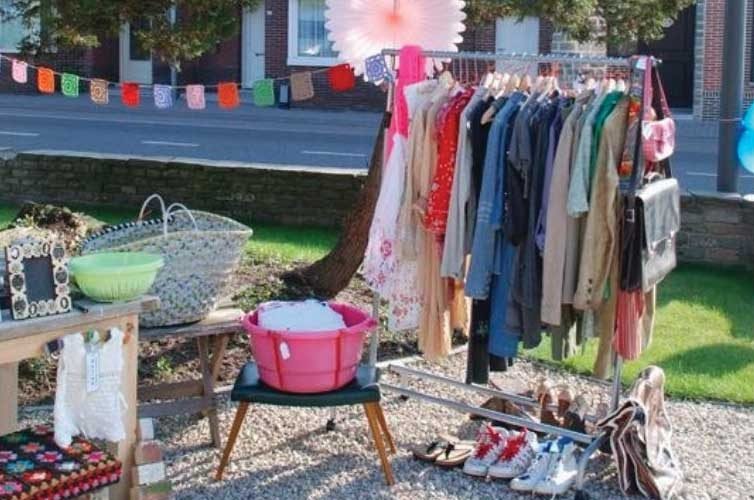
Woodford Creative Hub will be hosting a jumble trail this September.

Open to anyone living in Monkhams, Churchfields and Bridge wards, the event will see residents set up temporary ‘shops’ outside their homes and invite their neighbours to browser for a bargain.

“You can sell pre-loved clothes, shoes, toys, games, DVDs, books, furniture, homemade cookies or craft,” said event organiser Hannah Hole. “We will create a map highlighting the homes taking part and advertise via flyers and on social media, for locals to visit. We are charging a small fee to take part (£3) to cover the marketing costs and any money left over will be used for creative projects in the community.”

The trail will take place on 29 September from 10am to 2pm.

Email wcreativehub@gmail.com

Features

Photographic memories (part 10)

WWPS-Social-MeetingV2©David Tyrrell

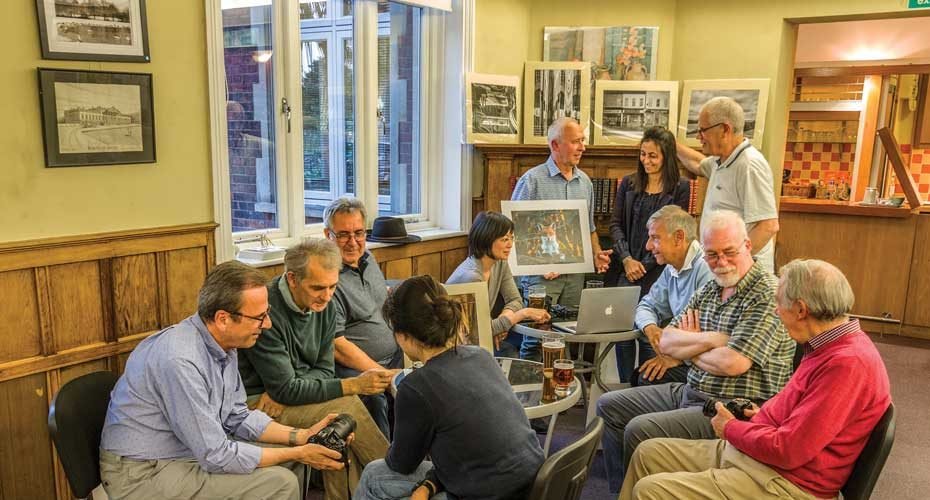
In the 10th – and last – of a series of articles celebrating the Woodford and Wanstead Photographic Society – which is now in its 126th year – club member Alan Simpson continues to offer an insight into the group’s history. Photo by club member David Tyrrell.

When the opportunity came to move club meetings to Wanstead House Community Centre in 2014 – only 70 years after it was first suggested – the chance was taken. Once there, it was not long before the club had outgrown its ground-floor meeting room and moved into the much larger room in the attic (once the home of the defunct Leytonstone and Wanstead Camera Club). The only downside of the move to Wanstead House was that the change of evening (from Tuesday to Monday) meant several members could no longer attend, including Peter Smith, a long-standing member and former chairman.

Meeting only twice a month, and not at all in some holiday periods, left some members wanting a more regular programme. With this in mind, in 2015, informal get-togethers in the Wanstead House bar were introduced on Tuesday evenings in the weeks with no formal club meeting. Workshops were also organised on the use of Adobe Photoshop and Lightroom. In addition, David Tachauer, and then Brian McCarthy, took on the role of organising outings to places with photographic potential. These extra activities all proved to be successful and truly meet one of the society’s early aims, viz ‘the discussion of the subjects connected with photography in a social manner and the encouragement of photographic research practice among the members by mutual and friendly assistance’.

The move to Wanstead House, a presence on social media (notably Flickr and Facebook) and an injection of new blood and new ideas into the committee all helped to revive the society’s fortunes, and membership numbers began to rise again – in mid-2018, there were 38 paid-up members (membership now costing £65 per annum; £45 for concessions). Many of the newer members had no background in ‘traditional’ photography, their photographic interest having formed in a world of camera phones, selfies and transient online images. To help these and others develop a wider skills base, the society now places less emphasis on competitions and its programme regularly includes practical hands-on sessions and outings. This is in some way a return to the motives of the society’s early years when the founder members gave instruction and demonstration sessions, but now with greater participation.

To celebrate the club’s 125th anniversary, Dave Tyrell organised an 1893 Foundation Cup inter-club competition. This was held in October 2018, with WWPS battling against local rivals from Loughton Camera Club, Romford Camera Club, Barking Photographic Society, Chingford Photographic Society and Chigwell Camera Club. Alongside the competition, an exhibition of members’ work was on display at Wanstead House for a two-week period.

The society’s founders would be amazed at the developments that have taken place since they formed their club for ‘the advancement of photography, technically and artistically’, in the modern methods of producing photographs and in the ease with which photographs can now be mass-produced. They would no doubt also be amazed that the club they founded 125 years ago is still meeting regularly and fulfilling their original aims.

Most years as chairman:

George Hall (11 years), 1945–1946, 1947–1954, 1955–1957 and 1958–1959

Peter Smith (8 years), 1998–2006

Longest continuously serving chairman:

Peter Smith (8 years), 1998–2006

George Hall (7 years), 1947–1954

Longest periods between first and last election as chairman:

H Wilmer (29 years), 1893–1894 and 1922–1923

Francis Emler (21 years), 1903–1904 and 1924–1925

Chairwomen:

Norah Cross, 1927–1928

Winn Fowkes, 1976–1978 and 1994–1995

Wendy Gill, 2006–2007

A History of Woodford and Wanstead Photographic Society was originally written in 1968 by George Hunt and updated in 2002 by Gillian Hutchinson. Alan Simpson updated the text again for the group’s 125th anniversary. Visit swvg.co/wwps
Features

Floating ideas (part IV)

River-Roding-1©Geoff Wilkinson

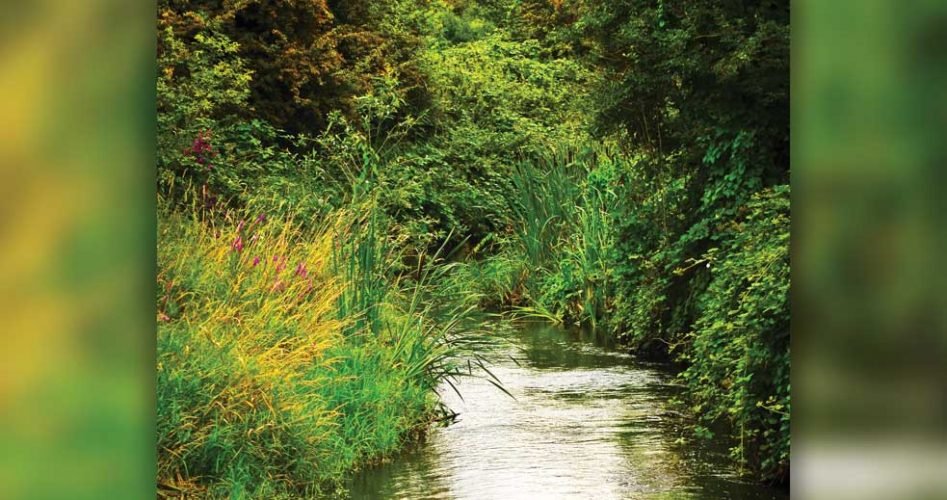
Rising at Molehill Green in Essex, the River Roding passes through the Wanstead and Woodford area en route to the Thames, bringing with it a very real flood risk to local homes. In the fourth of a series of articles charting the River Roding Project – which aims to reduce that risk – Andy Naish from the Environment Agency offers advice on protecting your property. River photo by Geoff Wilkinson.

The River Roding Project recently held a community drop-in event at Kelvedon Hatch Village Hall, near to the proposed flood storage area in Essex. This was a chance for local residents, community groups and landowners to find out more about the project, how we plan to minimise disruption and how it will reduce flooding impacts in the Wanstead and Woodford area.

Once we know which existing defences need refurbishing, we will hold a similar community drop-in event in Woodford so you can find out more. We will also be looking for opportunities to include environmental enhancements along the River Roding in the local area. Stay tuned for further details on our website.

Protecting your property
If your home or business is flooded, it can be costly, not just in terms of money and time but also inconvenience and heartache. While it’s impossible to completely floodproof a property, there are lots of things you can do to reduce the damage flooding can cause. The most important thing is to act now so you’re prepared if there is a flood in your area.

Whether you rent or own your home or business premises, there are many things you can do to be prepared. Some are simple and temporary, while others involve permanent structural work.

You can also make improvements so that even if the worst happens and floodwater enters your property, it causes less damage, so drying-out and cleaning up is faster and easier. This means you could move back home or open for business far more quickly.

Options to limit floodwater entering your property include:

  • Installing flood doors
  • Flood boards, which can be installed when flooding is imminent
  • Air brick covers: specially designed covers for ventilation bricks
  • Non-return valves: to fit on drains and water pipes to prevent water backing up

Options to reduce the damage floodwater might cause inside:

  • Put irreplaceable or valuable items on high-mounted shelves
  • Fix your TV and hi-fi to the wall 1.5m above floor level
  • Fit a pump to extract water (needs to be Gas Safe)
  • Lay tiles rather than carpets
  • Use water-resistant materials such as stainless steel, plastic or solid wood rather than chipboard in the kitchen and bathrooms
  • Raise electrical sockets and fuse boxes 1.5m above floor level

Professional advice
We strongly recommend seeking professional advice before investing in any flood protection. It is important to get an impartial flood risk mitigation assessment completed by a qualified flood risk specialist who is completely independent from any product or measure. You could contact the Royal Institution of Chartered Surveyors (rics.org) and the Royal Institute of British Architects (architecture.com).

How much will it cost?
The average cost of reducing the flood risk to your property is between £6,000 and £8,000, including a survey, products and installation.

Buying products
Before you buy any product, check it’s been tested and is up to the job – it should display the BSI Kitemark or equivalent national quality standard PAS 1188. A comprehensive list of flood resistance products and information can be found in The Blue Pages directory on the National Flood Forum’s website (bluepages.org.uk).

To find out if your property is a flood risk, visit swvg.co/checkflood
To register for flood warnings, visit swvg.co/floodwarn
For more information on the River Roding Project, visit swvg.co/rrp or call 0370 850 6506
FeaturesSlider

Art for the trees

aSummertime-in-Epping-Forest©Sue Mayne

Circles, colour and the trees of Epping Forest are among the inspirations for self-taught artist Sue Mayne, one of many local creatives to join the recently founded Woodford Arts Group.

As a traveller, I have always enjoyed looking at art as an art tourist, and it was while in Madrid in 1988 that I went to the Prado Museum and saw The Garden of Earthly Delights by Hieronymus Bosch. I was captivated and my love of art history began.

Frustrated with my career in the banking industry, I decided to return to study in the 1990s while still working full-time. I did an A level in Art History and the following year enrolled with The Open University and studied all the art history modules available at that time. By 2002, I achieved a BA Honours.

While studying a modern art module in 1999, I decided to have a go myself. I bought a set of acrylics and some paper, and never looked back. I’ve been painting now for nearly 20 years.

Over the years, I have experimented with pretty much all media, but I always return to acrylics as I love the flexibility and immediacy of the medium, which suits my style of painting. I often change my mind about a planned composition or colours, and with acrylics, it is usually easy to paint over and change. With such a diversity of types of acrylic paints on the market, experimentation is so interesting and rewarding. I rarely produce a painting in one sitting, and if it’s of a local scene, I often revisit the site many times to contemplate the next stage of the painting.

I always have my camera with me, taking photos of good compositions for a painting and reinterpreting them back in my studio at the bottom of my garden. My paintings cover an eclectic mix of genres from still life, landscapes and seascapes, animals and flowers to various abstract themes I have developed over the years. I love painting water and mountains and have travelled widely, including spending time living on the south island of New Zealand.

My abstract paintings generally follow a theme. In 2002, I began a range of paintings based on ‘colours of the rainbow’. I started out strictly using seven colours, but in later years used more, or less, to make my paintings more diverse. In 2005, I began my circles paintings. Based on the ‘colours of the rainbow’ theme, but using circles, I brought in basic colour theory that says the eye is attracted to ‘fire’ colours (red, orange and yellow). The intention is your eye is drawn to the centre of these paintings, and moves around and out to the edges containing the ‘cold’ (blues and greens) colours. That’s the theory anyway!

I am always looking to explore a new idea, not necessarily taking a ‘conventional’ approach to the subject matter. There is one thing that just about all of my paintings have in common whatever the genre… they are very colourful!

A love of walking, especially in the forest, has inspired me to focus on my paintings of Epping Forest over the last few years. Every forest painting is a specific location – favourite spots include Connaught Water, High Beach, Highams Park Lake and Wanstead Park.

I have exhibited and sold many paintings over the years. My first solo exhibition was at the Lopping Hall Gallery in Loughton in 2016. In November 2018, my second solo exhibition was at The View in Chingford. As a member of Essex Art Club, I exhibited at their recent exhibition at The View and also took part in Woodford Arts Group’s even more recent exhibition at Packfords Hotel.

To view more of Sue’s art, visit suemayne.com. For information on Woodford Arts Group, visit woodfordartsgroup.org
Features

DD’s 36th Woodford diary

swvgddjulyaug19cmyk©Evelyn Rowland / evelynrowland.co.uk

Some South Woodford scribbles from DD, our resident diarist, commentator and observer of all things local.

I have just bought a new broom. The old one was shedding bristles, so it was more of a hindrance than a help. My neighbour observed that it was “follically challenged”. I enjoyed that, and was prompted to head for Wickes without delay. (Sadly, no longer any hardware store locally.) I bought the one described as ‘heavy duty’. New brooms have developed a rather scary reputation. For doing away with what others, perhaps, had established before: “Making a clean sweep of things.”

Not applicable, of course, in this instance, as that was exactly what I wanted. But on my drive over to Loughton, I found myself thinking about new beginnings in general. Specifically, with the car radio tuned to Classic FM, I thought about my beginnings in music. I was eight. I had pigtails and a brown leather music case. Leather was rationed then, so I expect the case was second- or even third-hand. Quite an expense though, so my parents must have been confident I would stick at my piano lessons. They were right. I did. Somehow, even at the age of eight, I knew I must make a go of it to sort of ‘honour my family tree’. My mother’s mother had been an accomplished pianist. She had died in the flu epidemic of 1918 leaving four children under 10 and a husband fighting in France. My father’s sister had been a concert pianist. She also died in her thirties. In childbirth. On Christmas Day. Hard times!

I might have started earlier if my twin brother and sister hadn’t arrived when I was six. Things got rather busy, but I’m pretty sure I had mastered Chopsticks even before I was taken through the French doors of the elegant Georgian house on Broomhill Road, Woodford Green, to meet Miss Goodwin. I learnt quickly and was soon playing Dolly’s Lullaby and Gathering Peascods. My other grandma came to tea every Saturday. Always wanted the lullaby. I loved her, of course, but not when she regularly interrupted my playing to remark: “I think, dear, you must imagine that this room is larger than it is.”

Just think of the tedium for the adjudicator and the hapless supporting parents when, at my first music festival, I was the eighth of eight players to perform Gathering Peascods. The Congregational Church was almost next door to Miss Goodwin’s house. It had been irreparably damaged by a flying bomb late in the war. So, perhaps that lovely room where I played my first scales, and experienced the inevitable weekly feelings of guilt at not having done enough practice, had also suffered in the attack. It was destined, like the church with its impressive steeple, to be demolished. It disappeared finally under the Sir James Hawkey Hall and the road-widening scheme at the top of Broadmead Road.

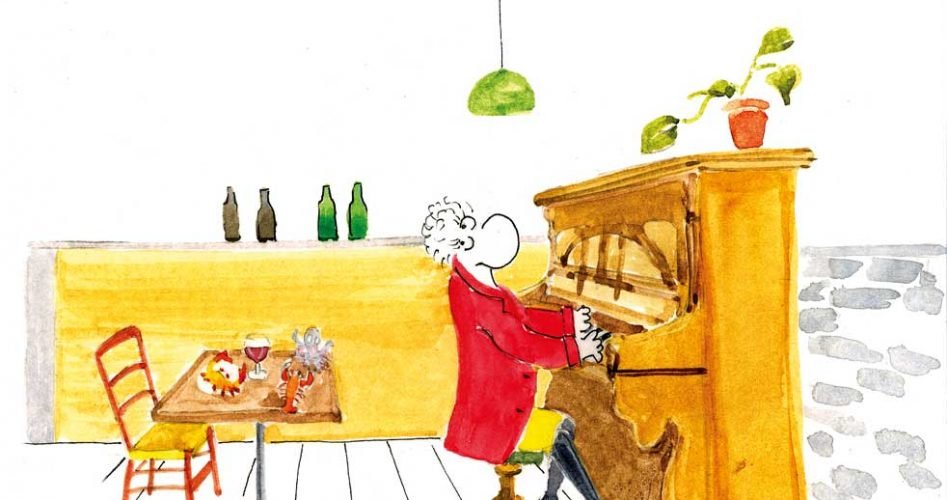
I learnt last week about another beginning. I was talking with Marcello in his restaurant opposite the cinema. It’s called Bella Naples. My son and his family took me there for a birthday lunch on Good Friday. We all loved it. A different dish for each of us. All freshly cooked to order. To begin with, Marcello asked if he might join us at our table so we could chat through what we’d like to order. A very relaxed and unusual approach. I started with a baked goat’s cheese dish served with thin slivers of courgette, fried crisp, almost caramelised. Delicious. I asked our host if I could come back for a chat to hear his story.

He had made a new beginning about 15 years ago. Left Naples for London. He was ambitious. “I wanted to travel but if I was going to work as a chef somewhere, Japan perhaps, or Malaysia or South America (or even South Woodford, I thought), I needed to learn English. It was the first requirement.” He visualised taking perhaps six months. But “doing things properly” was something he had absorbed from his family, especially from his grandmother. “I was very close to her. She was a hard worker. It wasn’t an easy life. She died only a few weeks ago. She was 101.” So, he worked his way through college in London for three years, cheffing for a number of “mega operators” and emerging with fluent English and a love of books. (By the way, the phone rang several times while we talked, but “don’t worry,” he said, “that’s just Mum. She rings every day”. (From Naples, of course!) “What are the most popular dishes?” “Probably the seafood pastas, especially the calamari. I do it in the proper traditional Italian way, coated in flour and deep-fried and served with aubergine baked with mozzarella.”

I had a confession to make to Marcello: since he first opened for business, I had been discouraged by the name: why not either Beautiful Naples or Bella Napoli? Not this hybrid: Bella Naples. He gave a rueful smile. “When I first opened, people asked me where I had come from. I told them Napoli. They mostly replied, ‘Oh, where’s that?’ So, I changed my plans for the name. It was to have been Bella Napoli, of course. ”Well, dear readers, imagine how I felt, considering the time and effort he had put into learning our language! And time and effort is what he puts in today: Bella Naples is not part of a chain. There is no fall-back position. What you get is this young Neapolitan and his chef.

I had my hair cut today. I asked Cathy if she had been to Bella Naples. “Oh yes! We love it. Small. Intimate. Lovely atmosphere. And, of course, Marcello, with his tall black chef’s hat, his beaming welcome… and his spectacular eyebrows!”

I can’t follow that!

Features

The art of Essex

Thaxted-300July-Thaxted by John Tookey

‘This is Essex’ is the theme for an Essex Art Club competition, which will be judged at the group’s annual exhibition at this November. Mary Springham invites artists to join the historic club and enter. Image July-Thaxted by John Tookey.

Essex is the theme for our special competition for members of Essex Art Club. The prize is £120 for a picture of 120 square inches, to celebrate the 120th year of the club.

We are pleased to announce the submitted works – which will be displayed at our November exhibition at Wanstead House – will be judged by Professor Ken Howard OBE, who was our club president for many years and is now our patron.

Essex Art Club has been encouraging artists and holding exhibitions since 1899, and the post of president has been held by Royal Academicians, such as Sir Alfred Munnings and Professor Howard. Sir Frank Brangwyn and Walter Spradbery were vice-presidents, as was John Nash, brother of the more famous Paul Nash. Our current president is John M Tookey, a member of the Pastel Society.

An annual exhibition has been held at Guildhall in the City of London many times and one Winston Churchill MP contributed a painting in 1950. The club did abandon the annual exhibition in 1916 due to “exceptional circumstances”.

Walter Spradbery played a significant role in the development of the William Morris Gallery as a memorial to the aspirations, achievements and fellowship of William Morris. Sir Frank Brangwyn presented a substantial gift to Walthamstow in the form of paintings, prints, drawings and sculpture, including pieces by the Pre-Raphaelite Brotherhood. Brangwyn’s own work included large murals depicting the British Empire, which are still held in the Brangwyn Hall in Swansea.

Ken Howard says painting should be about “celebration, communication and revelation“, and with that in mind, we offer members a varied programme of demonstrations, talks, painting sessions, three exhibitions a year and a regular newsletter. We welcome new members.

The deadline for entry to the Essex-themed competition is 30 September. For more information about Essex Art Club and the competition, call 020 8504 0584 or visit essexartclub.co.uk 
Features

Long story short

IMG_4656w

South Woodford’s Young Writers Club is nurturing the creativity of local budding authors, under the guidance of the group’s teacher Shameem Aziz, who knows to never underestimate a child’s potential.

The Young Writers Club was the brainchild of Agnieszka Kazmierczak, a friend of mine who was looking for a club that would encourage her son’s love of writing. There were no such clubs already in existence, so being the determined person she is, she set one up herself!

Prospective attendees submitted samples of their writing and were picked from these submissions. What was the criteria? Excellent  grammar? Sentence structure? High-level vocabulary? All of these elements had a bearing, of course, but the real requirement was a passion for creativity, ideas and a love of writing. The children’s ages range from seven to 10. Very young, you may think, for potential talented writers…my mantra, however, having worked in both primary and secondary schools for 16 years, is never, ever, underestimate the potential of a child.

My enthusiasm for writing, words, communication and utilising the power of language to inspire children remains unabated. This passion has found a natural home in the Young Writers Club.

Of course, I subtly check for accuracy, but much more important is that their interest in writing is nurtured, encouraged and inspired. Call me biased but I think articulacy and confidence in writing and communication is so important, and not just in an academic sense. It is a life skill. What better way to encourage this than through the children’s creativity? This puts them firmly in the driving seat when it comes to the form and shape the sessions take.

Do we analyse the components that make a good story? Frequently. Do we explore ways to produce effective writing? Regularly. Do we laugh? Always. Do the children leave the session feeling empowered and confident? Of course. Am I left with the feeling that children’s potential is limitless? As ever.

In today’s society, so much emphasis is placed on exams and league tables, but it is no bad thing to place importance on skills that advance and champion a child’s inherent sense of wonder and exploration.

This initiative set up by my friend is also a wonderful testament to the ability of one individual to contribute to the local community. Perhaps it will motivate others to start a project they are inspired by.

To paraphrase William Butler Yates, learning is not just about the “filling of a pail but the igniting of a fire”. Learning about, understanding and utilising potential is perhaps the most potent skill a child can possess. It is the portal through which a whole new world opens up to an individual. Every Wednesday, we journey through this portal.

The Young Writers Club meets during term time at South Woodford Library on Wednesdays from 5.30pm to 7pm. For more information, email youngwritersclub.southwoodford@gmail.com
FeaturesSlider

Our Garden: in the middle of our street

L1220531© Geoff Wilkinson

Thanks to the work of the South Woodford Community Gardeners, it will be hard to walk down George Lane this summer without noticing the floral beauty that bisects the road. Judy Noble tells the story behind their work.

On many a Friday morning when you walk down the high street, you can spy us busy weeding, planting, cutting back and pruning the lovely gardens we are so lucky to have right down the centre of George Lane in South Woodford.

We so enjoy it when you, the local public, come up and tell us how much you too enjoy these gardens. Some of you stay and chat awhile, giving us a chance to straighten our backs, or give us tips and plants you can spare from your own gardens. All are welcome.

We’re gardening on some Monday mornings as well now, and we also garden the five large beds and pavement up to Grove Road on the bridge over the North Circular opposite Waitrose.

Who are we? We didn’t come from thin air, but started from a local initiative through the U3A – the local branch of the University of the Third Age – where people who have mostly retired share their hard-won life experience with others and their local community for free. We apply this to gardening. None of us are experts but we learn from each other and from seeing how the plants grow, and occasionally, don’t. Redbridge Council’s resources have been under pressure and, following a lead from Wanstead, where you may have seen the signs in the beds telling you of the ‘Wanstead Community Gardeners’, we set up our own.

Redbridge Council cuts the grass and initially pulled out some very prickly bushes on the bridge, whose only function seemed to be to catch flying rubbish. The recycling collection also keeps an eye open for our sacks of weeds, and takes them away, but the rest we do. Both Lily House in George Lane and Waitrose generously help by allowing us to fill our watering cans – very useful as the beds get very dry, especially in the summer on the bridge.   

Our aim is to have plants with a range of heights offering something bright, in flower or berry, or lovely varicoloured foliage in all the beds in every season. On the bridge beds, we’re aiming to find enough ground cover plants that love the heat and survive drought, to cover the soil and keep down the weeds that spring up whenever there’s some rain. This will help taller plants to stand out and survive. We’ve pruned and cut back some shrubs that were growing straggly, so that after a little time, they can grow stronger.

We’re constantly weeding, uncovering plants that are struggling to compete and giving them a chance to establish themselves. We don’t use poisons, and like plants that birds and insects also like!

Our plants come from several sources as we have no funds. First, many of us have gardens and split plants that are doing well, or bring seedlings. Different people brought the marigolds and hollyhocks, and now they look after themselves. One of the Wanstead gardeners has helped us here. People who pass do the same, giving plants from their gardens though they have no time to help, and some local businesses make donations. It is all we need, so do please keep it coming.   

The gardens are something living and constantly changing in the middle of our main street. They give us great pleasure, and we hope they put a spring in your step and bring a smile to your face as you pass. And if you’re interested in joining us, you can email us or stop and chat.

To contact the South Woodford Community Gardeners, email southwoodfordgardeners@gmail.com