Editor

Editor

News

Greening South Woodford: final week to reach the target

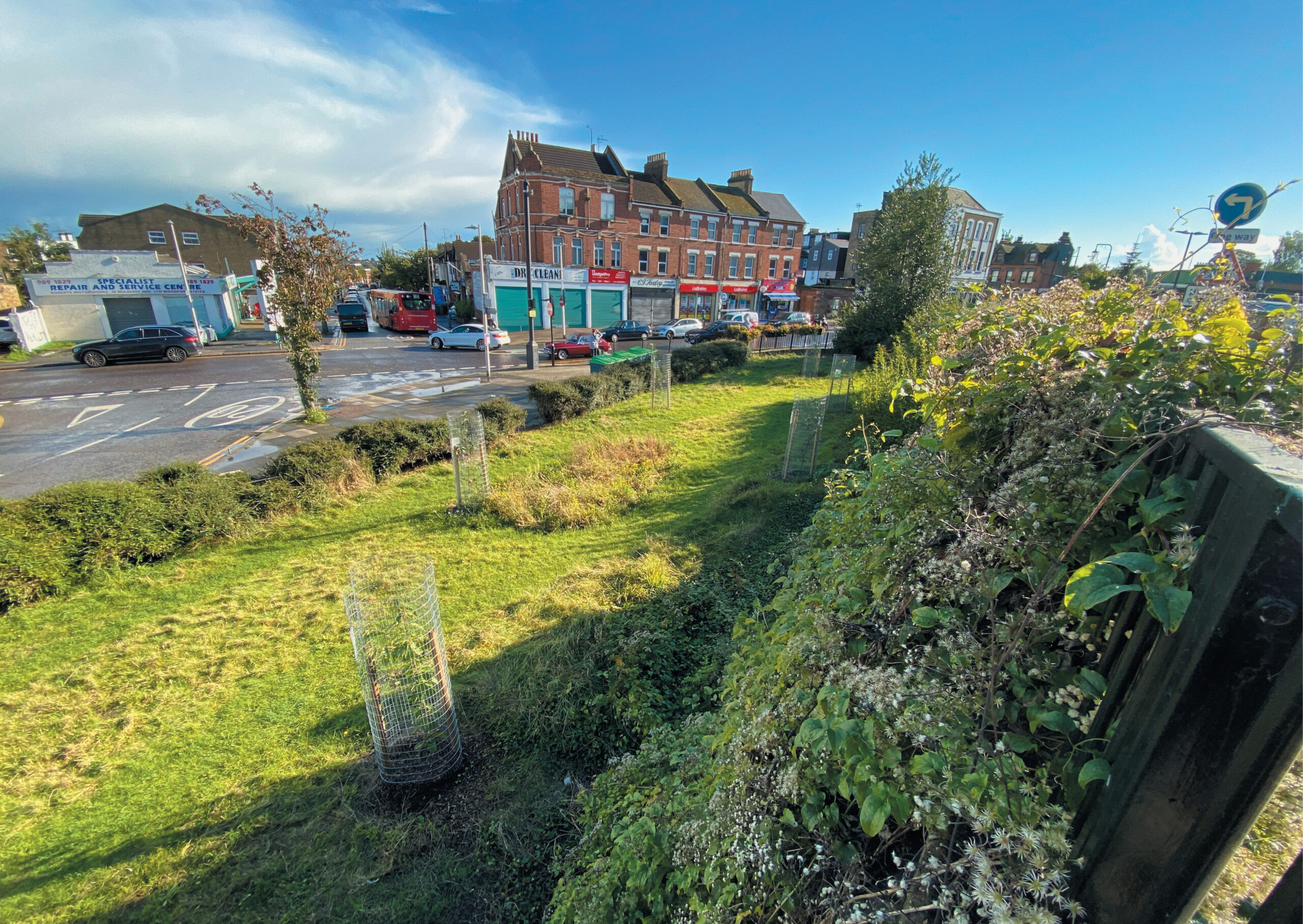
post-1_image0.jpgCommunity Orchard

The South Woodford Society is making a final push in it’s Greening South Woodford fundraiser, which runs until 28 February. 

“At the moment, we are 65% of our full target of £7,342 and have just a few days left. Large pledges have come from London Borough of Redbridge, the Coop and a grant from the Daily Mirror, as well as new estate agents to the area The Stow Brothers, but if we don’t reach the target, all will be lost!” said a spokesperson.

The aim is to make South Woodford a better place to live, work and visit by improving the look, air quality, recreation opportunities and community cohesion of the area.

“There are three main locations we want to improve. An orchard which has been established by local people and is now ready for the next stage of making it a community meeting area where residents can tend and benefit from its produce as well as sit and enjoy. Local families and schools can visit to better understand wildlife and their habitats. The second is a plot of land we’ve named Eastwood Green, which we would like to regenerate with flower beds, play opportunities for children and a meeting area for local people including a community herb garden created by local people for local people. Thirdly, we would like to support a local gardening group with resources to enhance the amazing work they already carry on flowerbeds in the area. Plans include a community composting project, which will reduce waste and recycling and feed all three areas.”

To make a pledge, click here.
Features

Printed History

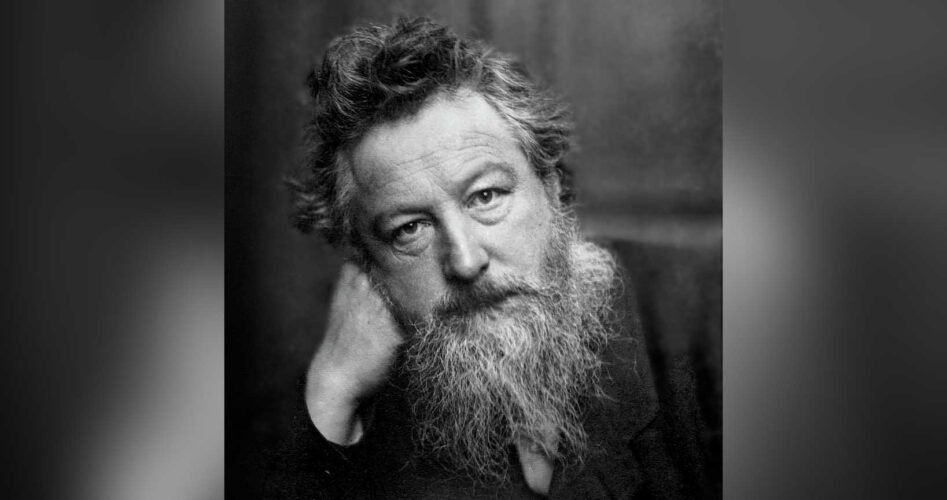
morris-1

South Woodford resident Debbie Pearson is a tour guide for the City of London and the City of Westminster. During lockdown, she took the opportunity to learn more about the local area, including former resident William Morris, one of the 19th century’s most famous names

A man of many talents, William Morris is most closely associated with Walthamstow, but he also has a South Woodford connection. In his lifetime, he was a poet, writer, designer, printer and political activist.

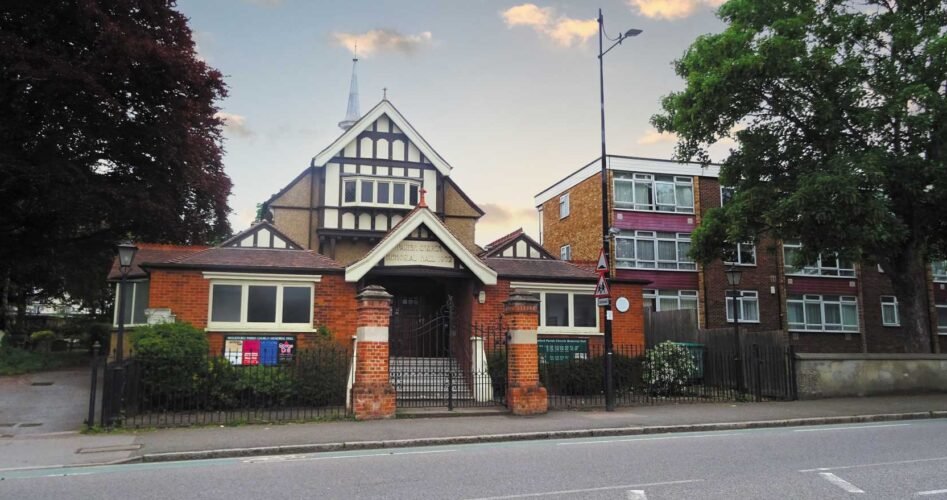
William Morris was born in Walthamstow in 1834, the son of William Morris, a financier in the City of London, and his wife, Emma. In 1840, the family moved to Woodford Hall, a large Georgian mansion. Woodford Memorial Hall on the High Road now stands on the site of that mansion. As a child, William Morris would explore the Essex countryside on his pony. His observations of the natural world would later feature in his pattern designs.

In 1847, William Morris Senior died, and the family downsized to Water House, Walthamstow, now the William Morris Gallery.  William Morris Senior is buried at St Mary’s Church, South Woodford, in a large stone tomb near the High Road.

William Morris was educated locally and then at Marlborough College, Wiltshire, before entering Exeter College, Oxford. While at Oxford, he made two lifelong friends: artist Edward Burne-Jones and architect Philip Webb. He became interested in art, architecture, poetry and writing. He also experimented with stone and wood carving, embroidery and textiles.

He married artist’s model Jane Burden in 1857 and they moved to Bexleyheath. Their house, the Red House, designed and decorated by friends, is now owned by the National Trust.

A few years later, he set up a decorating company, initially with friends, but later known as Morris & Co. He was particularly keen to champion craftsmanship. His wallpaper designs are still sought after, his most popular designs being Strawberry Thief and Willow. He also designed tapestries, furniture and stained glass windows. He is famous for saying: “Have nothing in your houses that you do not know to be useful or believe to be beautiful.”

His early attempts at poetry were not well received, but his retelling of The Canterbury Tales, as The Earthly Paradise, was very successful and made him famous.

He bought a property in the Cotswolds, called Kelmscott Manor, although he rarely lived there. However, it did inspire him, and he named his Hammersmith home Kelmscott House, and when he set up a printing press, he called it Kelmscott Press.

By the mid 1870s, he was becoming increasingly politically active. He was conscious of the class divisions in Victorian society and initially joined the Democratic Federation. He later joined the Socialist League and wrote their manifesto. He travelled the country giving lectures. He was also interested in conservation and founded the early conservation organisation, the Society for the Protection of Ancient Buildings.

William Morris died in 1896 and is buried in St George’s Church, Kelmscott in the Cotswolds.

During his lifetime, he was most famous as a poet. But his legacy was much greater, including his emphasis on craftsmanship, his wallpaper and textile designs, his political ideals and his conservation work. A memorial bench featuring his portrait can be found on the High Road, over the North Circular.


For more information, follow Debbie on Twitter @debbieguide

Features

Form/colour/magic

IMG_0412a

Sculptor John Rowlands describes the magical process by which he and fellow Woodford Arts Group members turn their ideas into visual creations

A few years ago, word got around asking whether people making art in Woodford could get together and promote visual arts in the area. We now have a group of about a dozen people, producing sufficient art to put on an exhibition (Covid permitting) twice a year.

Looking around the group, you see mainly people who have lived a life but are still full of ideas they want to convey visually. For example, Amanda Whittle uses broken shards of pottery to produce objects full of colour and rhythm but which hit you with an underlying provocative idea. Terry Rumak makes geometric patterns of colour that bounce off the eye. Darren Evans uses his architectural background to celebrate buildings and townscapes with a precision that pays tribute to the craftsmen who made the original built landscape. Julia Brett explores how the various techniques of image-making – whether paintings or print making – convey different expressions. And Emma Liebeskind explores, in a contemplative way, the relationship between simplicity and complexity to be found in natural forms.

Why do we do it? Some of the group sell their work regularly. There is, of course, huge satisfaction in knowing you have produced something out of your head that people want to purchase. But there is nonetheless an underlying drive to make art that is unlikely to sell. For example, I make sculptures in steel or plaster that take weeks to complete and need spaces to be displayed that are unlikely to be found in ordinary homes. But the ideas keep coming and the work goes on.

It would be wrong to suggest group members have the same underlying motivation. But in our group discussions there is a sense that each of us has an ‘inner life’ that is constantly bothering us: why don’t you explore this idea, or maybe there is art to be found in this direction? Is this the way imagination works? An ill-formed idea bothers you inside your head and you find yourself compelled to do something about it.

The next stage is hard. That vague, unformed idea has to be given some visual existence in a physical medium, whether it be a pencil sketch, paint on canvas, a mark on a copper plate or an arrangement of pieces of ceramic or metal. This is where you experience the tension of creativity. Your first marks are unlikely to be right. You have to adjust, scrub out, redraw, play around. Sometimes, the tension gets to you and you throw away what you have done in order to clear your mind for another go.

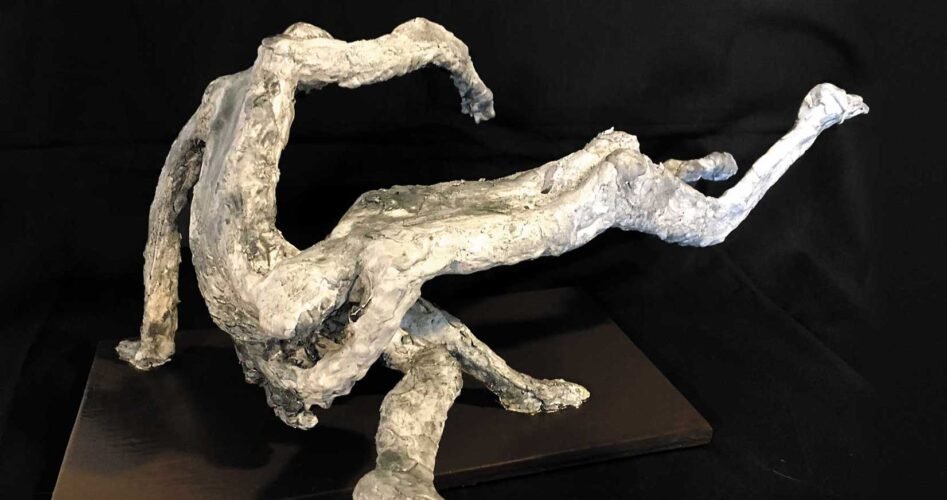
Sometimes, you stay on the path of an idea for a while longer, seeing where it will take you. Again, you may find yourself at a dead end and all there is to be done is to start again. But something else may happen that rewards your persistence. The incomplete work in front of you signals that you are on the right track. Indeed, this inanimate configuration of shape and colour somehow tells you what to do next, where to make the next stroke or put the next dab of clay. There is a sort of resonance between the maker and the emerging work. The piece shown here shifted in its making from a representation of a game of rugby to a much more elemental expression of a tackle somewhat removed from a rugby match.

We disagree in the group about how we describe this moment. Some of us are happy with the word ‘magical’, others less so. But we all seem to recognise the phenomenon. We all seem to experience these moments. And that is probably why we go on making art.


For more information on Woodford Arts Group, visit woodfordartsgroup.org

Features

Trust in Woodford

hall-1Meeting venue: Woodford Memorial Hall

Clive Boon is one of seven committee members for the Woodford and District Centre of the National Trust. That committee needs more help if the 54-year-old centre is to continue its programme of talks and trips

Some years ago, an article appeared in the South Woodford Village Gazette entitled Coasting Along Nicely. That article gave some insight into the history of the Woodford and District Centre of the National Trust and how it was still flourishing after 50 years, albeit with membership not as great as in 1985 (which was our peak year with 1,010 members).

The genesis of our centre was a coffee morning held on 7 December 1967 at 30 Snakes Lane, when it was decided membership of the proposed centre would cost five shillings. The first meeting took place on 12 February 1968 in the Hawkey Hall with a speaker from central office. In the course of our 50-year history, the centre has been served by just three secretaries, and in that time has contributed over £200,000 to various National Trust projects.

Despite the highs of our membership in the eighties, prior to COVID, we would still rejoice in several hundred members and visitors to our monthly talks and trips. Now, after the first appalling pandemic in most of our lifetimes, where we have all suffered illnesses and lockdowns, we are trying to regroup. In 2020 and 2021, we did our best to stay in touch with members via emails and by hosting three or four Zoom talks for those who were able to take part online.

The re-opening of our centre last September with a presentation about the National Gardens Scheme in Essex (on a gloriously sunny day) was a great day for us all, with a packed audience at All Saints’ Church hall. That was followed by October’s meeting at Woodford Memorial Hall with a talk about the historic Waltham Abbey Church. It felt like a revival of community spirit!

The trips we organise are very popular as well, evident from the full coaches that depart. Recent destinations include the National Army Museum (fantastic) and Polesden Lacey, an Edwardian house in Surrey. And excursions to St Paul’s Cathedral and the Secret Gardens of the City are planned for 2022.

Our meetings, and indeed all the trips, are supported by a small committee. With some lost due to natural ‘movement’ and several past retirement age, that committee has dwindled in size, and now consists of only seven people: chairman, honorary secretary, treasurer, membership secretary, London visits coordinator, publicity member and minutes secretary. At our last committee meeting, it was reluctantly stated that unless we get new support, then the awful conclusion would be our centre would have to close. That will be decided at our AGM on 6 April. So please, if this interests you, do join us. We only ask for a few more to join our committee; the work is not onerous, it is interesting and enjoyable! We really do need you. Our centre is a marvellous community base. It must not close!


For more information on the Woodford and District Centre of the National Trust, call 07774 164 407

Features

New building, same vision

L1230235©Geoff Wilkinson

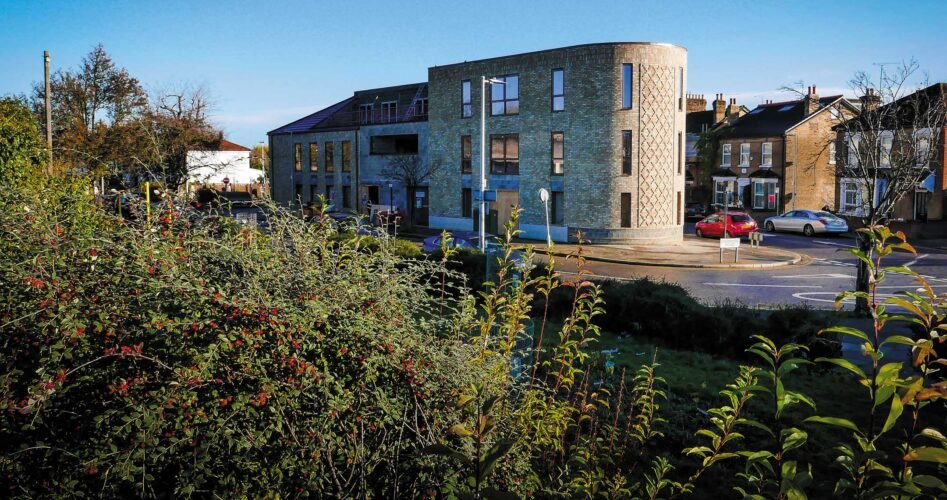
As the newly built mosque on Mulberry Way nears completion, Qaiser Malik, secretary of the Qur’ani Murkuz Trust, outlines the history and future of the landmark building. Photo by Geoff Wilkinson

South Woodford Islamic Centre (started and managed by Qur’ani Murkuz Trust, a registered charity) began as a learning centre and mosque from a single-storey set of old buildings on Mulberry Way which, over the years, had seen many transformations in its usage. In the last 25 years, Qur’ani Murkuz Trust (QMT), under the able guidance of its chairman Dr M.E. Fahim, has served not only the religious needs of the Muslim community but also became a centre providing a social space for Muslim women and children, both young and old, as well as hosting many cultural events and fundraisers for many important causes.

The centre hosted Three Faiths Forum events and jointly organised visits to the Holy Land with members of the Forum. It also provided health advice, conducted marriages, and provided support, counselling and adult learning facilities.

The mosque has faced its fair share of hate crime, which peaked when the centre was torched 21 years ago on the auspicious night of Eid-al-Adha and suffered huge damage.

Due to the demographic changes in the area, expanding needs of the community and limited space for children and women learning facilities, QMT applied for planning permission for a new building, and in 2019, consent was given by Redbridge Council. In mid-August 2020, the trustees commissioned the building works; completion has been slightly delayed due to a shortage of materials caused by Covid. It is hoped that the building should be ready for use in Ramadan at the beginning of April 2022. We plan a formal launch and opening of the building after Eid-al-Fitr and will hold an open day for all our neighbours.

The new building has already been appreciated by many who have seen it and who like the design and the brickwork; special care has been taken to match the structure with the surrounding environment. The new premises will provide ample space on the ground floor prayer hall for men and on the first floor for ladies. The basement will house our evening and weekend school. It will also be available for community activities and social events, neighbourhood watch meetings, local council meetings and Three Faiths Forum events. The new building provides for wheelchair access and includes a lift for those who need it. Interior design will pleasantly reflect the aesthetics of the Islamic faith.

In our commitment to the environment, the new building is equipped with solar panels, and all collected rainwater will be reused for services. All electrical equipment is being selected for their energy efficiency capacity; 15 years ago, we were declared the first green mosque in the country by BBC radio, for contributing to planting trees in the rainforest. To meet the operational costs of a large centre, four high-quality apartments are also part of the project to generate regular rental income for the mosque.

It is not just going to be a landmark building in the area but also a centre of excellence for our future generations, to train them to be responsible citizens of this country, with strong moral character and to play a positive role in future growth and development.


The South Woodford Islamic Centre is located at 10–14 Mulberry Way, South Woodford, E18 1ED. For more information, visit qmtrust.org.uk

Features

Clear Vision

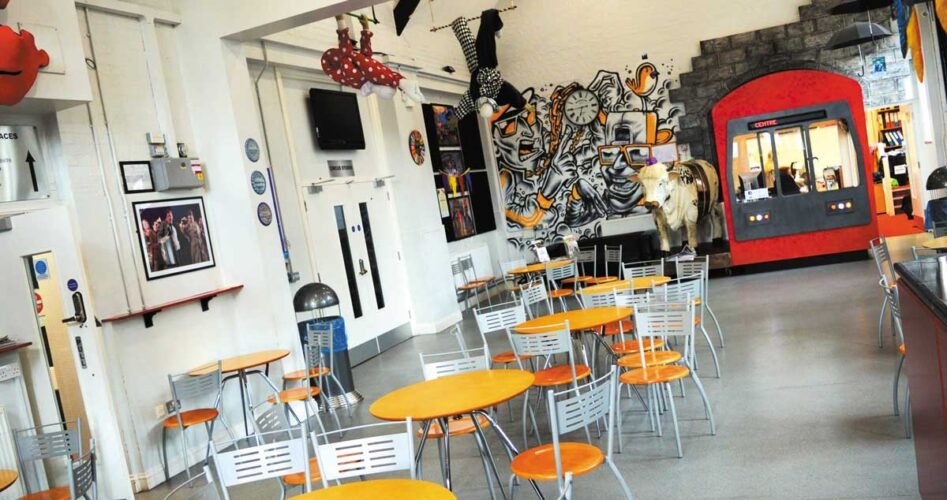
RDC-CafeInside Redbridge Drama Centre, which is managed by Vision RCL

Vision RCL is a charity that works in partnership with Redbridge Council to deliver leisure and cultural services. Here, chief executive Iain Varah offers some insight into the workings of the organisation

Vision RCL is an independent registered charity and a company limited by guarantee, overseen by a board of voluntary unpaid director trustees made up of community representatives and two local councillors.

As a charity, any financial surpluses Vision makes are reinvested to improve the quality of facilities and services and to deliver our charitable objectives. Vision aims to increase participation, accessibility and inclusivity across all of its services, as well as developing partnerships and sharing best practice.

The charity was established in 2007 and Redbridge Council decided to transfer a number of core sport and leisure facilities to the trust at that time. This was followed in 2008 by the transfer of the three remaining sport and leisure facilities, including Wanstead Leisure Centre. In May 2011, the council transferred a wider range of services into the trust, including parks and open spaces, nature conservation, libraries, arts and events, museum, heritage, hall lettings and grounds maintenance services.

Vision again expanded significantly in 2016 to incorporate Redbridge Music Service and Redbridge Drama Centre, the latter based in South Woodford. Wanstead and Loxford Youth Centres were also transferred in the same year. Vision also took on the operation of the dual-use school/community pool and sports facilities at Loxford School of Science and Technology, and a further leisure centre development at Mayfield School opened in 2018. In September 2019, Vision took over management of the Kenneth More Theatre.

Vision, as an independent charity, has access to a range of significant external funding that public bodies cannot access. On an annual basis, this figure is in excess of £800,000, but will be significantly increased with an Arts Council England grant of £1m from the Creative People and Places fund to be spent across Redbridge in partnership with a number of Redbridge-based charitable and voluntary organisations over the next three years. Vision now has over 750 employees and a turnover of over £20m, and is one of the largest and most diverse leisure and culture trusts in the country.

The formal relationship between Redbridge Council and Vision is defined by a Funding and Management Agreement in place until March 2026, as well as related leases, licences and other supporting agreements. As the council is under increasing financial pressure due to the reduction in government funding, the need to generate income to protect jobs, services and facilities has become more acute. The management fee from Redbridge Council has reduced significantly over time, and Vision has to generate income to fill the ever-increasing hole in finance between the management fee and running costs.


For more information on the work of Vision RCL, visit visionrcl.org.uk

News

New series of online talks about the history of Wanstead Park

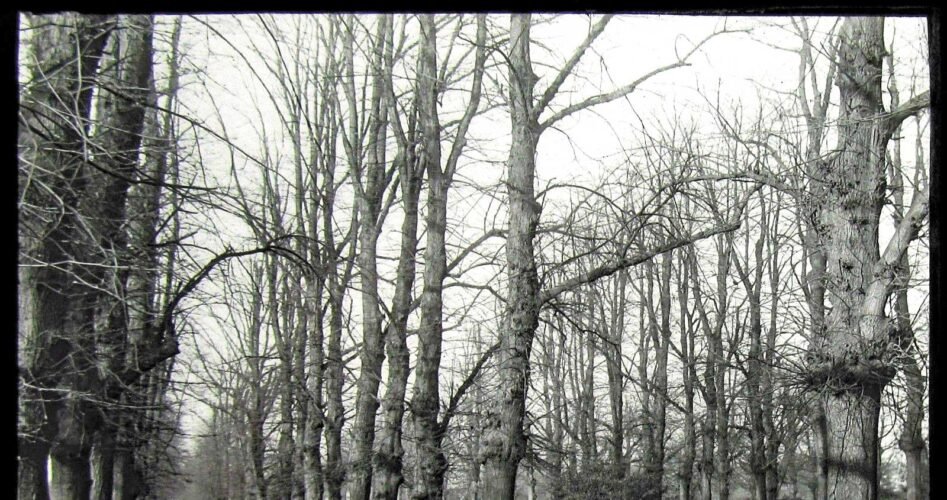
Glass-Magic-Lantern-Slide-THE-AVENUE-BUSH-WOOD-LEYTONSTONE-C1910The Avenue, Bush Wood (circa 1910)

A monthly series of free online talks about the history of Wanstead Park will launch this year.

“Some of you may remember I ran a popular two-year series of articles in the Wanstead Village Directory about the owners of Wanstead Park. These talks – entitled Wanstead Park in Context – will be much wider ranging. As well as personalities, I’ll be exploring political, social and cultural themes, and the evolution of this unique landscape,” said Richard Arnopp, whose first event takes place on 27 January.

Visit swvg.co.uk/wpic

Features

Restoring the Roding

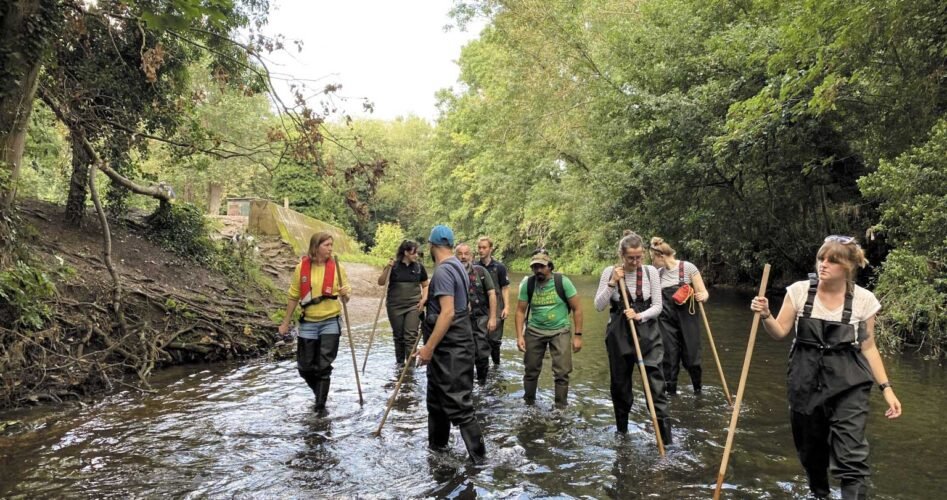
IMG_0013-1536x1152Thames21 project partners walking along the Roding in Wanstead Park

The Thames21 project is making improvements to the River Roding adjacent to Wanstead Park. In the first of a series of articles, Catchment Partnership Development Officer Will Oliver explains the background

The River Roding is London’s third longest tributary of the Thames. It rises in Essex before flowing 50km south, through east London, meeting the Thames at Barking.

Like many of England’s rivers, the Roding is suffering. Historically, the river has been straightened and widened, losing much of the natural connectivity to its floodplain that would otherwise support a range of biodiverse wetland habitats. Combined sewer overflows (CSOs), road run-off and agricultural inputs have caused a decline in water quality and barriers – such as the Redbridge gauging weir – block the movement of migratory fish species.

On its journey through London, the River Roding forms the eastern boundary of Wanstead Park. In its natural state, the river here should appear ‘untidy’. The channel should meander across the land and provide deep, slow pools interspaced with fast, shallow riffles and glides. Aquatic plants should be found throughout and there should be areas of clean, loose gravel for fish to spawn in. Take a look at the river next time you walk along its banks here and you’ll see that, instead of this complex mosaic of habitats and flows, the channel resembles a canal. It follows an unnaturally straight course characterised by a uniform shallow, lazy glide and lack of aquatic plants. This means the river only has limited value to fish, birds and insects.

Fallen trees would have once been common within a river. As water worked its way around them, deep scoured pools, fast runs, shallow riffles and areas of slack, sheltered water would form. In this way, fallen trees act as the engineers of a healthy river and provide vital habitats for fish and aquatic life. Historically, fallen trees have been removed from rivers to ease the passage of water downstream.

Thames21 is an environmental charity and member organisation of the Rivers Trust. Our goal is to put healthy rivers at the heart of community life. Working in partnership with the City of London (Epping Forest), Vision RCL and the local Friends of Wanstead Parklands and Wren Wildlife groups, Thames21 is developing a project to improve the habitat within the Roding adjacent to Wanstead Park.

This project will add strategically placed fallen trees to this stretch of the river. These trees will help to restart natural processes and encourage more diverse and improved habitats to form. They will be secured in place to ensure they do not pose a flood risk, with all works reviewed and approved by the Environment Agency. The project will enlist the help of local volunteers and is scheduled for completion in early 2022. Many thanks go to Essex and Suffolk Water and Britvic for funding these improvements.


For more information and to get involved with the Thames21 project in Wanstead Park, email will.oliver@thames21.org.uk

News

Bread is fine: what to feed local waterfowl this winter

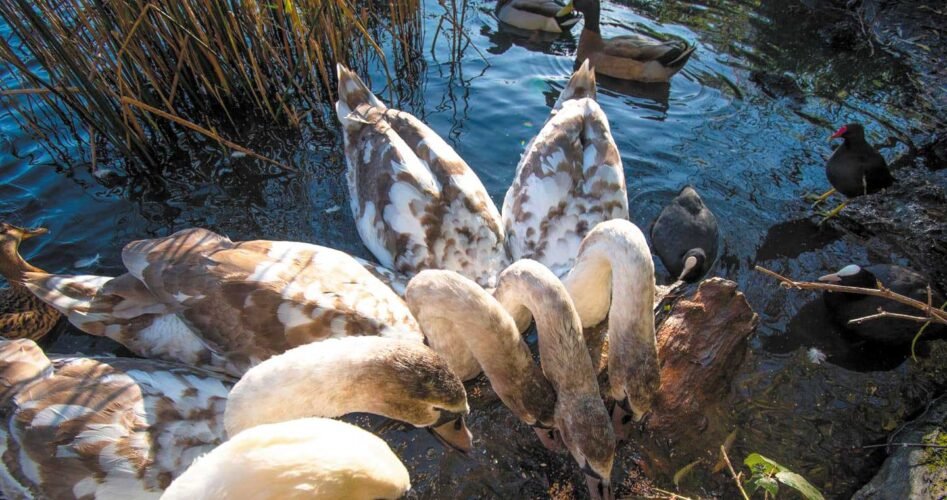
feed-1

Residents are encouraged to feed local waterfowl this winter.

“Good food to use includes peas, sweetcorn and lettuce. Bread is also fine – it will not cause diseases or swell in their stomachs. But never use mouldy bread and never feed meat, fish or dairy. Please feed birds in the water, not on the land. Water aids digestion, and on land they are vulnerable to dogs when engrossed in eating. It’s also a good idea to only throw more food in once they have finished what they are eating,” said Swan Sanctuary volunteer Louisa Green.

Features

Ask the Mum Chat

castaimage0Casta Littlewood and her son Blake

Local resident Emily Potter became a first-time mother during the first lockdown. Luckily for her, she made contact with Super Mum Casta Littlewood, whose WhatsApp groups have been a lifeline to many

Lockdown babies. Whoever thought that would be a thing? I gave birth to my lockdown baby only a few days after the government ordered everyone to stay at home due to the pandemic. But lockdown first-time mothers? Well, this concept was rather overlooked.

During my pregnancy, I’d imagined a maternity leave of meeting fellow mums over leisurely playgroup mornings and making new friends in the breastfeeding workshops. The reality was depressingly different, with access to very little support and being confined at home, wondering whether I’d ever get any freedom during my time off with my little one.

I was pointed in the direction of local Super Mum Casta Littlewood. She had the foresight to create a world of networks for mums in the Redbridge area, setting up a series of WhatsApp chat groups to support women on parenting topics. I tentatively joined the ‘Mum Chat’ to see what was happening. Need to find a nursery? Having trouble deciding which car seat to buy next? Which strategies work best for a fussy eater? Simple! Just ask the Mum Chat. The queries weren’t always limited to parenting; sourcing a reliable plumber, helium balloons for parties at the last minute or tasty takeaways on a Friday night. Ask away and your question is answered within minutes! What works so brilliantly is the access to several hundred mothers at your disposal to help. Not only can mums ask for help but share their own experiences and bond with other mums, removing a lot of the isolation but also building self-worth in supporting others.

Popularity grew. The more mums joined, the more questions were asked, and the greater the wealth of knowledge on the chat. As lockdown eased, I joined more of Casta’s WhatsApp chats on other topics; timetables for baby classes, swapping of toddler clothes, even a science thread explaining fact-based Covid research, sometimes quicker than the press could publish. Soon enough, a waiting list to enter had formed as the groups attracted mothers from Epping to East Ham.

I’ve found these groups to be a true source of quality information and support. And I’ve made some lovely friends. I received advice that helped me diagnose my baby’s croup within 30 seconds to get quicker medical support, and ideas enabling me to win a flexible working contract. Nowadays, if I have a question, my partner’s default response has become ‘ask the Mum Chat’. He even requested the latest on buying petrol during the crisis and managed to avoid the queues!

So, I write this on behalf of all the local mums to give credit to Casta for managing these groups – you are a modern-day heroine of mothers. A huge thank you and best of luck in your new project, PlayHubs.


For more information on PlayHubs – a children’s activities and parenting information hub – visit playhubs.co.uk

Features

The law is… daft

37681283_s

Derek Inkpin from local solicitors Wiseman Lee takes the law seriously, but even he knows sometimes the law can be an ass… especially if you need to carry a plank along a pavement

We are surrounded by laws and regulations every day of our lives, the dos and don’ts which regulate society and all of us in it. The change in Coronavirus regulations in 2020 and 2021 is a good example of how we are told to behave for the benefit of all of us, but which causes many of us to question these impositions.

However, against this serious background, perhaps something a little light-hearted to start the New Year. The following bizarre laws still exist:

  • You must carry a bale of hay in your car at all times.
  • Your cow may not be driven down the highway between 10am and 7pm without prior approval of the Commissioner of Police.
  • It is unlawful to handle a salmon in suspicious circumstances.
  • You commit an offence if you are drunk in a pub, and it is an offence for a publican to sell alcohol to a person who is drunk.
  • You must not allow your pet to mate with an animal of the Royal Household.
  • In Scotland, if someone knocks on your door and wants to use your loo, you must let them enter.
  • It is an offence in the City of London for a cab to carry a rabid dog or corpse.
  • Placing a postage stamp with the Queen’s head upside down is considered to be an act of treason.
  • No person in business may import into England potatoes which he knows or suspects have come from Poland.
  • By law, it is legal for a pregnant woman to relieve herself anywhere she wishes, even in a policeman’s hat.
  • Since 1939, it has been against the law to carry a plank along a pavement.
  • It is legal for a male to urinate in public provided it is on the rear wheel of his vehicle and his right hand is on the vehicle.
  • You must not shake or beat your rug or carpet before 8am.
  • Relevant to Covid-19, it is illegal to get public transport if you knowingly have the plague. Also, if you know you have the plague, you may not flag down a taxi.
  • Is the law an ass? You decide. A happy, and hopefully brighter, New Year to you and yours.

Wiseman Lee is located at 9–13 Cambridge Park, Wanstead, E11 2PU. For more information, call 020 8215 1000

News

Monitoring air quality in Elmhurst Gardens playground

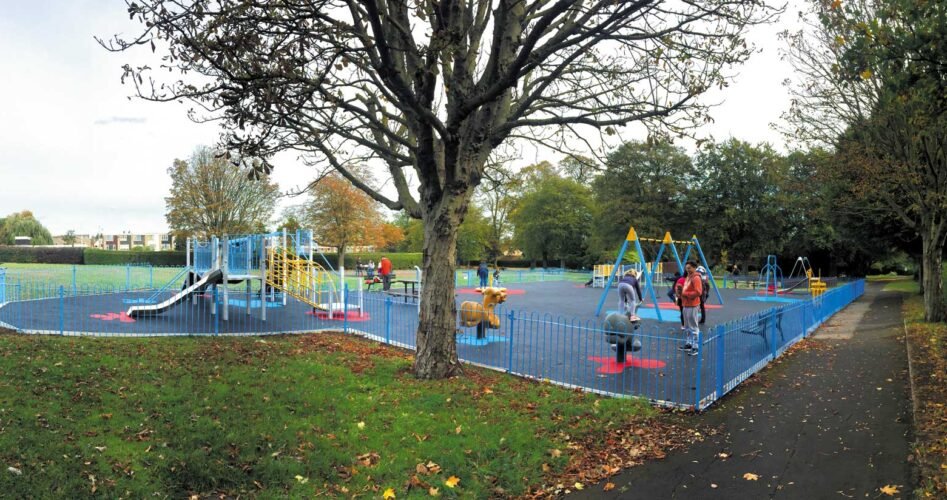
IMG_9581

Local mum Lydia Fraser-Ward has teamed up with the South Woodford Society to apply for an air quality node from Breathe London to monitor levels of air pollution in the children’s playground in Elmhurst Gardens.

“Only 10 nodes are available for all of London this year, so it’s likely to be highly competitive, but a strong application was submitted, including a 20-minute film with interviews and endorsements from local councillors and parents,” said Lydia.

A decision on the application is expected in January.