


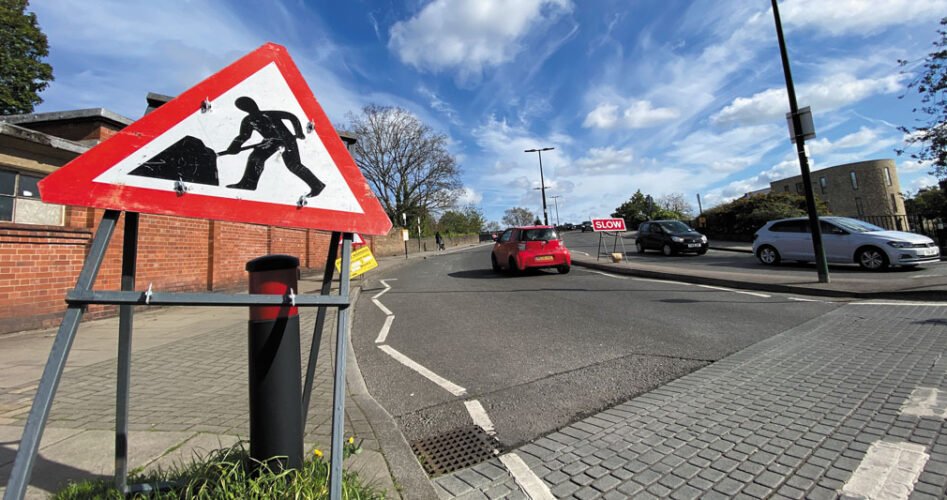
It will follow work to replace the expansion joints on the bridge, which began in April.
“We are continuing at pace with the works and are aiming to finish ahead of schedule. We will update the parking suspension signage once contractors complete a full side of the joint renewals. This will allow some parking on The Viaduct whilst the work continues,” said a spokesperson.
![vectorstock_33243703-[Converted]](https://swvg.co.uk/wp-content/uploads/2024/04/vectorstock_33243703-Converted-947x461.jpg)
“This exciting event will bring together local residents who will be selling pre-loved items on their doorsteps. Come along and explore the local streets to discover hidden treasures. Whether you’re a buyer or seller, it’s a fantastic opportunity to find bargains and make new friends,” said a spokesperson. Stallholders must register by 17 May (£5).
The event is being supported by Stow Brothers (no commercial stalls are permitted).
“At this time, the analysis of data does not support re-providing the current bed-based services of the Margaret Centre in the new facility.”
The statement also highlights that it is “too soon to make firm recommendations” and a decision on the Margaret Centre’s future is pending. The first phase of construction of the new hospital is expected to begin this summer.
Visit swvg.co.uk/mcfuture
 ©Geoff Wilkinson
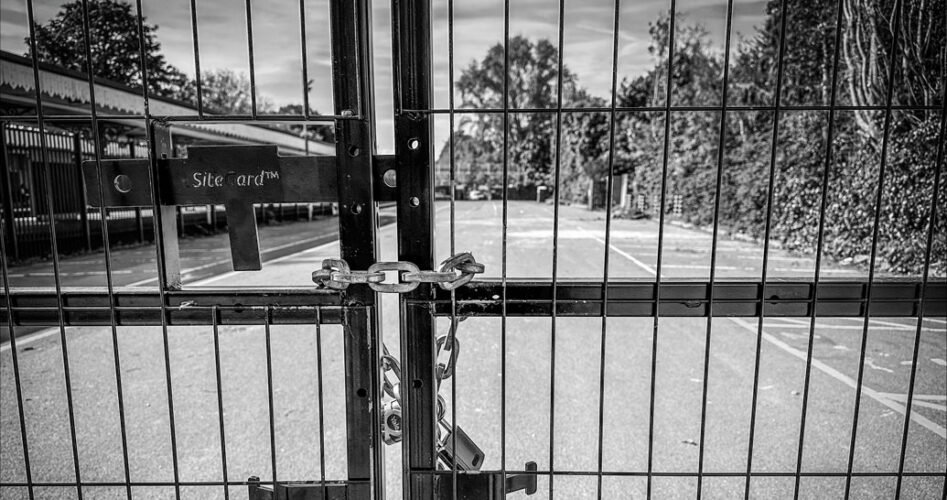
“This will allow work to deliver 74 new affordable homes to commence. Due to the complexities of the construction work, there will be limited access to Blue Badge spaces, but we will work to keep these spaces available as much as possible during construction,” said a spokesperson for Places for London, TfL’s commercial property company.
A smaller car park with 22 spaces is expected to reopen in spring 2026.
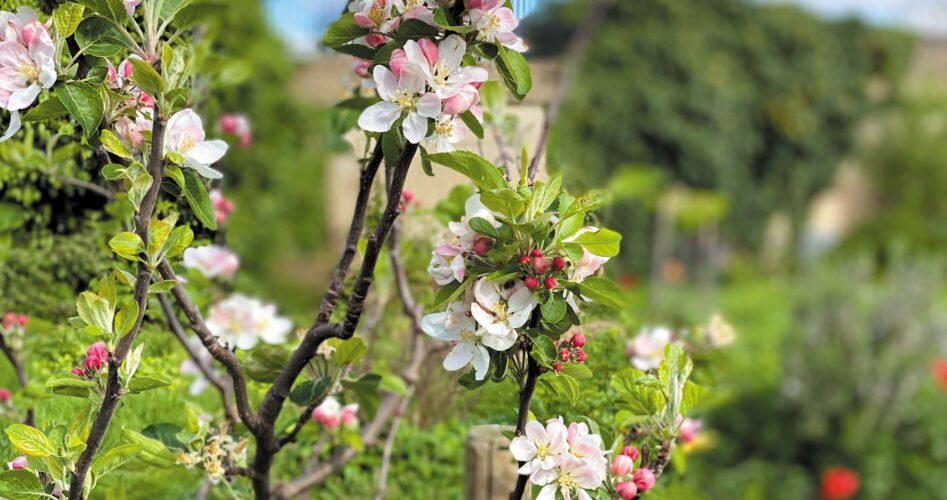
“This is our new annual event to enjoy the fruit trees, flowers and buzzing pollinators. Our team of fabulous volunteers celebrated in style with a hands-on gardening session. Everything is growing brilliantly at the moment, including the weeds, so most of the session was spent weeding the central bed where we planted raspberries a couple of months ago,” said a spokesperson for the South Woodford Society, which established the orchard in 2021.
And the site – located on the corner of Primrose Road and Mulberry Way – is set to undergo more development this summer, with plans to lay woodchip paths for better access around the plants. “Our next volunteer day will be held on 19 May from 11am; everyone of all ages is welcome!”
Email e18society@gmail.com
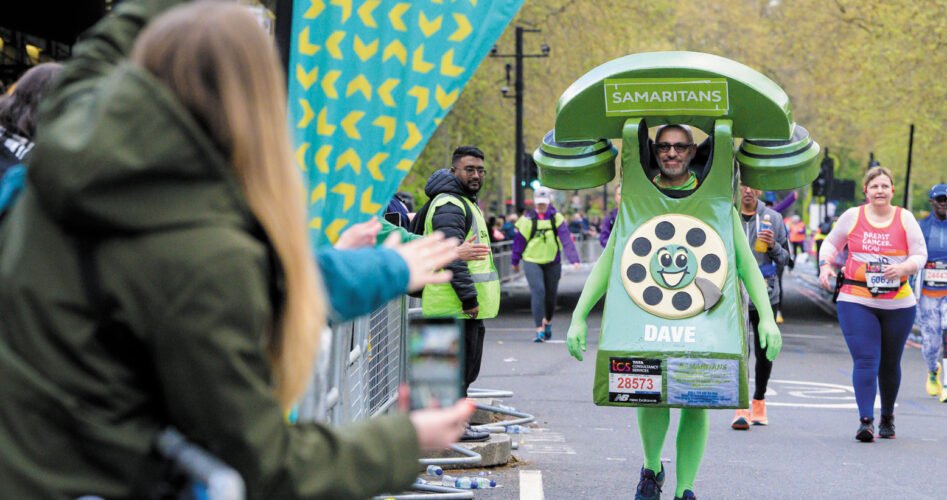
“Every step I take and pound raised could help train more volunteers, answer more calls for help and, ultimately, save lives,” said Dave Lock, who lost his brother Steven to suicide last year. The veteran runner – who completed the 26.2-mile course with his daughter Isabella in seven hours and 26 minutes – has raised over £50,000 for the charity.
Visit swvg.co.uk/lock
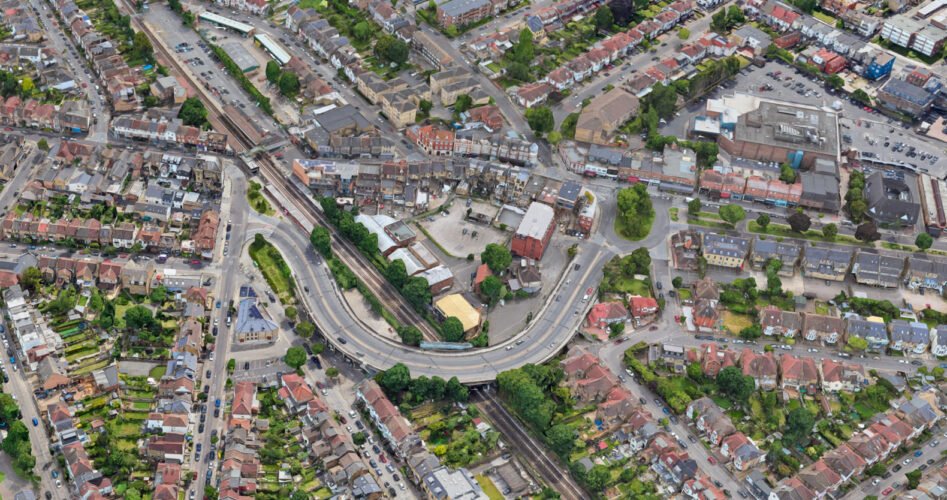
“We will be replacing the expansion joints on the Viaduct as part of our routine maintenance schedule,” said a Redbridge Council spokesperson.
The work will begin on 2 April, with the Viaduct closed in both directions that night between 9pm and 6am (local diversions, including for buses, will be in place).
After the night works of 2 April 2024, the Viaduct will be open to traffic but the road width will be reduced to accommodate the replacement of the joints. This work will take up to 12 weeks to complete.
“There may be restrictions on parking on the viaduct to ensure traffic can pass safely past the works. The council will also be undertaking a Principal Inspection of the structure over the coming weeks and months as part of its routine structures inspections programme. We apologise for any inconvenience caused by the closures and the part lane closure, which are essential for these works.”
 ©Evelyn Rowland
I’ve never been any good at painting. I am perfectly OK when giving the garden shed an occasional coat of preservative. If it’s a nice warm day. (I favour willow green.) But a ‘still life’ or a portrait? Impossible.
I do remember drawing a square box with four windows, a door, roof and chimney, identical to what the rest of the class produced when we were five. I recall my art teacher at Woodford High with great affection, but I think she appreciated my willingness to scrub up the palettes over the butler sink rather than any skill with brush on paper. David’s dad was a fine artist and my son is very gifted. So, there might be some talent hovering around in our genes. Perhaps I had always, secretly, wanted to advance beyond the kindergarten crayons stage. Over the years, I have assembled a large collection of sketchbooks and paints and brushes from jumble sales and markets. But putting them to use always seemed to slip down the priorities on my to-do list.
So, when an invitation to enrol in a 14-week beginners’ art course came through the door last July, I put it to one side. And later picked it up again. “Are you thinking of doing that course?” asked David. “I’ll come with you if you like.” (Newspapers do regularly feature advice on exercising the brain by learning something new, don’t they? Especially as we get older.) We started in September. Within easy walking distance too, down at the Salvation Army premises on Daisy Road. The local residents must have become accustomed to the bevy of hopeful Picassos passing by, carrying their rather promising portfolios, every Thursday afternoon. We’ve both done our share of teaching in the past; now, we’d gone back to school. As very ‘mature students’.
A sense of community soon developed. “Avoid looking at other people’s efforts,” we were advised. But “stroll round and chat and see how others are doing,” was also recommended, which led to some much-appreciated mutual encouragement. Imagine my warm glow of hope when one fellow beginner, en route to the coffee and biscuits trolley, paused to comment: “You can definitely see that’s supposed to be a fox!” As the weeks went by, the social aspect of our ‘predicament’ intensified. We talked. “I’ve been taken right out of my comfort zone,” admitted Nicole. “I’m engrossed. This blocks out everything else. Great therapy.” I asked Eric how he came to register on the course. “I’m retired now. Wanted to get out of the house”. But it was so much more: Eric had visited Venice and Rome, been stunned by the lavish murals in churches large and small. “Everywhere you looked, astounding art. I wanted to learn more.”
Diane impressed me deeply as she explained and analysed her feelings. She had been the head of a primary school. Now, she was finding this course “immensely difficult”. She felt uncomfortable, even threatened by being unable fully to grasp and carry out the set projects. But underlying this discomfort was her deepened awareness of how this had probably been what some of her young pupils experienced when the smiling teacher urged them to tackle a challenging new task. Diane did admit that she had, just minutes before, managed to complete that day’s painting. Her daughter, leaving for work that morning, had called out: “Just try and enjoy it today, Mum.” Now, perhaps, things were moving that way.
Valerie was only too happy to chat. Appreciated a pause to sit back and gaze at her progress so far. “I’ve never drawn a partridge before! I’m trying to decide if I’ve overdone it, or underdone it. You don’t want to spoil the OK bits of your picture. But is there some tweaking that could improve it? A picture has got to grab you, hasn’t it? There’s a Madonna in the National Portrait Gallery that I always make a beeline for. So beautiful. I could take it home with me. But I’m not a religious person.” Nagma was thoughtful too: “I’m loving the course. I feel I’m getting better. But I really wish we could all paint each other. I’d love to be a portrait artist.” Janice treated me to a dollop of delightful philosophy: “I’ve worked in a high-octane career all my life. There was no time to nurture any creative gift I might have had. What happens is, you sort of stop learning. When you do that you finish expanding yourself. This course is like going back to childhood! No weight of responsibility. You can start again. You don’t know what you are capable of until you try. It’s been a joy!”
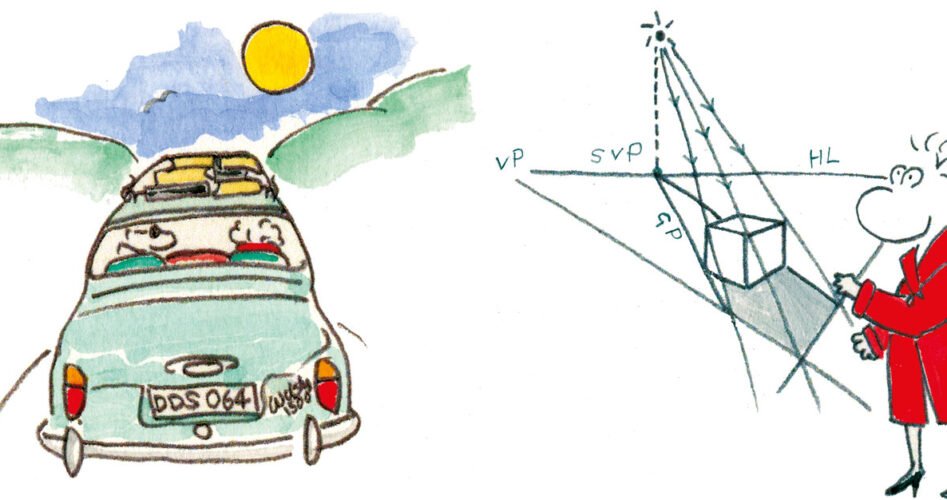
And what about us? We’ve learnt about perspective and the basics of figure drawing. (But no nudes, in case you were wondering!) We’ve tried pencil sketches and watercolour landscapes, a trio of gorgeous figs in oil pastels. Assorted subjects in acrylics: David said my ‘abstract lemons’ looked like casserole dishes. I thought his looked like a cross between bulldog clips and high-viz helmets. A pair of shoes proved unexpectedly tricky as a subject. Our tutor described mine as “caricaturistic”, which I took to be her kindly way of saying “decidedly odd”. I realised when applying my final brushstroke that both shoes were for a right foot. We’ll never be hanging in the Tate Gallery. But we have been surprised by the pleasure of the experiment and even some modest sense of achievement. Next time we pack for a holiday, sketchbooks may well be included. Certainly, we have made a small step forward in appreciating more about the skill of the great artists. And the kids have had fun posting their comments on WhatsApp. One of the most challenging classes was dedicated to painting objects made of glass. “Could you tell which of us painted which?” David asked his daughter. “Of course,” she said. “DD painted one wine bottle and two glasses. You painted two wine bottles and one glass.”
To contact DD with your thoughts or feedback, email dd@swvg.co.uk
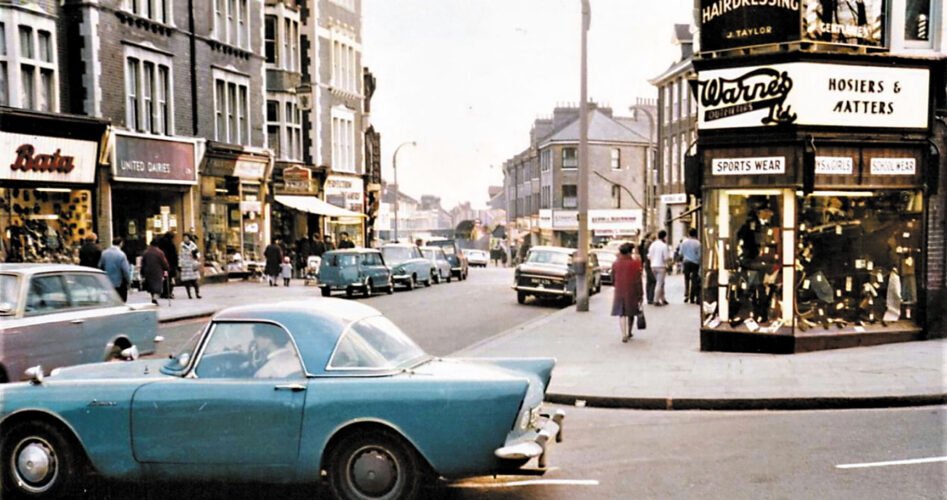 George Lane, 1957
Recently, I’ve been looking at my collection of old photographs of Woodford and Wanstead. I have lived in South Woodford for most of my life, as did my parents and grandparents before me. During lockdown, I set up a Facebook group called Woodford, South Woodford and Wanstead Memories and Life to share these images, which I have enhanced to bring a new level of realism.
In the digital age, our ability to interact with and enhance photographs using artificial intelligence (AI) has reached unprecedented levels. One fascinating technique that has gained popularity in recent years is palette recolouring – a process that breathes new life into old photos. By applying modern colour schemes to vintage images, we revive memories, making them more vibrant and relatable to contemporary audiences.
Palette recolouring involves selecting a new colour palette for an image while preserving its original structure and details. This technique is not about altering the content of a photo but rather reimagining it through a fresh set of colours. It can be applied to black-and-white photos, sepia-toned images or faded colour pictures, effectively transporting them to a different era or infusing them with a contemporary aesthetic.

One of the key challenges in palette recolouring is maintaining the authenticity and emotional resonance of the original photograph. Artists and enthusiasts must strike a delicate balance between introducing new colours and preserving the historical or sentimental value of the image. Careful consideration of the subject matter, historical context and cultural nuances is essential to ensure the recolouring enhances rather than detracts from the photo’s significance.
Palette recolouring offers an opportunity to bridge the gap between the past and present. By infusing old photos with contemporary colour schemes, we can engage with historical moments more personally, such as seeing photos of the local area from 100 years ago in colour for the first time.
Recolouring vintage images allows us to gain a renewed appreciation for the past, fostering a stronger connection between generations. It is a means of ensuring the stories encapsulated in old photographs continue to resonate with those who come after us.
We still have some way to go before, as in the film Bladerunner, we can actually go inside the photograph and explore, but I’m sure we will be heading that way. I imagine one day, we’ll be able to combine multiple images and maps to create an explorable 3D area of the past. Using AI technology, we can already build missing parts of a picture, upscale the resolution and, of course, recolour them. Software is improving all the time, taking images to new levels of realism.
To join the Woodford, South Woodford and Wanstead Memories and Life Facebook Group, visit swvg.co.uk/wml

“Everyone loved the last quiz night – so book now for our next event. You can book a whole table of eight to fill with your friends and family, or you can book individually or for a few of you, when you can either choose to go it alone or we can make up tables on the evening. Please bring your own refreshments – and there’ll be a raffle on the night. ” said a spokesperson.
The event will take place at the Wynndale Hall, Woodbridge High School, IG8 7DQ (6.30pm for 7pm).
Tickets: £8 per person (payable on the door).
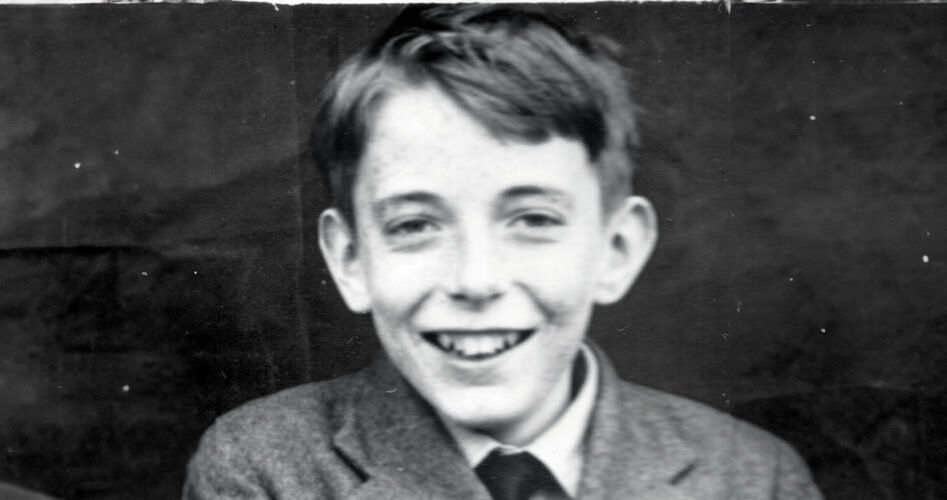
I started at Churchfields County Infant School in 1949. I didn’t like school from day one. As my birthday was in December, I started school in the January term. I was shown into my class, which consisted of children who had started together the previous September and had formed friendships and did not take kindly to a stranger being thrust into their midst.
Having been brought up virtually as an only child, I had no wish to meet other children and would prefer to be back home with my mother. By the time morning playtime came around, I had had enough of the whole thing and set off to go home, hotly pursued by the teacher on playground duties, who pulled me back, much against my will.
The school day was broken up by playtimes, lunchtime and the morning milk round. Schoolchildren were each allocated one-third of a pint of milk each day. Older children were given milk monitor duties, which involved collecting the crates of milk and delivering them to classrooms, then later collecting the empties. I enjoyed this job; it got me away from my classmates and out of the classroom. Children often played with their milk bottles, spilling milk over the desks and floor, giving classrooms a strong smell of stale milk. This put me off drinking milk for life.
At the end of the three years we could read, write and recite our times tables up to 12. On the last day, the top-year classes were marched into the playground and divided into four groups. We didn’t know it at the time, but we were being streamed into ability classes for the junior school next door. Much criticism is levelled today about streaming children by ability at 11 years old, but here we were, at seven, going through this process, purely on our teacher’s judgement and without any tests or exams. I went into the top class.
I entered Churchfields County Junior School in September 1951. My first-year teacher was Miss Pettit, with Mr Walford as headmaster. We were taught in classes of 60, with several classes to each year. If you needed to use the toilet, I recall the teacher would issue a regulation four sheets of toilet paper. Everything was still in short supply, after all.
My last winter at Churchfields was marked by heavy snowfall. One afternoon, the whole school was led out into the field, divided into two and told to attack in a snowball fight! When the time came to leave, I had mixed feelings. I realised the standard of education had been very good, and I had enjoyed good relations with all the teachers, and latterly made friends. However, I still regarded school as a necessary evil. Sadly, I didn’t keep in touch with any of my friends, and it wasn’t until many years later, through the medium of Friends Reunited, that I was able to contact some of them again.
For more information on Churchfields Infants’ School and Churchfields Junior School, visit swvg.co.uk/churchfields


