
Editor

Editor

News

Supermarket and flats proposed for restaurant site on Hermon Hill

WVD-JUN-2026-arkDesign proposal

Plans have been submitted to redevelop the site of the Ark Fish Restaurant on Hermon Hill.

If approved, the current two-storey building will be extended to accommodate a supermarket on the ground floor. A third floor will also be added, with nine self-contained flats on the upper levels. A decision on the proposals is expected in June.

The restaurant first opened in September 2003 and went on to serve the local community for more than two decades before closing for good at the end of May.

Visit wnstd.com/arkplans
News

Volunteers tackle invasive Himalayan Balsam along the River Roding

WVD-JUN-2026-rr

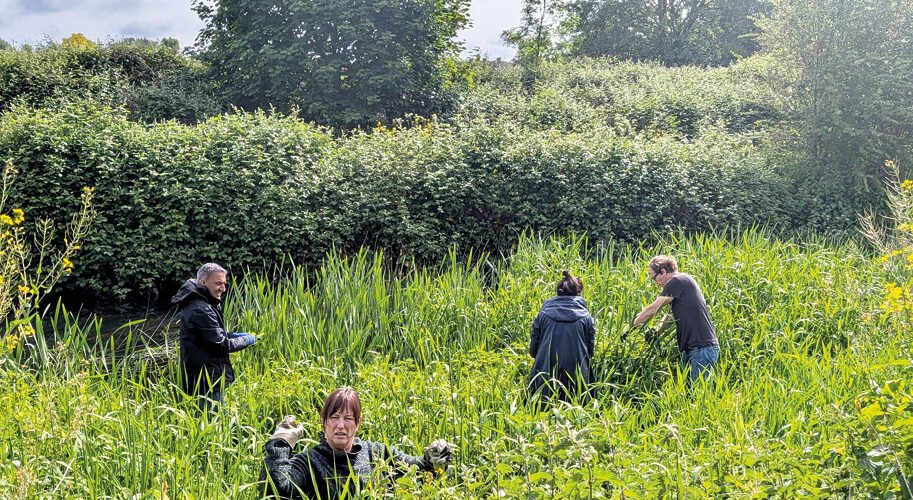
Local volunteers have begun the annual task of removing Himalayan Balsam from the banks of the River Roding.

“It’s an invasive species that spreads rapidly, and with its lethal combination of a large leaf canopy and small roots, it quickly outcompetes native species whilst also weakening the river bank. The seeds pop and spray far and wide, so we need to extract as much as we can right now before it begins to flower. Get in touch if you’d like to help,” said Derek Seume from Friends of the River Roding.

Visit wnstd.com/fotrr

News

Volunteers help clear rubbish from Eagle Pond in community clean-up

WVD-JUN-2026-ep©Geoff Wilkinson

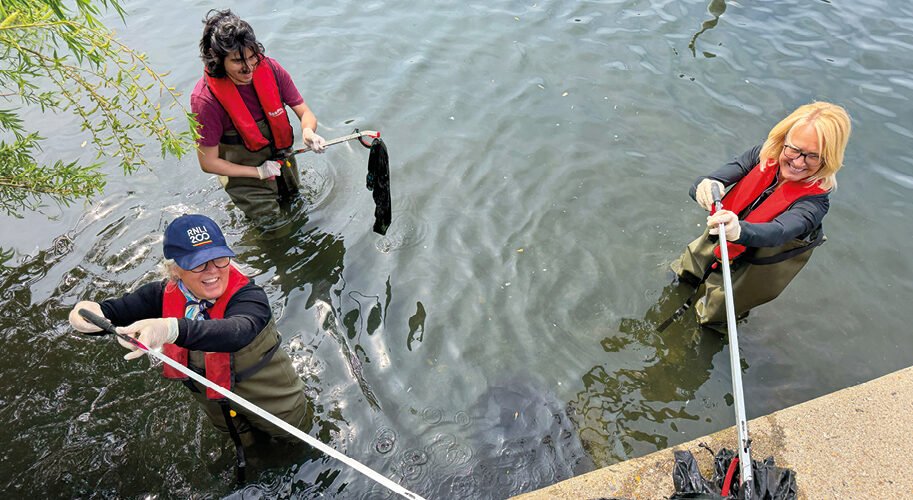
Volunteers assisted the City of London Corporation in clearing 20 bags of rubbish from Snaresbrook’s Eagle Pond earlier this month.

“This community litter pick in the pond and the surrounding forest land was eye-opening and a reminder of how much litter still exists. It was a really rewarding day. The volume of rubbish we collected shows how much of a positive environmental impact initiatives like this can have, helping preserve our precious environments for communities and wildlife alike,” said local resident Katriye Ibrahim.

Features

Stories In Stone

SWVG-MAY-JUN-2026-wm©Geoff Wilkinson

Ahead of a talk about war memorials in June, Richard Speller, vice-chair of the Woodford and District Centre of the National Trust, offers an introduction to these important symbols of our shared heritage. Photo by Geoff Wilkinson

My interest in war memorials is not a morbid one, that is a fascination with death, nor is it a glorification of war. However, whatever we may think of our country currently, we are probably better off having been on the winning side in the two great wars in the 20th century, and thus, I believe that we owe a debt to those who lost their lives contributing to these victories.

Probably more importantly to me is that they are very much part of our nation’s heritage. Not unlike our parish churches or country houses. Clearly, they are younger, but nevertheless, the vast majority are now over 100 years old. The Imperial War Museum believes there are over 100,000 war memorials across the UK and Eire, but probably less than half of those are listed. Memorials can be checked on their register, and any that are missing can be added if the details are known.

Probably the best-known war memorial is the Cenotaph in Whitehall, where every year the Remembrance Service is held on the Sunday closest to ‘the 11th hour of the 11th day of the 11th month’ when the Armistice was signed in 1918. Interestingly, the Cenotaph, designed by Sir Edwin Lutyens (1869–1944), was first meant to be a temporary structure made of wood. But such was its magnetism with tens of thousands of people visiting that it was converted to stone and made permanent. I should also say it was some years before I learnt that the word Cenotaph is Greek for ‘empty tomb’. Another well-known war memorial is ‘the tomb to the unknown warrior’ in Westminster Abbey. The burial place of a soldier of the Great War “unknown by name, rank or number, laid to rest amongst the monarchs of this country.” So sacred is the tomb that not even the reigning sovereign may walk over it.

Another other important memorial to me is the statue of Nurse Edith Cavell at the top of St Martins Lane near Trafalgar Square, cruelly murdered (not executed as claimed) by the Germans in Brussels in 1915, simply for aiding allied soldiers to escape. However, it was not until the mid-19th century that war memorials, as we know them today, first appeared. These were those honouring the dead of the Crimean War, followed by the Boer War, not a conflict to be proud of! It is, of course, after the First World War (1914–18) that the vast majority of memorials were established. As such a large number perished in that war – probably every family in the land would have lost someone – communities across the country came together and contributed to the establishment of memorials to commemorate lost local fathers, sons and brothers.

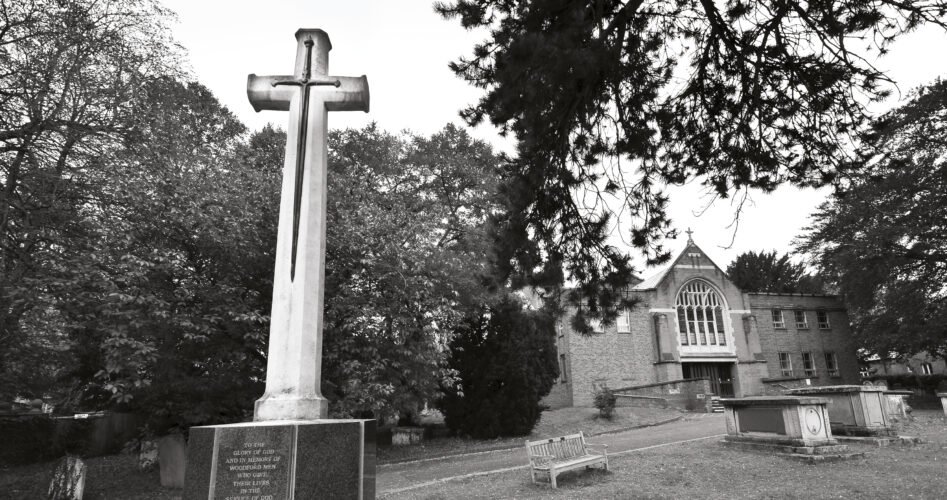
A typical example is the Woodford War Memorial (pictured here) in the churchyard of St Mary’s Church, South Woodford, a Cross of Sacrifice, unveiled in 1920 to commemorate the loss of 73 local men. It stands five metres tall and is made of stone. For a relatively small community, the fact that Sir Reginald Blomfield (1856–1942) designed the memorial here was a real coup. Sir Reginald Blomfield, along with Sir Edwin Lutyens, were the two great World War One architects of so many memorials at home and abroad.

I do believe these memorials should be cherished for future generations, and perhaps an appropriate ending should be the famous and oft-used sayings: ‘Lest we forget’ and ‘Their name liveth for evermore’.


The Woodford War Memorial is located in the churchyard of St Mary’s Church, 207 High Road, South Woodford, E18 2PA. It features the following inscriptions:

To the glory of God and in the memory of Woodford men who gave their lives in the service of God, King and country 1914-1919.

And in memory of those men and women who laid down their lives in the 1939–1945 war, we will remember them.

Greater love hath no man than this that a man lay down his life for his friends.


Richard’s talk will take place at All Saints’ Church hall in Woodford Wells on 10 June from 2.30pm (visitors: £3). For more information, call 07774 164 407

More information

Census statistics for the area served by the South Woodford Village Gazette

SWVG-covers2020-wide

Figures from the 2021 Census provide a snapshot of the community served by the South Woodford Village Gazette.

The statistics reveal a vibrant, well-connected neighbourhood with a strong mix of families, professionals and long-term residents. The data highlights everything from household sizes and employment levels to education, health and travel habits, offering an insightful picture of the people and lifestyles that shape the local area.


Features

Photo and story

WVD-MAY-2026p1

In the fourth of a series of articles featuring images by Woodford and Wanstead Photographic Society members, Anuraj Theivendram looks at David Tyrrell’s award-winning work

Within the vibrant community of the Woodford & Wanstead Photographic Society (WWPS), few photographers embody quiet excellence quite like David Tyrrell. Long admired for his thoughtful compositions and calm, observant style, David has recently enjoyed a remarkable run of success, winning the club’s 2026 landscape and wildlife competitions. These achievements highlight not only his technical skill but also his instinct for capturing moments that feel both intimate and expansive.

David’s landscapes are shaped by atmosphere and emotion. Whether it’s mist drifting across rolling hills or the rhythmic symmetry of a lavender field at sunset, his images invite viewers into scenes that feel contemplative and immersive. His winning landscape entry exemplified this sensitivity, balancing light, structure and serenity with effortless clarity. His wildlife work carries the same quiet attentiveness. The award‑winning image of two monkeys poised together on a tree trunk, their expressions alert yet unguarded, reveals David’s ability to wait for the moment where behaviour and environment harmonise. Even in close‑up studies, such as his beautifully lit oyster mushrooms, he finds sculptural elegance in the natural world, elevating small details into striking visual stories.

Last year also saw David expand into astrophotography with a breathtaking Milky Way composition. Set above a ridge of silhouetted observatory domes, the night sky arcs across the frame in a luminous sweep of stars and cosmic dust. It’s an image that blends scientific curiosity with artistic vision, demonstrating David’s willingness to explore new techniques and push his creative boundaries.

As a long‑standing member of WWPS, David is deeply woven into the society’s culture of learning and shared growth. He values the constructive critique of competition nights and the camaraderie of club outings, where ideas, techniques and inspiration flow freely. His generosity to newer members reflects his belief that photography thrives when knowledge is shared.

Through his work and his presence within the society, David Tyrrell exemplifies the spirit of WWPS: a community where passion meets perspective, and where photography produces not just an image, but an invitation to feel.


For more information on the Woodford and Wanstead Photographic Society, visit swvg.co.uk/wwps

Local Elections 2026News

South Woodford elects Labour and Green councillors

WVD-JUN-2026-sw

South Woodford ward is now represented by councillors from two political parties following last week’s local elections.

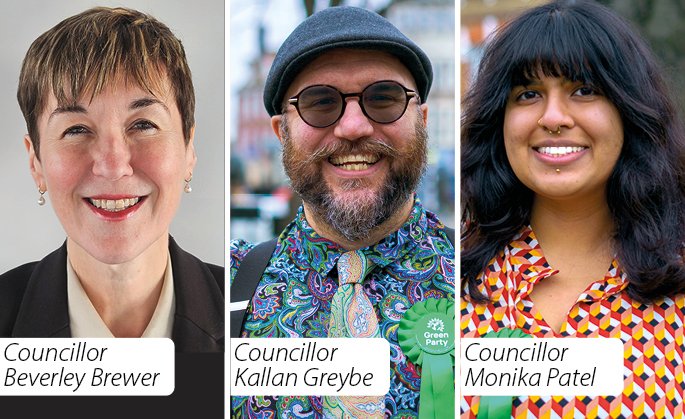
Beverley Brewer was re-lected as a Labour councillor, receiving 1,464 votes. She is joined by Kallan Greybe and Monika Patel from the Green Party, who won 1,299 and 1,309 votes respectively.

South Woodford recorded one of the highest voter turnouts in the borough, with 49.67% of the electorate taking part. The average turnout across Redbridge was 42%.

Local Elections 2026News

Churchfields re-elects Labour councillors

WVD-JUN-2026-ch

Churchfields ward continues to be represented by three Labour councillors following last week’s local elections.

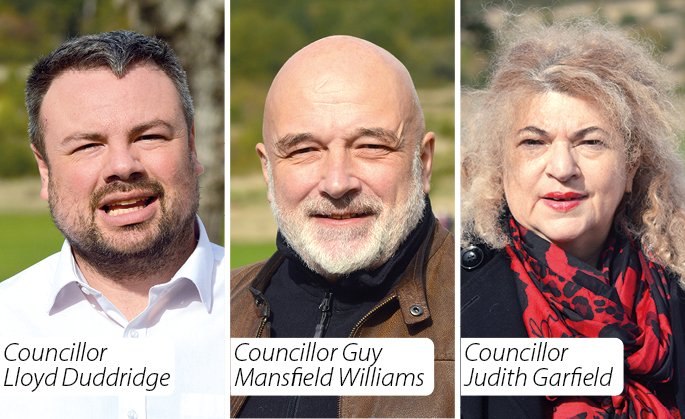
Lloyd Duddridge and Guy Mansfield Williams both held onto their seats, receiving 1,808 and 1,597 votes respectively. They are joined by former Barkingside councillor Judith Garfield, who won 1,664 votes.

Overall, Labour held control of Redbridge Council, winning 43 seats out of 63. The Conservatives and Greens both won five seats, independents won nine seats, and Reform UK won one seat.

Features

Laws for all

WVD-MAY-2026-law

As social media use grows, media law is no longer just for the rich and famous. It now touches everyday life, says Alex Cochrane of local solicitors Edwards Duthie Shamash

Media law is often perceived to be the preserve of the rich and famous, of celebrities, sports stars and royalty. For example, Prince Harry has been involved in high-profile litigation against several English newspaper groups. However, such a perception is misplaced. Media law plays a part in all our lives, particularly with the widespread use of social media. The main areas of media law that permeate our daily lives are defamation, privacy and harassment.

Defamation is the communication of a false statement to a third party that causes or is likely to cause serious reputational harm. If you have been the target of false allegations on Facebook, Instagram or X (formerly Twitter), for example, or if your business has suffered similar treatment, for instance, in online reviews, you may be able to use defamation laws to protect yourself. If the statement published is false, it identifies you (you do not need to be identified by name), and it has caused or is likely to cause serious harm to your reputation, then you would have an actionable claim in defamation. Although it may be distressing, it is imperative you do not delete the posts – take screenshots because this will be important evidence for your claim.

Misuse of private information is a legal cause of action that protects an individual’s right to protect their personal information. It covers the unauthorised publication of private information where there is a reasonable expectation of privacy. Examples of private information include medical records, personal photographs and private correspondence. If, for instance, following the breakdown of a relationship, your former partner shares or publishes photographs of you of an intimate nature (which you may have previously exchanged consensually), that would amount to a serious misuse of your private information. This is sometimes referred to as ‘image-based abuse’, or ‘revenge porn’. Such conduct can also give rise to criminal offences.

Harassment is unwanted, unwelcome and uninvited behaviour – which can be verbal, physical or online – that violates a person’s dignity or creates an intimidating, hostile or offensive environment. It involves a pattern of behaviour, or ‘course of conduct’, which causes distress, fear or alarm. Common examples of harassment include unwanted communications (such as repeated phone calls or texts), physical conduct (such as unwelcome touching) and abusive messages on social media. If you are the victim of repeated and unwanted abuse which is causing you fear or distress, you may be able to use harassment laws to protect yourself. Harassment can give rise to civil claims, and if it is of a serious nature, can also amount to a criminal offence.


Edwards Duthie Shamash is located at 149 High Street, Wanstead, E11 2RL. For more information, call 020 8514 9000 or visit edwardsduthieshamash.co.uk

Features

First great love

SWVG-MAY-JUN-2026-tr

South Woodford resident Lakshman Pathak recalls how the Class 315 train from First Great Eastern sparked his love of railways and led to a restoration project in time for the train’s 45th birthday

The Elizabeth Line is London’s brand new railway, but before it opened, the commuter lines from East London and Essex into London Liverpool Street once looked very different. They were run with a different kind of train, known as Class 315, dating from 1981. Class 315 trains formed the basis of my childhood during the early-to-mid 2000s. On many occasions, my mum would take me and my brother on the Central Line from South Woodford to Stratford before connecting with one of those trains to take me to my grandparents’ house in Romford.

During this time, the services from Liverpool Street to Stratford, Ilford, Romford and Shenfield ran under First Great Eastern, a privatised Train Operating Company that began in 1997. Their trains, including the Class 315s, sported eye-catching livery of blue, green and grey curves. This, combined with the noise, character and even smell of the trains, is what formed my enthusiasm for transport, and without doubt, my current job on the railway.

I attended Oakdale Junior School during this time, and I was never one for following the latest trends with my classmates. But train journeys filled me with joy, and in my spare time, I used to draw the Class 315 trains in First Great Eastern livery on whatever piece of paper was available.

In 2025, after initially joining a movement to save a Class 315 from the scrapyard a few years prior, I decided to take a big step up and lead the direction of the train’s new life in preservation (owing to the legacy group suffering from financial difficulties caused by internal foul play). Merging with a friend’s similar preservation group, we co-founded a non-profit organisation called the Alternating Current Multiple Unit Society, focused on the Class 315 and other similar trains.

And so, Project Yellow Submarine was launched, in good time for the train’s 45th birthday. Named after the Beatles’ song (because the end of the train’s cab is yellow and the interior was soaking wet from leaks), this project formed the biggest rolling series of undercover roof and bodywork repairs to the train since it entered preservation. A fundraiser brought in over £1,500 in just three days. The main work on the leading vehicle was carried out over 10 days in January 2026 at the Llanelli and Mynydd Mawr Railway in Wales. Not only was our primary objective met, a secret secondary ambition was met too: one side was repainted in First Great Eastern livery, just like I used to draw 20 years ago. It feels good to come full circle, having started as a child who just liked trains to owning the sole-surviving Class 315 and painting the vehicle exactly how I remember it. But by no means was this a solo endeavour. I want to thank everyone who helped get this preservation effort back on track.


For more information on Project Yellow Submarine, visit acmusociety.com

Features

DD’s 77th Woodford Diary

DDclarkespaintcropmayjune

Some South Woodford scribbles from DD, our resident diarist and observer of all things local. Illustrated by Evelyn Rowland

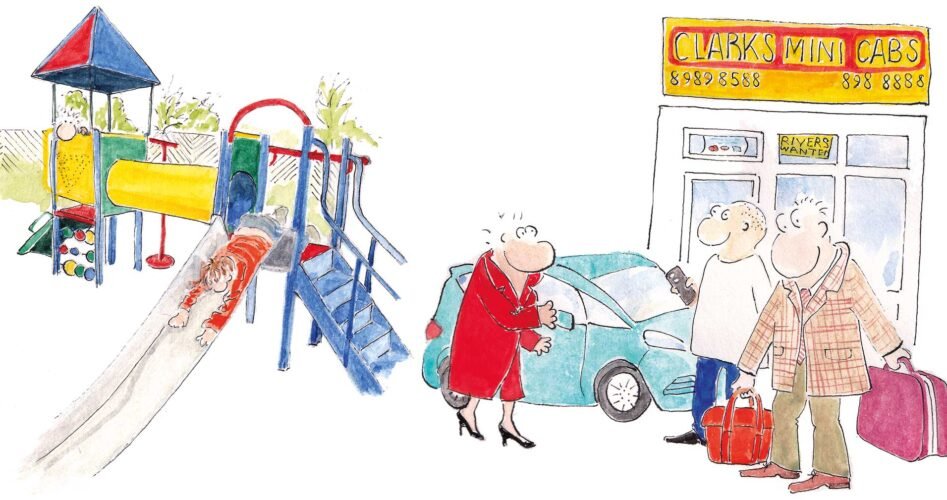
We came back recently from Scotland: glorious Glasgow, teeming with life, then Peebles, in The Borders, with strolls along the banks of the Tweed. Such varied and wonderful scenery. Back home to South Woodford. Clarks on hand to give us a lift home with our heavy suitcases. Key in the door. Kettle on. Home sweet home. One of our neighbours, Rajesh, was just going out, but stopped to chat. “That’s exactly how we felt when we arrived back from India last week. What is it about South Woodford? It’s such a wonderfully friendly neighbourhood. We arrived here in 1987, and we’ve moved house twice, but never considered leaving the area. I am a member of the South Woodford Business Network. A community in itself, really. The fact that most of the small shops are owned and run by local people adds to that feeling of togetherness.”

Another neighbour, Gillian, admitted: “I never walk down the road without at least one stop to catch up on news of friends. I grew up in mid-Wales. Five miles from the nearest shop. Now, there are plenty, almost on my doorstep.” Later on, I met Linda in the queue at Nationwide. “Oh, it’s the sense of community,” she said. “On warm days, it’s lovely to sit in the Shrubbery gardens and watch the world go by, or I can nip off on the 123 to visit the William Morris Gallery in Walthamstow or take the Central Line to Stratford for the big chain stores. All so convenient. And what about Nationwide? NatWest, Barclays and HSBC have seen fit to abandon us. I really appreciate the personal service here.”

Tom said he’d give the matter some serious thought: “I’ve lived here for 80 years, in the same house with its own quirks: the squeaky floorboard on the landing, the roses smiling at me through the kitchen window. The road layout is familiar, the parade of shops. Some still have the same purpose: the two chemists on George Lane, the dentist in Glebelands, solicitors in the Shrubberies. The familiar smells from the chip shops and wood ovens, the same hum from the A406, the ambulance sirens heading for Whipps Cross. The same walk to the station for my daily commute into town. I was born here. It feels like home because that’s what it is, and my wife and family and friends are there to share it.”

Two delightful, contrasting but complementary encounters came next: Beth was in Boots with her two young daughters. “Oh yes, we’re happy here. We lived nearer London before, but since moving to Derby Road, we have felt a strong sense of belonging. We all chat as neighbours. There’s Diddi Dance for toddlers at the Memorial Hall on Fridays, and a welcome at the Mothers and Children group at St Mary’s. I feel supported as a young mother.” Doreen was relaxing contentedly on a seat outside Sainsbury’s. “Home Sweet Home? Certainly. Look, I’m getting on a bit and my sons say, ‘Why not sell your house, Mum, and buy a bigger one somewhere, and we could all live together?’ But I don’t want to be in the middle of nowhere! I like being independent. Really, I like being alone. In a nutshell, I like to be here! I can still walk quite a distance, but I don’t have to: I am close to the Tube, the buses, the shops, the doctor, the dentist. It suits me fine.”

Bill was happy to list some of the trips to Europe he enjoys: “On holidays abroad, yes, you feel carefree. New sights and sounds, new people. But after a while, you are pleased to come back to certainty. There’s probably a limit to how much change you can absorb. Returning to the security of home is good. The lady at number 43 lets me help myself from her rosemary bush when I’m slow-cooking lamb. The couple three doors up have a wonderful crop of Victoria plums each year and bags appear on my doorstep.” John emerged from the Post Office and joined the conversation: “For me, South Woodford is home to many cherished memories of arriving in 1970 with four small children. Taking them to the footbridge over the Central Line to coax a toot out of the drivers in response to our frantic waves. And doing the same for my grandchildren in due course.”

Further down the lane, I met Litsa and Elena. Litsa is a Greek Cypriot and Elena is from Romania. Both have made their home in South Woodford. They only arrived about four years ago, but “Everyone seems to know everyone,” they say. Both work at Creative Biscuit and love being busy with young families, having fun with paints and pencils and being, exactly as advertised, creative. Joe was walking his dog, but launched into my topic with enthusiasm. “There are lots of open spaces in South Woodford, the Churchfields playground, the Elmhurst park. There are volunteers giving their time and expertise in planting and tending the public gardens. People stop to talk. I have always felt safe here, even in the dark. In Highview Road, we have our own community WhatsApp system. We can get in touch easily. Perhaps someone needs help. Perhaps just wants to ask if, for example, someone could make use of six small terracotta flowerpots.”

We started this in Glasgow. There’s a huge poster there, greeting you as the train slows down, crossing the Clyde into Central Station. “People make Glasgow,” it reads. Proudly. But that’s just as true of South Woodford, isn’t it, and no doubt of North Acton and East Finchley and West Ruislip. I was really angry with my otherwise absolutely favourite Chambers Dictionary, which referred to suburbs as places “narrow in outlook and without the good qualities of either town or country.” Perhaps we shouldn’t brag too loudly, but we can smile smugly about one fact at least: for us, Epping Forest is just as easily accessible as Charing Cross.


To contact DD with your thoughts or feedback, email dd@swvg.co.uk

News

South Woodford’s remote workers invited to join new community group

SWVG-MAY-JUN-2026-rem

A group is being established for people who work from home in South Woodford and the surrounding areas.

“The group is called Remotely and will benefit anyone who would welcome a bit more connection during the working week. Expect coffee meets, lunchtime walks and after-work drinks. The focus will be on friendship and helping people connect,” said group founder Haz Anwar, who works for an AI company based in San Francisco.

Meetups will take place in Wanstead and South Woodford.

Visit swvg.co.uk/remote