
Editor

Editor

Features

A case for law

SWVG-MAR-APR-2026-am

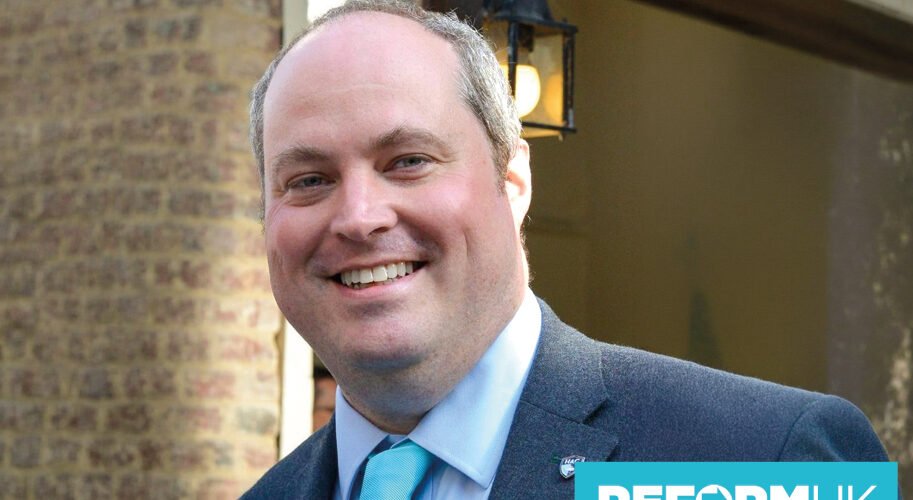
Austin MacDonald – a 17-year-old student from Woodford Green – has launched a campaign calling for the introduction of law as an official GCSE subject in England and Wales

Law shapes almost every aspect of society, and yet young students like me rarely get an opportunity to study it. We can change that, but I need your help!

For the majority of young people in the UK, the opportunity for legal education is available only at university, and by then, it is often too late. Undoubtedly, the introduction of law as a GCSE subject would be a crucial step towards improving legal literacy, widening access to the profession and helping to enhance our collective knowledge, understanding and respect for the laws that govern our society.

Currently, students are leaving school with little to no understanding of their rights and responsibilities. Terms such as contracts, employment rights, criminal liability and the justice system are all abstract concepts and continue to remain entirely unfamiliar to them.

This lack of understanding helps to explain the current ambivalence and disengagement which a GCSE law course would hope to resolve, allowing students to better understand how the law works and, specifically, how it affects their lives.

Most importantly, the provision of a law GCSE would also help to facilitate social mobility. The legal profession is still dominated by individuals from affluent backgrounds who are often introduced to the legal profession from an early age through family ties or independent education. The implementation of a law GCSE would help to fix this, providing structured, accessible exposure to law and allowing students from all backgrounds to make informed decisions about pursuing legal careers, demystifying the profession and challenging the perception that law is only for a select few.

One might argue the study of law is too complex for a GCSE discipline, but I would argue this is a misconception not only of the abilities of students but of the entire point of secondary education. A GCSE law course would not just be about immediately fostering lawyers but would cover core legal concepts, reasoning and critical thinking skills, aptitudes already acknowledged in other subjects like History, English Literature and Politics.

In today’s world, an era of social change, technological advancement and development in rights, legal knowledge is no longer a choice, it is a necessity.

The question is no longer whether our students are able to study law at this level, but whether we can afford to leave them without it.


To view Austin’s petition to introduce law as a GCSE subject, visit swvg.co.uk/law

News

Threads of empowerment: family embroidery workshop

WVD-MAR-2026-emb

An embroidery workshop inspired by women who have sparked change will take place at Wanstead Library as part of Women’s History Month celebrations.

“Learn about influential women and draw inspiration from their words, stories and impact. You’ll be guided through simple embroidery techniques to create your own embroidered hoop featuring empowering quotes or original designs,” said a spokesperson. The family-friendly workshop will take place from 1.30pm on 31 March (£3 per embroidery set)

Visit wnstd.com/threads

Features

Past cards

SWVG-MAR-APR-2026-post

Lynn Haseldine Jones will be presenting local postcards of the past at the April meeting of the Woodford Historical Society

The golden heyday of the postcard was the period from about 1902 to 1920. People used the postcard as the email of the day. In many places, there were four collections from every pillar box and four deliveries to every home every day, Monday to Saturday (and even one on Sunday), so it was possible to send a message quickly, costing just a halfpenny!

There soon developed the idea of collecting postcards, of places, people, cats, steam engines, in fact, just about anything. But the most useful for today’s historian is the topographical postcard, with images of towns and villages, houses and features, many of which have changed so much, or disappeared, in the intervening period. Here are some views of Woodford from my own collection:

  1. George Lane showing the premises of the fishmonger Gildersleeve, tea rooms, the tower of Warne’s outfitters in the distance and horse-drawn delivery vehicles.
  2. Woodford High Road around 1905. Note the neat row of trees in front of the shops. Weatherboarded Fuller’s Corner has now become Tesco Corner.
  3. The top of George Lane, postmarked 1905. The policeman on point duty is looking down Woodford Road towards Snaresbrook. On the right is the corner of The George public house.
  4. Elegant Edwardian ladies strolling down ‘The Avenue’ of trees, long before the Churchill statue was erected.
  5. Woodford Bridge looking very rural.

The golden age gradually came to an end when postage went up to a penny, when people began to acquire their own cameras and telephones made leaving messages even easier. I shall be telling the story of the development of the postcard and showing more views of Woodford, Woodford Bridge, Woodford Green and South Woodford from my collection at the April meeting of the Woodford Historical Society.


Lynn’s talk will take place at All Saints Church, Woodford Green on 9 April from 2.30pm (visitors: £5). For more information, visit swvg.co.uk/history

News

Redbridge domestic abuse service seeks essential donations

WVD-MAR-2026-reach

Redbridge Council’s domestic abuse service Reach Out is seeking donations of toiletries.

“We support residents in South Woodford and across Redbridge. As well as emotional support, we also provide practical assistance through the Reach Out shop, offering free items for those in crisis. Community donations are vital to keeping the shop stocked. We welcome adult items, including toothpaste, deodorant and sanitary towels, as well as nappies and other baby essentials,” said a spokesperson.

Visit swvg.co.uk/reachout

Features

A reel rescue

SWVG-MAR-APR-2026-video

When local resident Paul Hollins started digitising his family’s video tapes just over a year ago, he didn’t realise it would turn into a business with a mission to help local residents protect fragile memories

If there’s one thing many of us have learned over the last few years, it’s that the small, everyday moments often become the most precious. A wobbly camcorder clip of Christmas morning. A family holiday filmed on VHS. A wedding video tucked away in a drawer. These recordings aren’t just old tapes. They’re living snapshots of who we were, and they’re worth protecting so they can be enjoyed by future generations.

The challenge is that the media we relied on in the 1980s, 1990s and early 2000s wasn’t built to last this long. Magnetic tapes slowly degrade over time. The binder that holds the magnetic layer can break down, tapes can stretch or stick, and if they’ve been stored in lofts, garages or damp cupboards, mould can become a real issue. Many people are surprised to learn the expected lifespan of tape was often quoted as around 10 years in ideal conditions. Now, we’re regularly dealing with tapes that are 30 to 40 years old. In some cases, a tape might play once and then fail, which is why acting sooner rather than later matters.

DVDs can also be vulnerable. Disc rot is a gradual deterioration of the disc’s layers, sometimes due to manufacturing issues, but also accelerated by heat, humidity or tiny cracks. It can show up as freezing, pixelation, missing sections or a disc that won’t read at all. If a DVD holds the only copy of an important family event, that’s a risk most of us would rather not take.

There’s another practical reality, too. Working machines are getting harder to find, and the era of widespread servicing and repair has largely faded. Even if you still have a player, it may not be running at its best. Many households simply don’t have the equipment anymore.

That combination of emotional value and technical fragility is exactly why I set up Tape Transfer Pro here in the local area. It began when my brother and I discovered some tapes belonging to our late mother. We were close to throwing them away, but curiosity won. Hearing her voice again was a proper stop-you-in-your-tracks moment. I started digitising my own family archive, then neighbours and friends in Wanstead, South Woodford and nearby areas asked if I could help with theirs.

The goal is simple: remove the stress from the process. People shouldn’t have to post irreplaceable tapes across the country and hope for the best, or hand them to a high street counter without knowing who will handle them or when they’ll be returned. Keeping transfers local, handled carefully and personally, makes a real difference. Because in the end, this isn’t really about formats. It’s about protecting memories now, so your kids and grandkids can press play later and feel like they were right there with you.


For more information on digitising old video tapes, visit tapetransferpro.com

Features

Stream team

WVD-MAR-2026-roding

The Friends of the River Roding’s Wanstead and Woodford local group are on a mission to restore the river and its tributaries, one bag of rubbish and one forgotten stream at a time. Derek Seume reports

In late winter and early spring, river guardians such as the Friends of the River Roding can really get stuck into clearing up our blue spaces. Over the last few weeks, we have been hard at work, taking advantage of the seasonally reduced undergrowth before the nesting season begins.

In the Woodford and Wanstead area, we have been litter picking like never before, in particular, targeting the area around Charlie Brown’s Roundabout, which suffers from rubbish being thrown out of car windows from the flyovers overhead. This either gradually degrades the soil or blows around until it finally makes its way into the Roding, down to the Thames and ultimately out into our oceans. Our lovely little corner of the world here in northeast London is but a tiny part of a far wider ecology.

In our first four litter-picking sessions of 2026, we extracted some 114 bags of rubbish, but we are literally only scraping the surface. It will take several more sessions to clear the area even superficially, but sadly, the reality is there are no doubt several further layers of rubbish beneath the soil in places. Realistically, we can’t get to all of that – and indeed we must tread carefully so as not to disturb the species that have made their homes among our mess – but at the very least, we are striving to improve the aesthetics of the local area. If the eyesore is allowed to fester, so too does the impression that it’s acceptable to treat our green and blue spaces as one big rubbish dump. Litter begets litter.

Further south, between the river and Roding Lane South, we recently discovered a forgotten stream, hidden deep within woodland. Its source is unknown (we presume there is a spring somewhere that has been covered by a road or housing), but it meanders a short way through the woods towards the main river itself.

Our volunteers cleared the choked stream of rubbish and silt, dug a couple of pools to improve its flow dynamics and cut back brambles and ivy to allow more light into the water. Once we were satisfied we had brought the tributary back to life, we continued picking up litter around its vicinity, finishing the day with another 80 bags of rubbish. The stream – which we’ve unimaginatively named Redbridge Stream for want of an official title – already looks much healthier, but we will revisit it over the coming months and years to see how it develops and supports native species to thrive.

If you feel inspired to get involved and help us in our mission to restore the River Roding and its tributaries, please get in touch for information on future volunteer days and other ways you can contribute.


For more information on the Friends of the River Roding, visit swvg.co.uk/fotrr or email river.roding@gmail.com

News

Eagle Lane subway gets deep clean from new rapid response team

WVD-MAR-2026-subway

The Eagle Lane subway was cleaned up in February by Redbridge Council’s new Rapid Response Clean Team.

The new service uses a specially equipped vehicle. “The vehicle is designed to handle a wide range of issues, thanks to being kitted with a range of equipment, including brooms, cleansing apparatus and jet wash capability,” said a spokesperson.

The subway – which runs under the Central Line – will receive a weekly cleaning visit. Street cleansing issues can be reported online.

Visit swvg.co.uk/reportit

Features

Dear Sadiq…

Screenshot 2025-08-29 at 15.40.09

Local resident and journalist Donna Mizzi writes an open letter to Sir Sadiq Khan, the Mayor of London and chairman of TfL, on behalf of W14 bus users

Dear Sir Sadiq Khan,

You have recently answered a London Assembly member’s question on the hourly W14 buses by stating the number of users is not high enough to justify a more frequent service. Local residents want to make it clear that it is TfL’s bus reorganisation that has directly reduced its usability. It is too infrequent, ridiculously unreliable and no longer goes where passengers need to reach, even terminating short of Whipps Cross Hospital.

From the date the new W14 bus was imposed in 2024, passenger figures plunged dramatically from about 1,800 to 300 a day. No one knew when the reduced hourly bus was due or where it would actually stop. And it still continues to be much of a mystery bus today. It’s usually late, sometimes early and frequently doesn’t arrive at all.

Yet the W14 is the sole bus service and only public transport accessible for hundreds of Wanstead and South Woodford households on the huge Nightingale Estate, and for further hundreds of flats and 60 retirement units by Snaresbrook Road. Most of those homes are beyond acceptable walking distances to essential services or other transport, particularly for the elderly, disabled or mums with young children. For those reasons, a bus service has run there for 36 years.

Elderly and disabled people cannot stand out in the freezing cold or in other extreme weather waiting for a bus which may or may not arrive. Residents, including the elderly, have frequently become ‘stranded’ when trying to get back home, waiting up to three hours for the next W14 to arrive. TfL has said for 17 months it has been working on W14’s reliability, but as you admit, it has still not met the minimum standard required.

When presented with TfL’s own W14 figures, you have stated: “none of the current routes are directly comparable with the old route numbers prior to the changes.” You say there are too many empty seats at present, exaggerated by TfL imposing unwanted oversized buses down these narrow residential roads. Meanwhile, hordes of children no longer contribute to daily passenger numbers because the W14 service does not coincide with school times. Pupils are also badly affected.

Here are other startling figures. An Equality Impact Assessment reveals the W14 route contains the highest percentage of elderly (41%) and disabled people (5%) using it out of all the local W-bus services. Therefore, TfL has hit the most vulnerable residents. The harmful impact has been massive, including despair, social isolation, inability to get to vital health appointments or even visit a pharmacy or food shops. Residents who cannot afford to keep the heating on are unable to reach a warm space. Carers and relatives also have more trouble reaching those who need support. These vulnerable groups are also less likely to have smartphones or computers, though the W14 service updates often don’t appear, anyway.

TfL’s positive spins on the overall W-bus services do not reveal the full picture. For instance, the W12 now covers more miles but also contributes to traffic jams in ultra-congested Leytonstone, so it often takes frail passengers 50 minutes to travel from Snaresbrook to Whipps Cross Hospital when their journey previously took 10 minutes.

W-bus problems have been dire enough to create an ITN News report, an MP’s petition presented to Parliament, demonstrations, public meetings, a 5,400-signature petition and direct questions to you in the London Assembly. Meanwhile, families have gone back to using cars or even struggle to buy a vehicle or order taxis. Or they avoid going out. Parents interrupt their work to run their children to school, clocking up double the road miles that taking a W14 would entail. Commuters’ travel time is extended. Individuals fear walking long distances along dark, quiet roads back to their homes. Others struggle with heavy groceries. Such bad services are not good for individuals, families, the health service nor the economy.

One of your main aims, you say, is to persuade Londoners to give up driving and use public transport. If so, increasing the W14’s frequency would be a priority.

Apart from the needs for greater frequency and a stop within Whipps Cross Hospital’s grounds (backed by its management), the other main W14 issues are:

The southbound W14 has been amended to stop near Wanstead Tube station. Passengers with mobility problems also need to get back from there; the present baffling W14 northbound stop is a third of a mile away.

The new W14 no longer stops by George Lane’s main shopping area and big supermarkets, making even weekly food shopping difficult. Changing buses with a heavy shopping trolley is not a sensible TfL suggestion.

TfL has failed to grasp the situation for 18 months. Local residents would love to hear some encouraging news from you as soon as possible.

Yours sincerely,
Donna Mizzi
(reply to editor@swvg.co.uk)


Written questions were submitted by the Deputy Chair of the London Assembly Transport Committee, Caroline Russell, who called a public meeting on the local bus problems last June. She has agreed to deliver this letter to Sadiq Khan.

To view the original written questions and answers between Caroline Russell and Sadiq Khan, visit swvg.co.uk/busqa

Features

Guided by design

SWVG-MAR-APR-2026-dog

The Guide Dogs’ recently refurbished centre in Redbridge has enjoyed architectural award recognition. Local volunteer coordinator Phoebe Coles reports on a building that champions sustainability

The Guide Dogs South East Regional Centre in Redbridge is celebrating an exciting achievement this year, having been shortlisted for the RIBAJ MacEwen Award 2026, a national recognition that celebrates architecture designed for the common good. The award highlights buildings that deliver meaningful social benefit, and the Redbridge site has stood out for its thoughtful design, commitment to accessibility and inclusivity and its focus on improving the lives of people with sight loss and the dogs who support them.

Designed by Kay Elliott Architects, the Redbridge centre is located in Woodford Bridge and is Guide Dogs’ first net‑zero building, demonstrating the charity’s strong commitment to sustainability and responsible design. As a working hub, it can accommodate up to 75 dogs, offering state‑of‑the‑art facilities that prioritise dog welfare, support high‑quality training and meet the needs of both staff and volunteers. Nestled within a greenbelt landscape, the site also enhances local biodiversity by increasing plant and tree varieties – an important feature valued by the award panel.

This modern centre is vital to the charity’s work in the region. The South East Regional Centre trains nearly 250 guide dogs every year and supports over 600 volunteer puppy raisers, making it a cornerstone of services across Essex and neighbouring counties. Its indoor and outdoor training areas, community spaces and flexible facilities enable teams to deliver essential skills, information and support services to people with sight loss.

Being recognised on the MacEwen Award shortlist reflects not only the building’s architectural merit but also the profound social impact Guide Dogs continues to have in our community.

With the centre growing in activity and impact, Guide Dogs is calling on local residents to consider becoming a volunteer fosterer. Fosterers provide temporary homes for dogs in training, offering love, stability and day‑to‑day care, while the dogs learn essential skills that will one day support a person with sight loss. It’s a rewarding role that directly contributes to the life‑changing work happening at Redbridge. Information on how to get involved can be found through Guide Dogs’ website, where opportunities such as fostering, puppy raising and other roles are regularly updated.

As Guide Dogs in Redbridge gains national recognition, there’s never been a better moment for local residents to support this incredible charity. By volunteering, you become part of a mission that brings independence, mobility and confidence to people living with sight loss across our region.


For more information on Guide Dogs, volunteer fostering and other ways to help, visit swvg.co.uk/gdvolunteer

News

Health network aims to improve care across South Woodford

SWVG-MAR-APR-2026-healkt

The inaugural meeting of the South Woodford Health Practitioner Network in January brought together GPs, pharmacists, paramedics and other local health professionals – many meeting face-to-face for the first time.

“The event helped build relationships that will support more joined-up care, with professionals now working more collaboratively rather than in isolation,” said organiser Rena Pathak, who hopes the network will continue to grow and improve patient journeys across South Woodford.

News

Lazy, Kite and Jolly complete seasonal grazing at Wanstead Park

SWVG-MAR-APR-2026-cow©City of London Corporation

Three English Longhorn cows finished their seasonal stay at Wanstead Park in February.

“We are grateful to the Friends of Wanstead Parklands and our cattle volunteers, who helped ensure the wellbeing of Lazy, Kite and Jolly whilst they went about their important business grazing the acid grasslands. Thanks to the cows, the anthills remain open and the dung beetles will continue to thrive, helping to preserve the delicate balance of Wanstead Park’s ecosystem,” said a spokesperson for the City of London Corporation.