Editor

Editor

News

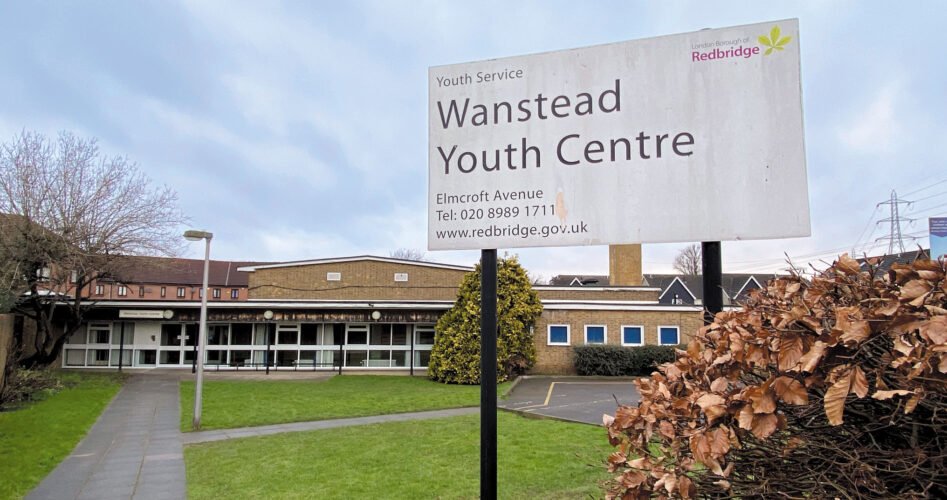
Public meeting at local youth centre as venue’s future remains uncertain

IMG_2493 (1)

Redbridge Council is considering the future of Wanstead Youth Centre, which it claims is in need of over £2.4m of refurbishments.

But campaigners have objected to the style of questioning used in the consultation – which runs until 13 March – and insist the Elmcroft Avenue venue is a vital resource in a good state of repair.

If the closure is progressed, groups that use the centre will need to find alternative premises by May.

An on-site public meeting will take place on 7 March from 7.30pm.

Visit swvg.co.uk/youthcentre

News

Community tree planting to help boost butterfly population

AdobeStock_398545925White-letter hairstreak

Volunteers joined Vision RCL’s nature conservation rangers in February for a community tree planting day in Roding Valley Park, near Charlie Brown’s Roundabout.

“We planted elm trees donated by our partner Butterfly Conservation. These trees will help the white-letter hairstreak butterfly, a species solely reliant on elm trees to complete its life cycle,” said Tajinder Lachhar.

Following the outbreak of Dutch elm disease in the 1970s and 1980s, the UK population of white-letter hairstreak butterflies dropped by 96%.

News

Help tackle climate change in Redbridge

tackle-climate-change-image--carousel

Residents are invited to be part of the Redbridge Climate Forum and help tackle climate change in Redbridge.

Since launching in September 2021, the Redbridge Climate Forum has been a platform for bringing local communities together in the fight against climate change. With 70 members and growing, forum participants exchange ideas and highlight work taking place to support greener living and working in Redbridge.

The next forum meeting will take place on 28 February from 6.30pm to 8.30pm at Redbridge Town Hall. The event will begin with an update on Redbridge’s Climate Change Action Plan from Cabinet Member for Environment and Civic Pride, Councillor Jo Blackman. Special guest Jose Baladron from charity TRAID will also be speaking about the environmental impact of clothing waste and a new partnership project with Redbridge.

“There will also be lots of opportunities for networking, learning and ideas sharing with other active, eco-minded groups and individuals in the borough, as well as finding out more about local green projects and how to get involved,” said a council spokesperson.

The forum is free to attend, and is open to all local people, businesses and community groups. You don’t need to have attended any previous forums to take part.

Click here for more information on the February Climate Forum, and to register your interest in attending.

Features

Art pad

markl

Alongside traditional work, Woodford Green artist Mark Lewis creates images using digital imaging techniques, like this view of Hollow Pond and Leyton Flats, drawn on an iPad

I am a designer-maker, specialising in silversmithing and jewellery, and also a landscape artist. I worked for a major jewellery and silver manufacturer in London before establishing my own workshop in 1981. 

In 1985, I entered full-time teaching, although I continued to maintain a freelance consultancy. Until the summer of 2009, I was a principal lecturer in the Sir John Cass Department of Art, Media and Design at London Metropolitan University. I currently lecture part-time at the Goldsmiths’ Centre in London and was, until recently, a part-time lecturer at Birmingham City University and the University of Creative Arts in Surrey.

I am a Fellow of the Royal Society of Arts and a Liveryman of the Worshipful Company of Horners. I’m also interested in folklore, especially seasonal traditions, and am an active member of the Folklore Society.

In the last 20 years, I have actively pursued an interest in the history and practice of landscape painting and drawing. I work with both traditional and digital imaging techniques. Drawing is my greatest artistic passion.

I am also interested in the relationship between art and spirituality. Some drawings are generated on an iPad and produced as giclee prints. My long-standing interest in lighthouses is reflected in my love of maritime landscapes and the contrasts between man-made structures and the wild and often unpredictable environment of coastal terrain. These places continue to provide powerful inspiration for some of my recent work. 

However, my current work focuses on expressive and gestural mark-making, responding to the hidden energies and textures in the landscape and is gradually pushing towards semi-abstraction. My latest drawings have celebrated the Essex coast and countryside, and a recent solo exhibition of drawings at the Epping Forest Visitor Centre in Chingford drew inspiration from the drama of light and shade and the sense of mystery they evoke in the forest environs.

I enjoy the immediacy of working with sketchbooks and I’m never without one!


Mark runs bespoke workshops and training courses on iPad painting, drawing technique, creativity and design. For more information and to view more of Mark’s work, visit marklewisart.co.uk or following him on Instagram @mlewis342

Features

Free will

will

Derek Inkpin from local solicitors Wiseman Lee looks at the problems of family disputes in relation to inheritance and wills and explains the importance of equity and mediation

What if your father who owns his farm says to you: “One day, all this will be yours,” but then years later, you fall out and your father changes his will to exclude you and leaves the farm to your brother? Can the law help you? Would your answer be any different if, based on the above promise, you worked on the farm for low wages for many years because you relied on that promise, and then have to leave the farm cottage you were given to find employment elsewhere?

Normally speaking, a promise is not enforceable unless it is made part of a contract. Another aspect is that we are free to change our will until death. However, if we act to our detriment by relying on a promise of inheritance and give up getting a better-paid job elsewhere to work on the farm, the verbal promise given to you earlier will likely be enforceable.

There is something called equity, which will put right an injustice where the law would not normally help. Equity will restrain the rigid application of legal rules where the outcome would be unconscionable and therefore unfair because you have been given a promise but later that promise to confer property on you is broken. 

The remedy which you ask the court to decide in your favour is called proprietary estoppel. This sounds rather quaint, but put simply, means a person cannot break a promise without the court stepping in to stop an unfair outcome. If this explanation seems an obvious result, what the courts continuously have to do is to resolve a clash of legal principles. For example, on the one hand, having the freedom to make a will of your choosing but having that will overturned because something was said many years before which contradicts the will.

Family disputes, of course, can get very complicated and expensive because the persons in dispute see their family relationship fall apart with the worry of how the dispute is to be paid for. Against that, the arguments both for and against raise really important principles which, understandably, people are not prepared to forgo.

One of the major changes in my working lifetime is the use of mediation. Instead, therefore, of listening to both parties’ barristers slugging it out in court with the huge legal costs normally being paid by the loser, there is much to be said for the appointment of an experienced mediator, who helps both sides at a fairly early stage make their own contributions to the process and, hopefully, an agreed outcome, with your lawyer to help you during the process.


Wiseman Lee is located at 9–13 Cambridge Park, Wanstead, E11 2PU. For more information, call 020 8215 1000

News

100-year-old drama group to perform Oscar Wilde play in South Woodford

Arthur-Saville-1024x427

A local theatre group celebrating its 100th year will stage a production of Lord Arthur Savile’s Crime – a comedy thriller based on a story by Oscar Wilde – in South Woodford in February.

Formerly known as The Wanstead Players, the company was founded in 1923. In 2020, after 43 years at the Kenneth More Theatre, the group rebranded as WP Drama and relocated to Redbridge Drama Centre on Churchfields.

The show runs from 23 to 25 February (7.30pm; tickets: £15.50), with a Sunday matinée on 26 February (3pm).

Call 020 8708 8803 or visit swvg.co.uk/lordarthur

Features

Workhouses

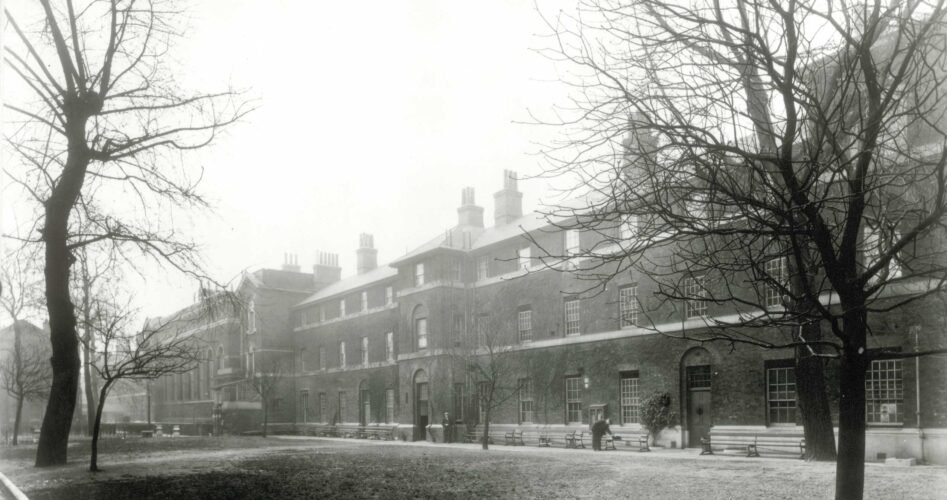
workhouseThe Waterloo Road workhouse, Bethnal Green

This month, The East of London Family History Society welcomes Sarah Wise to Wanstead Library, who will be talking about the Victorian workhouses of east London

The workhouse was just about the most feared and hated of all Victorian institutions – every bit as terrifying as prison and the ‘lunatic’ asylum. It wouldn’t be abolished (along with the entire machinery of the Victorian Poor Law) until 1929, but it continued to cast a long shadow across the family memories of many people – my own late mother included.

In the ‘General Mixed Workhouse’ were mingled together the able-bodied, the aged, children, the infirm, the acutely sick and the so-called ‘morally degenerate’. The Poor Law Commission declared in 1909 that this was why it was such a terrible method of dealing with poverty: “The continuous social intercourse between young and old, hardened and innocent, loafer and genuinely out-of-work.” Their report approvingly quoted one chairman of the Board of Guardians of the Poor as saying: “To the reputable clean-minded inmate, this association with the depraved is the bitterest and most humiliating experience.” There were, in 1909, some 24,000 children under the age of 16 in the workhouses of England and Wales, and while the Commission had discovered no large-scale child neglect or cruelty, nevertheless, the effect of workhouse life on a child’s spiritual and intellectual well-being was felt to be immense.

As one example, throughout the 1880s and 1890s, problems continued at the Bethnal Green Workhouse – in particular, their tardiness in adding an infirmary wing, to which the poor of the locality could go when ill or after an accident. Overcrowding was a perennial problem, and cleanliness and lack of good lighting were often cited. Extra premises for an overspill workhouse were leased out of the borough – in Well Street, Hackney – but this was a short-term solution. The Local Government Board (the Whitehall body that oversaw the nation’s workhouses) made a long and unannounced visit to Bethnal Green in 1894 and issued a damning report on the conditions and the corrupt awarding of contracts to supply the workhouse. 

Whether old or new, big or small, rural or urban, the workhouses of the nation were felt to be increasingly out of step with how a modern, technologically advanced country ought to be providing for those who were unable to compete in the workplace. This is why we see, from the early 1880s onwards, a concerted campaign to ‘humanise’ them, with many more creature comforts, better food, entertainments and hobbies.

In my illustrated talk, I’ll be focusing on these changes, with an emphasis on the London experience, and in particular, how the Bethnal Green workhouse was run.


Sarah’s talk will take place at Wanstead Library on 18 January from 7.30pm (visitors: £3). Call 07762 514 238

For more information on Sarah’s research, visit sarahwise.co.uk

Features

Have you heard?

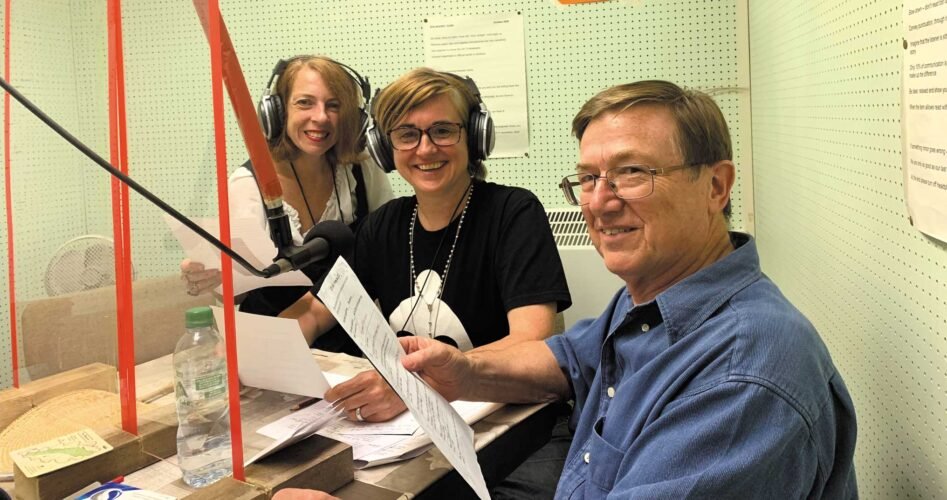
rtnLeft to right: Chichi Parish, Sally Dunbar and Paul Campbell

Voice-over artist Sally Dunbar gives us the inside story on the Redbridge Talking Newspaper, a weekly publication for those living with blindness or visual impairment. And as a free service, more volunteers are needed

Are you sitting comfortably? Then I’ll begin… From the popularity of yesterday’s radio programmes like Listen with Mother, to the long-running TV show Jackanory, through to today’s boom in audiobooks, being read to is something we all respond to on a very instinctive level: the reassurance of a friendly voice in our ear; the shared experience of the story.

It is these kinds of human interactions that are integral to our existence. Something highlighted so strikingly during the pandemic, which denied us the enjoyment and comfort of social contact with others. For those living with blindness or visual impairment, however, those feelings didn’t necessarily go away when lockdown ended. A talking newspaper can help these people stay in contact with their local community.

As a voice-over artist, I spend much of my time talking to other people through the medium of radio and television; narrating stories, imparting information and being a reassuring voice. It is a job I love and have been doing for over 20 years. But it’s much more than a job. I also spend my free time reading to people and using these same skills in whatever way I can. So, when my friend, Chichi Parish, a volunteer news editor for the Redbridge Talking Newspaper (RTN), told me they were looking for more readers, I jumped at the chance.

RTN is run by a dedicated team of volunteers, headed up by Paul Campbell, whose enthusiasm and energy is inspiring. He dedicates much of his time to organising and running the team of around 50 volunteers, who put the talking newspaper together every week. Each edition runs for about 90 minutes and includes local headlines, news stories, a magazine feature, some music and a quiz. It is a free service and the programmes are copied onto memory sticks and posted out to about 50 listeners each week, with many more listening online.

“I’ve been listening to RTN for 20 years and particularly value the local news as it’s difficult for me to get this anywhere else, but the recordings really have something for everyone and are a wonderful achievement. I really appreciate so many people giving up time to produce them,” said listener Clare Gailans.

It’s marvellous to know that the RTN started life in 1976 and is still going strong today. Even during lockdown, production didn’t stop. We changed to monthly editions and all recorded from home. Thankfully, we’re now back in our Ilford studio, recording weekly again. We’re always looking for volunteer readers, news editors, engineers and more. If you’d like to get involved, we’d love to hear from you. In the meantime, why not have a listen to our latest edition? And, as all stories must come to an end… I’d like to wish you a happy ever after.


For more information on the Redbridge Talking Newspaper and to listen to the latest issue, visit swvg.co.uk/rtn

News

Sheets and blankets to be collected at Eagle Pond to aid swan rescues

swan2

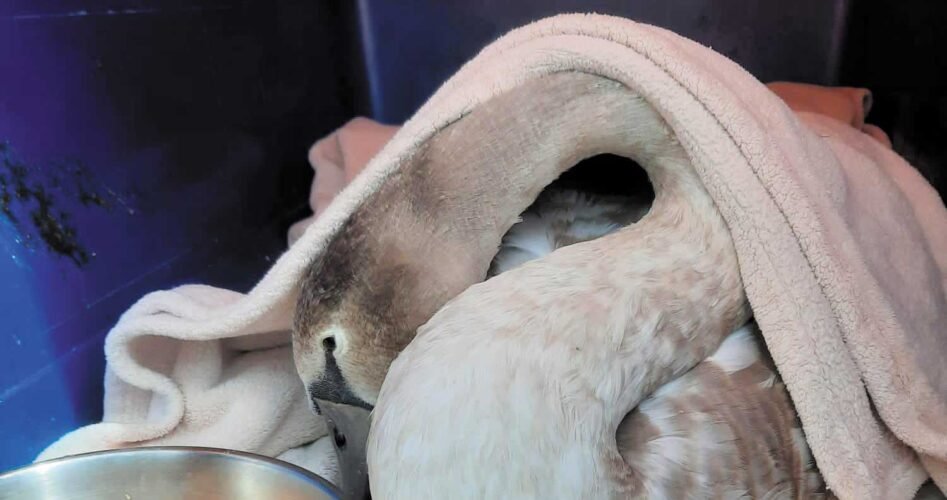
Local swan rescue volunteers are collecting unwanted blankets to aid the transport of injured birds.

“Avian influenza means nothing used for one bird can be used for another, and we have rigorous cleaning routines in place. We use bedding in the ambulance travel pods and also when a rescued bird doesn’t need admission but is held locally for observation,” said Swan Sanctuary volunteer Gill Walker.

Bed linen, sheets and blankets will be collected at an event at Eagle Pond on 14 January from 11am to 12 noon.

Visit swvg.co.uk/swanrescue

News

Calling storytellers, poets and authors in Wanstead and Woodford

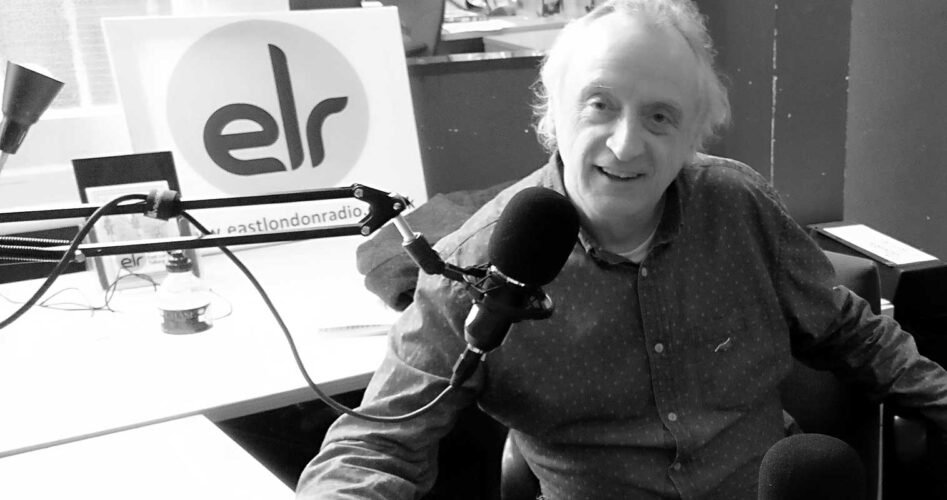
tonyTony Cranston

The presenter of East London Radio’s Talking Stories – a programme dedicated to the spoken word – is seeking local storytellers, poets and authors to take part in future shows.

Talking Stories is the first and only UK radio show dedicated to the art of storytelling. Our audience is growing – we have 43,000 listeners across the globe – and we would like to feature your stories and promote your talents, of which there are plenty in Wanstead and Woodford!” said presenter Tony Cranston.

Email totocranston@hotmail.com

News

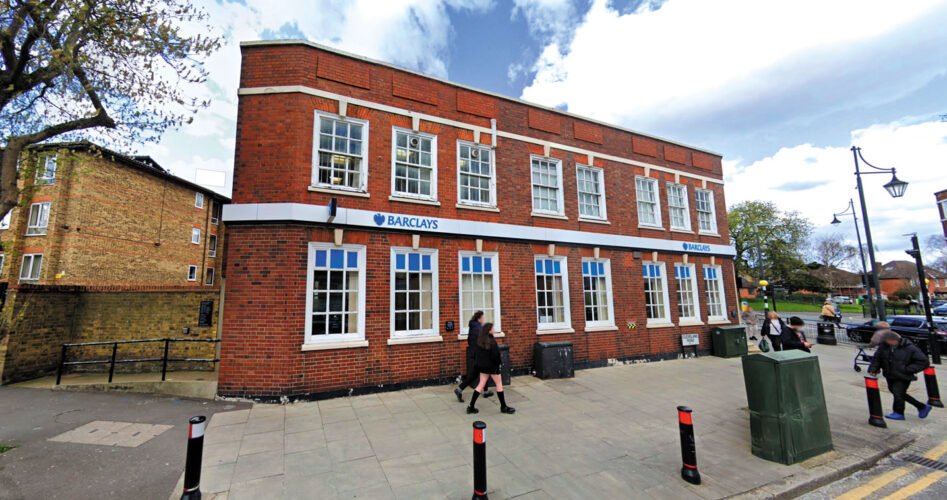
Councillors ask Barclays to reconsider South Woodford branch closure

Screenshot-2023-12-07-at-10.16.11

Local councillors have questioned Barclays’ decision to close their South Woodford branch on 23 February.

“Obviously we are disappointed, especially as this was announced so soon after the Post Office had just returned to George Lane. They are talking about a replacement ‘deposit service’ offered by Link as opposed to a banking hub, which we have argued for as an alternative. We have made contact with Barclays and asked them to reconsider their decision, but I fear it is a fait accompli,” said Councillor Joe Hehir.

Features

DD’s 57th Woodford Diary

dd2©Evelyn Rowland

Some South Woodford scribbles from DD, our resident diarist, commentator and observer of all things local. Illustrated by Evelyn Rowland

I’m writing about bereavement this month. “You can’t write about that!” some have said. Others have said: “Go for it.” Perhaps the sense of national shared grief following the death of the Queen brought the subject into the headlines. I was unashamedly amongst those who did indeed find it strange and sad that she was ‘no longer around’. The majority of the population had never known another person on the throne. Or on the stamps. As for me, I could remember the life of her father George VI ‘drawing peacefully to a close’ and feeling a 12-year-old’s sympathy for the princesses losing their dad well before his time.

Years later, I vividly recall driving with my sister and brothers behind our father’s hearse and being moved and somehow comforted by the sight of two workmen putting down their pneumatic drills, removing their caps and bowing their heads as we passed. I was thinking: “He will never put his arms around me again and give my back a good rub.” Our mother slipped away early in the morning of her 98th birthday; my sister and my son and I were nearest to the hospital and arrived a few hours later. My sister held her and whispered in her ear: “Don’t worry, Mum, we’ll always be your kids!” Small incidents in themselves but all contributing to the inevitable, painful, yet somehow celebratory and thankful journey we had begun as ‘orphans’. 

But there’s got to be a time when it’s absolutely OK to weep; to sob; to howl. I’ve been looking at some of the consoling letters that flooded in when my husband died, and some of my replies. To one I wrote: “The sense of loss is frankly terrible, though I know, somehow, I will be able to get through, not around it, in time. I came upon a letter in his familiar handwriting this morning. I allowed myself a few moments of wailing and then got down to the nearest job available, emptied the dishwasher and stacked things away.” 

People are all different, unique, with their own life experiences and relationships. Not surprisingly, their route through bereavement will also be different and unique. As usual, when preparing this diary, I have relied on the help of people I meet ‘down the lane’. So many are happy to talk; so varied their insights: “I lost my partner five years ago. I live in a cul-de-sac. If I didn’t go out, I would see no one all day. I know I must make the effort. Make a habit of getting out. Be in the world like Fred always was.”

“The 10 years of my husband’s deepening dementia were really a slow, prolonged bereavement. He became less and less the person I knew. My chum, my soulmate. When he died, the sense of relief that he was no longer struggling was all mixed in with my sense of absolute desolation. We had been together from schooldays and never apart. It’s as if I’m holding things in balance. On one of those old-fashioned sets of scales. Sometimes the loss weighs more heavily, sometimes the thankfulness that he has finally been released from his cage of confusion.” 

“I still have chats with my dear wife, even after several years. And I am grateful for the friends who understand how much I need to talk about her. They don’t avoid the subject.”

“Never a day goes by when I don’t remember my mother. Especially when I’m ironing shirts.” (Tell me more.) “At school, in Home Economics, we were taught the correct way to iron shirts, so when I got home I told my mother she wasn’t doing it right. She was definitely not well pleased!” (But what a loving smile that recollection produced!)

“Yes, I am in mourning. Other pet owners will understand. My dog would always greet me as if she hadn’t seen me for years. She gave me unconditional love, whatever my mood: sad, happy, anxious, whatever. We knew something was seriously the matter but the diagnosis yesterday took us by surprise. The vets could offer no cure. We had fetched her from Battersea Dogs’ Home when she was 11 months old. She ‘went to sleep’ yesterday evening, 10 years later. I am grieving for my loved companion. It feels very raw. But I’m comforted by knowing we were able to give her a good life.”

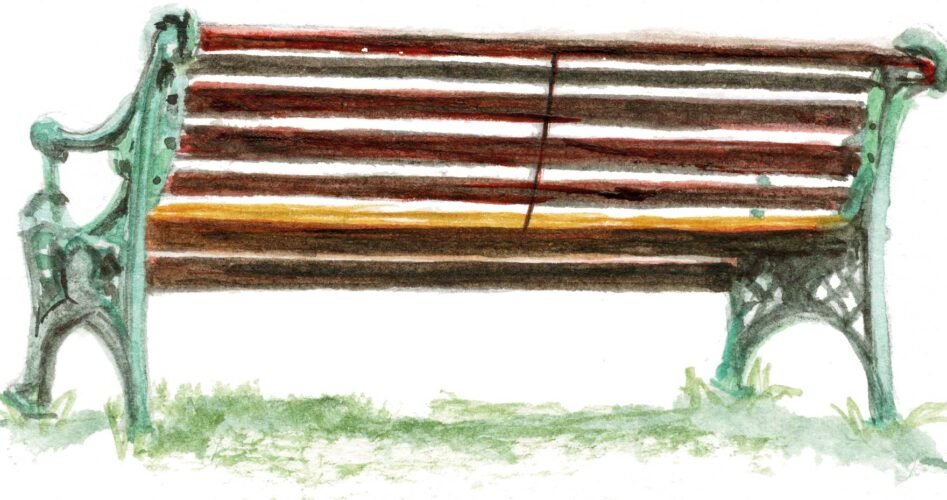
“I lost my grandma recently. She was very special. We were very close. I’ll be learning to drive soon. It would have been good to take her out for a ride to celebrate when I pass the test. She used to meet me from primary school sometimes. There was a seat in the park that we called ‘our seat’. We would talk together about the day. Or just sit in silence enjoying each other’s company. I miss her very much. I always will.”

“I have seen neighbours cross the road when they see me coming. Some have told me ‘they don’t know what to say’. But if they just said ‘I don’t know what to say,’ it would be more comfortable. Then we could chat.” 

Well, dear readers, was I right to choose this subject? You be the judge. For me, there were beautiful moments even in the first few days of my bereavement: my Hindu neighbour walked over the road and sat quietly, cross-legged on the sitting-room floor for some hours just to demonstrate, as he said, that ‘he was here for me’. A Jewish work-colleague rang me on a day when I was feeling very low. “I am thinking of you,” she said, “and I wish you long life.” Another neighbour knocked on the door holding quite a large shrub in a pot. I had to peer around it to see who it was. He was near to tears. No prepared speech. “Remembering him. Brought you a plant.”


To contact DD with your thoughts or feedback, email dd@swvg.co.uk