
Editor

Editor

News

National Youth Brass Band visits Churchfields Junior School

001

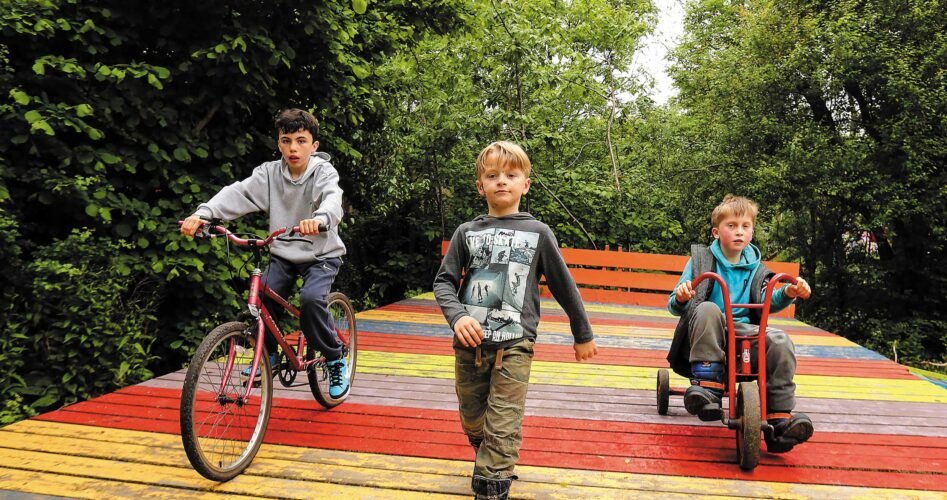
Pupils at Churchfields Junior School enjoyed a concert by the National Youth Brass Band of Great Britain in July.

“We were recently selected by the Department for Education to be a national case study for a new music curriculum, and we welcomed the band to encourage their young players. Hits including Sweet Caroline and Uptown Funk were played and have hopefully inspired a future generation of musicians. All pupils at Churchfields learn to play an instrument,” said Deputy Headteacher James Easter.

News

Broadmead Road closure update: ‘more robust inspection’ required

broadmead-2

Redbridge Council has issued an update regarding the closure of a section of Broadmead Road:

“Following agreement by TfL, we plan to conduct a survey of the bridge the week commencing 4 September. This will allow us to complete a more robust inspection and inform us if we need to do further work or if we can open the road at a reduced capacity and vehicular weight limit. In the meantime, for your safety, we kindly ask people not to move the cones and barriers to drive over the bridge until further inspections are complete.”

News

Changes at recycling centre

AdobeStock_326012826

Residents wishing to take any waste to Chigwell Road Reuse and Recycling Centre in a van or trailer must now book a slot in advance.

“This system is aimed at relieving congestion and improving recycling performance. You can make up to 12 bookings over the course of 12 months and up to two bookings in any one month,” said a spokesperson for ELWA. Booking is not required for cars.

Visit swvg.co.uk/booktip

Features

Youth centre decision day

IMG_2493 (1)

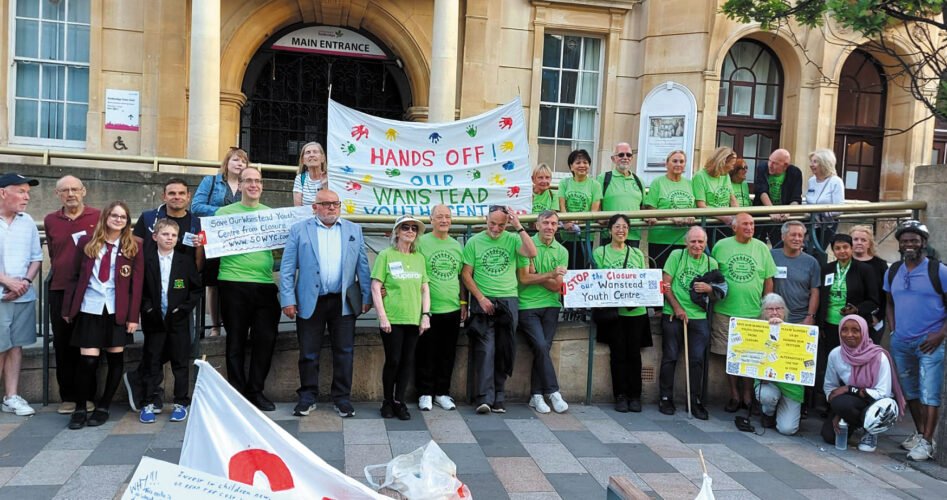
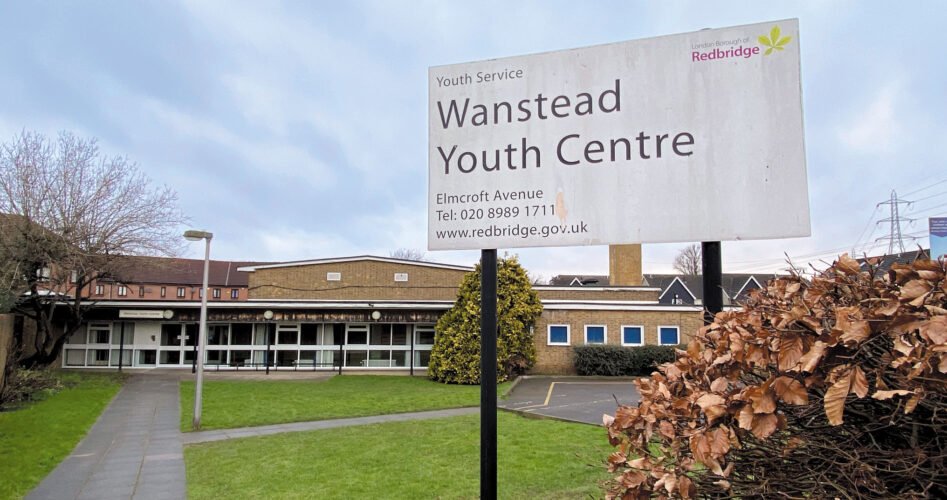
A demonstration will be held outside Redbridge Town Hall on 14 September as campaigners await the council’s decision on the future of Wanstead Youth Centre.

The Elmcroft Avenue venue is under threat of closure following claims £2.4m of refurbishments are needed. “The cabinet meeting is when the decision will be made. We will gather from 6.30pm,” said a Save Our Wanstead Youth Centre spokesperson.

Visit swvg.co.uk/wyc

Features

Cholesterol: what’s the fuss?

AdobeStock_596231981

Cholesterol is a waxy substance, made in the liver and essential for the continuing health of every single cell in the human body. We need it, says Fiona Flaherty, a registered nurse and nutritional therapist 

The body makes around 80% of our cholesterol. The remaining 20% comes from food. Functions of cholesterol include the manufacture of hormones and bile salts to break down dietary fats, plus a transporter for Vitamin D. 

The body self-regulates the amount of cholesterol needed. If cholesterol consumption is too high, the liver cuts back on manufacture, unless the liver is damaged. But if inflammation is present in the body, then it produces more as a protective mechanism. Therefore, results from a blood sample showing a higher total cholesterol means you have excess inflammation in the body. 

So, what do the numbers means? Firstly, lipoproteins. These are like boats that take cholesterol from the liver to the tissues and back again to the liver to be reused. Cholesterol is like a family in which there are four players: HDL (high density lipoproteins), LDL (low density lipoproteins), triglycerides (additional energy stores) and VLDL (very low density lipoproteins). Each has a unique value, and total cholesterol is just that: the total of all the numbers added up. If elevated, it causes imbalances in the body.

HDL is rarely elevated. But when LDL becomes elevated and oxidises (like rust), it damages blood vessels and blood is more likely to clot, causing even more inflammation in the body. The liver responds by making more cholesterol in an attempt to repair the damage. Elevated cholesterol markers are associated with conditions including cardiovascular disease and diabetes.

The current treatment in the UK is prescribed statins. They set the body back to zero and stop cholesterol being made in the liver. This initially lowers the LDL and triglycerides and may, coincidentally, raise HDL levels, as well. However, having no cholesterol in the body may account for early cell death, possible hair loss, muscle aches, low exercise tolerance, fatigue and reduced libido in adults. So, what can we do? The body needs to be rebalanced. We need to eliminate ‘triggers’ in our diet to reduce overall inflammation. Simple steps to help manage cholesterol levels include: 

  • Increase antioxidants with fruit and vegetables. Excess cholesterol binds to the fibres and is evacuated out of the bowels. 
  • Drink about two litres of water a day to keep your blood flowing efficiently. 
  • Exercise aerobically for 20 minutes every day to increase HDL and decrease LDL. 
  • Avoid or limit BBQs, smoked, burnt, deep-fried and shop-bought fried foods as these are inflammatory.

Fiona Flaherty is a registered nurse and nutritional therapist based in South Woodford and Harley Street. For more information, call 07973 601 862 or visit meducatehealthcare.com 

Features

Cost of dispute

AdobeStock_228105982

Derek Inkpin from local solicitors Axiom DWFM looks at how legal costs can spiral in cases like boundary disputes and urges the use of a mediator where possible

Unless you have won the lottery, the legal costs of getting involved in a dispute as either a claimant or defendant will be of great concern. Referring a dispute to a mediator can be a great boon, not least the court costs it saves on a successful outcome.

The parties concerned can feel fully engaged in the process. However, a mediator is not a judge and all they can do is encourage the resolution of the dispute by mutual agreement. A mediator does not make orders as does a court. A court decision in favour of a winning party can be a great outcome but can be a disaster financially for the loser. 

There is a 2021 case called Davis vs Winner involving a boundary dispute where the trial judge was informed that the combined costs of both parties were about £200,000. What was of great concern to the judge was that the case involved an allegation of 17 inches of boundary encroachment against a neighbour arising from the installation of two boundary garden fences. At an early stage, as in any civil court case, the district judge decides which ‘track’ is to be allocated and this is determined by the complexity of the matter. In the Davis case, this was allocated to the multitrack and in so doing affected the costs to be incurred. 

What the trial judge said was that to the outside observer, the extent of the boundary encroachment in terms of monetary value was not great. The judge made clear that where the value of the claim in monetary terms was unlikely to exceed £10,000, then if the parties both agreed, the case should be allocated to the small claims track where the costs to the loser would normally be restricted to court fees and witness expenses. 

The small claims track therefore minimises the financial risk to the parties, and in the Davis case would have concentrated the parties’ minds on not incurring the combined £200,000 fees.

However, boundary disputes can involve a complexity of facts, law and expert evidence, which may take two to three days to conclude and conventionally this will likely take it outside the small claims track to the multitrack, which incurs substantial costs. An important issue in these low-value cases is whether the court can save the parties’ costs by allocating it to the small claims track. However, if it is argued at an early stage that the legal and other issues are complex, then allocating the case to another track with no cost protection to the parties will likely be the outcome. And this is when a mediator could help save a fortune.


Axiom DWFM is located at 9–13 Cambridge Park, Wanstead, E11 2PU. For more information, call 020 8215 1000

News

Park Life

eg

In the third of a series of articles featuring the images of local photographers who document the wildlife of Wanstead Park and the surrounding area, Tushar Bala presents a montage of his shots of a Little Egret

My name is Tushar Bala and I’m a science teacher. I started my wildlife photography in earnest at Wanstead Park on day one of COVID lockdown. I would practice before and after work. I would take pictures of anything that moved! I love Wanstead Park because of its various wildlife. But it is the people who have approached me to have a quick chat that makes the park special, from lovely retired couples to TikToking teenagers, dog walkers and families.

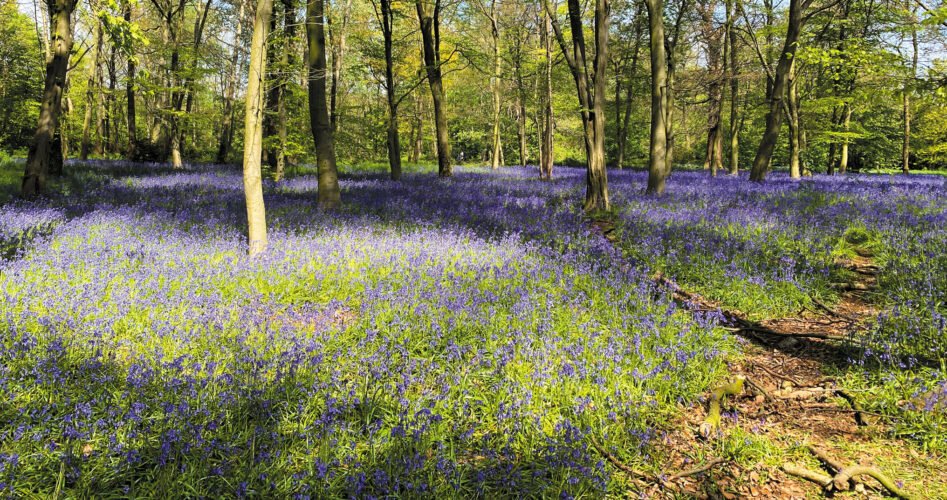
I have gone on to inspire my students to visit Wanstead Park as well. Just a few weeks ago, one of my wheelchair-bound students insisted on going to the famous bluebell wood. So, his dad and brother pulled and pushed him through the quagmire. He took some pictures, and I will admit, they were brilliant and better than mine. He had a history of not wanting to go out and his parents were desperate to get him out of the house. He is now a regular visitor to the park.

Wanstead Park offers a plethora of wildlife experiences. I’ve played hide and seek with a fox, literally going around in circles. (The fox cheated and took a short cut through the bushes!) I’ve been stopped in my tracks by a heron wrestling with a two-foot pike. I’ve watched a Great Spotted Woodpecker tear off bark to get to grubs. And during one lunchtime walk, I was rewarded with a buzzard perched in the woods. I stopped a family and allowed the children to watch it through my camera lens.

At dusk, I like to sit down with a cup of tea and watch the beautiful terns hunt, swooping down, skimming the surface to catch fish. And I love to watch the Grey Heron do its… well, I call it a snake dance, using its neck to attract fish. Or watch the Little Egret do its shuffle dance to stir up the mud and catch its dinner.

I found the Little Egret quite tough to capture. These birds are usually found at the wooded part of the lake, so the background is very dark and you can easily overexpose the image. Little Egrets are very skittish and one has to approach very slowly. After a few minutes of observation, I decided to go for a set of three images; the dishevelled look, not so dishevelled and then looking quite smart. I call the sequence ‘having a bad hair day!’

Wanstead Park has a lot to offer, not least, for mental health well-being. It is wonderful to be humbled by the wildlife and their behaviour, to meet like-minded people who appreciate the sense of calmness that the park offers, a place to sit and rest one’s bones with a flask of coffee, to listen to the dawn chorus of the birds, a catalyst (I had to put a scientific word in the article!) to visit other places.

As I walk home with my unwieldy camera gear, I’m tired, hungry and thirsty; my joints ache; I’m sometimes euphoric that I may have taken a nice image, but I always have a big, fat cheek-to-cheek smile.

I now also visit lots of other places to get my wildlife fix, mainly RSPB sites and some Wetland Trust sites. My pictures (the decent ones) are emailed to the organisations responsible for looking after the habitats I have visited, just as a thank you. Some images have been published, and usually, the sites I visit will post them on their websites.


To view more local wildlife photos, visit swvg.co.uk/parklife

Features

Community Confidence

SGT-MALIK-TEAM-PIC

Sergeant Imran Malik heads up the policing team for South Woodford, Churchfields, Bridge and Monkhams wards. His mission is to ensure the streets are safe for all and is keen to build community confidence 

Hello, South Woodford. I’m Sergeant Malik, your local police sergeant. I was born and raised in the heart of East London, a proud member of our diverse and vibrant community. As a Muslim, I’ve always appreciated the multicultural fabric of our city and have committed to being a bridge between different cultures and people. I speak six languages, a skill that allows me to connect more deeply with many of you.

Growing up, I often found myself on the receiving end of stop-and-search practices. Although I understood the intention, the experience was difficult and distancing. I saw an opportunity to be part of the change, to create a police force that respected everyone’s dignity. Thus, I became a police officer.

One of my most cherished memories growing up is playing cricket at the local Ilford Cricket School, run by Joe Hussain, father of England Test captain Nasser Hussain. Those days instilled in me the values of teamwork, discipline and fair play. I’ve also nurtured a passion for bodybuilding, which has taught me focus and dedication – attributes I bring to my work every day.

I believe in the power of mentorship and learning. In 2021, I initiated a mentoring network in the Met called TEAM (Together Everyone Achieves More). This network supports officers and staff seeking promotion or looking to work in specialised roles, and encourages collaboration with our stakeholders. In the same year, I worked with Ilford Business Improvement District to organise a training session for local businesses, arming them with the knowledge and tools to combat crime. One instance highlighted how collaboration could help businesses, particularly those facing repeated offences. I encouraged them to share descriptions and patterns of known offenders, allowing Safer Neighbourhood Team patrols to respond more effectively.

My mission is to ensure the streets that raised me are safe for all. I’m dedicated to reducing violence, particularly that affecting our young people, and ensuring our town is a place where women and girls feel safer. I am committed to tackling the harm caused by drugs and to developing strategies that help deter those at risk of criminal activity.

I want to build trust and confidence within our community. I pledge to treat everyone fairly and respond to neighbourhood concerns effectively. I aim to bridge any gaps that might exist between different groups and increase public faith in the police service.

I am not just your local police sergeant; I am a part of South Woodford. I am excited to work with all of you towards a shared vision of a safe, inclusive and thriving community. Let’s create a better South Woodford together.


To contact the police in an emergency, call 999. For non-emergencies, call 101

Features

Queen Quieeran

Acr2781418366976-2615593

South Woodford resident Kieran Pruett has been named Graduate Talent of the Year by Fashion Crossover London. As a proud non-binary, deformed individual, Kieran is not only eradicating their insecurities, but using them as inspiration for their designs

It feels wonderful to be recognised for my design work. My graduate collection entitled Deformed Beauty is something I’m so incredibly proud of as it is such an encapsulation of me as a person and as a designer.

More specifically, as a trans designer, it feels euphoric to be highlighted and platformed, particularly as my community is repeatedly being misrepresented and, frankly, disparaged in the media. On top of that, trans representation in the industry is still lacking, so it feels right to be a part of the slow change whereby marginalised communities are finally being showcased. This is a change I wish to see much more of to create a more inclusive and rich industry.

My creative practice is a true embodiment of my personal style and my identity. I am a proud non-binary, deformed individual who as an artist and designer wishes to eradicate my insecurities and use them as inspiration for my work. I am drawn to flamboyance, regality and fun and I desire to create garments that exude those qualities. With my graduate collection, I wished to change the narrative of how I feel about myself by romanticising my pain regarding my deformity and my transness. Through my print work featuring my own self-portraiture, I have created artistic and personal designs that possess a euphoric energy. Additionally, through excessive ruffles and bold silhouettes, I have constructed garments that make people feel like their most unapologetic selves. In essence, my work is devoted to my younger self, my community and to those who have ever felt alienated or rejected by society: it’s all for you.

For my influences, in terms of silhouette and style, I look to the great monarchs of the past who dressed in such grandeur and elegance that regrettably is not prevalent today. My brand name being Queen Quieeran, researching royalty feels like an appropriate and thoughtful choice. Henceforth, I want my work to consistently exude a sense of luxury, regality and extravagance. To gain authenticity when creating new designs, I look to my own clothing for inspiration. I love the idea of taking garments from my own wardrobe and draping them in unique ways to create something new. In doing so, I can create unexpected silhouettes that embody my personal style. This experimentation is integral to my work and is used throughout my design process to ensure the joy of dressing-up and draping remains. 

In terms of my print work, I took inspiration from Francis Bacon, whose distorted portraits really resonate with me. I love the idea of taking something I perceived as ugly and turning it into something beautiful. Therefore, I adore creating vivid prints that showcase my self-portraiture, and in doing so, I am changing the way I feel about myself.

Another notable inspiration would be the trans community. I am heavily inspired by my community’s resilience to be their authentic selves in the face of adversity. Collectively, they are the reason I had the courage to embrace and be my authentic self. 

My experience at Middlesex University was one I’m very thankful for. What I love most about the fashion department at Middlesex is that nothing is ever off-limits or too outrageous to try out. They truly allow you to reach your potential and I’m so grateful to the team there for pushing me to create more than I ever thought I was capable of. When I was at school, I was often underestimated; therefore, I feel lucky to have had a university experience that truly developed my skills. On top of that, it was really liberating to be in a space where my growth as a designer and as a person was encouraged and welcomed. Additionally, as a trans person, I felt truly safe to be who I am. Admittedly, I was quite nervous before embarking on my degree as I heard how toxic some fashion courses can be. Middlesex, thankfully, was a safe space for all students where my classmates gladly embraced each other’s creations and successes.


To view more of Kieran’s work, follow them on Instagram @queenquieeran

Features

Road to safety

Churchfields-School-090523Councillor Gomez with deputy head James Easter

Councillor Rosa Gomez (Churchfields ward, Labour) reflects on the road safety improvements that have been made at Churchfields Junior School over the past few years

It has been my privilege to work with teachers and parents of children at Churchfields Junior School, where I have been a governor for several years. In 2018, soon after I was first elected as a councillor, I visited the school on a number of occasions and found the children particularly articulate. They had a keen interest in the environment and were clearly annoyed at the number of vehicles driving past the school.

Consequently, one of my top concerns has been the safety of the children. My fears have been highlighted by a series of near misses and at least one incident when a child was struck by a car. It takes only a second’s loss of concentration for tragedy to strike.

Over the past few years, the combined efforts of Churchfields parents, teaching staff – especially headteacher Rebecca Emeny – and officers of Redbridge Council’s Highways Department have made a real difference. Temporary signage, which is put in place when children are going to school and leaving, extended zigzag lines on the road, a park-and-stride scheme and now CCTV to deter dangerous driving have all helped. 

I recently had the pleasure to revisit the school at home time. I was joined by deputy head James Easter, and we had an opportunity to monitor how the safety measures are working. Between 3pm and 3.45pm, as children were flooding out of the gates, we didn’t notice a single instance of car drivers idling, parking on zigzags, performing U-turns or doing anything else that could endanger young lives. James told me that 89% of children now travel to and from school on foot, bike or scooter. Ten years ago, 26% travelled by car, and now that figure is only about 10%. This marked decrease was helped by the introduction in 2021 of the park-and-stride scheme, with free parking in the nearby Derby Road car park during drop-off and pick-up times. The school’s leadership team are determined to encourage a further reduction in car usage outside the premises.

Churchfields staff’s commitment to safety has been demonstrated by a willingness to engage with parents and spend money – the signs aren’t cheap and come out of the school budget. The council’s commitment has been shown by officers such as Adam Warnes and Simon Casson, who found ways to implement safety measures. And parents have responded positively. This has been a wonderful example of people coming together to find solutions and I’m proud to have been part of it.

This is all good news, but I must make an appeal. I know how hard it is for the driver of a reversing car to notice a small child walking behind the vehicle. Cars are potentially lethal machines, so please, if you are doing the school run or simply in transit past a school – any school – obey the signs and pay attention to what’s going on around you.


To contact Councillor Rosa Gomez, email rosa.gomez@redbridge.gov.uk

Features

DD’s 60th Woodford Diary

swvgddfriendsjulyaug23FLATcmyk©Evelyn Rowland

Some South Woodford scribbles from DD, our resident diarist and observer of all things local. Illustrated by Evelyn Rowland

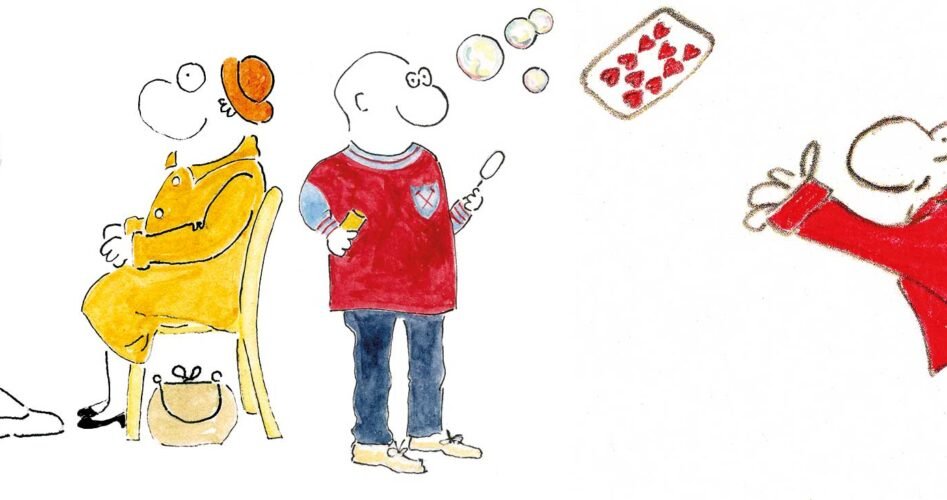
We all like to be appreciated. “How was the apple crumble, dear?” (Hoping for “Full marks, love,” or something similar.) “Does this dress suit me?” “Spot on! You look great.”

This gentle custom of kindly oiling the wheels of our day-to-day relationships has mushroomed into a universally established marketing ploy: after any purchase, the almost instantaneous message from companies and traders large or small is: “How did we do?” There may even be a short questionnaire: “Thank you for renewing your car insurance with us. On a scale of one to five, please tell us how likely you are to recommend us to your friends.” “How would you rate the look and overall feel of our app?” “We would greatly value your comments on your experience when buying your pliers.” “You could even tell us more by leaving a short video response.”

Even as I am writing, I have suddenly recalled one of my earliest (and really rather treasured) ‘feedback’ experiences. It was about 15 years ago and it arrived in the post. It was a customer satisfaction questionnaire from the crematorium as a follow-up to Uncle Bert’s funeral. A modestly elegant response form to be completed and then folded, three ways, in accordance with the diagrammatic instructions, then moistened round the edge-flaps, pressed to seal and dispatched. No stamp required. Printed in black and white with pale lilac subheadings. Not your average sort of mailing; nothing like the Plumbs’ loose-cover sale catalogue or the water bill. No, this was truly something on which to exercise the mind. I was intrigued.

“How do you normally travel to the crematorium?” Normally! As if one were commuting on a regular basis. Fair enough, when you’re in your eighties, there is a regrettable increase in the number of these journeys. The roll call of much-loved friends and relations who have set off before us does tend to accelerate these days and remind us of our own mortality.

“Did any of those attending the service have any difficulty in finding their way to the correct chapel?” On balance, there seemed little point in outlining the problems of one posse of relations who did have difficulty, not in finding the right chapel, but in finding the right crematorium. Unfortunately, they appeared just a few crucial minutes late. Their arrival immediately followed the coffin’s departure. The curtains had already inched their respectful way round Bert’s brass-handled box. Non-arrival at funerals is probably endemic hereabouts: the City of London Crematorium in Manor Park is not far, as the crow flies, from the Manor Park Crematorium. It’s all too easy to get confused. And you can’t very well request an encore for latecomers. The curtains reopening and the coffin trundling back in. Sort of instant reincarnation.

“Have you any views on the toilet facilities at the chapels?” I left this one blank.

“Was the role of the chapel attendant helpful to the proceedings?” In a word, well, two words: “Not really.” But I elaborated: in bitterly cold conditions, the attendant had refused to allow our patiently waiting crowd of mostly elderly mourners to enter the cosy, deserted chapel just four minutes before our designated time slot, on the grounds that we’d all have to be turned out again if the undertaker failed to show up with the body. I asked if our particular undertaker, who came strongly recommended, had ever been known to miss the deadline, so to speak. But by then, the attendant had hurried inside to keep warm. 

“There is current technology available that will allow heat recovered from the cremation process to provide heating for the chapels. Would you find this proposal objectionable?” Frankly, a question better left unasked. Too much information, I thought. But something to ponder over still. Not over the principle of the thing of course. We children of the recycling age could scarcely take exception to such an eco-friendly stratagem. But rather over the nature of the available “current technology.” Current, hinting at something new. Technology suggestive of computer wizardry. But surely pipes had been pretty standard equipment for centuries?

The last question: the finale: “Would you like to be involved in our Cemetery Feedback Group?” A winsome plea: “Do let’s keep in touch. We know cemeteries aren’t bread and butter to you but they are to us, so please come back and tell us how we are doing.” Who knows? Perhaps it was at just such a feedback group that successful policy changes were hatched that led to the much coveted accolade, ‘Cemetery of the Year 2001’. I noticed this printed boldly on the receipt when I paid for the urn. How had this honour been achieved? On what criteria? Presumably, there are only so many prettiest villages in Essex to inspect in an average year. Do the same panels of judges fill up their fallow periods strolling around graveyards with their clipboards, awarding points for an extra-clean catacomb and a well-swept vault, high-quality plastic grass matting and tenderly pruned memorial roses?

Is it shocking to be so frivolous about a subject so serious? Our local ‘places of rest’ are, of course, superbly run. But funerals do, not infrequently, attract somewhat dark humour, don’t they? Is it something that makes it easier to cope? In fact, often, the Order of Service may include an imagined, upbeat message from the departed, much-mourned friend. Something along these lines?

I’d like the memory of me to be a happy one. I’d like to leave an afterglow of smiles when life is done.


To contact DD with your thoughts or feedback, email dd@swvg.co.uk

News

Residents critical as Crescent Road development is approved

Despite opposition from residents, a planning application for 18 flats fronting Crescent Road in South Woodford has been approved.

“It is clear this development will totally change the character of Crescent Road, with its green corridor on one side. We felt council officers put undue pressure on councillors at the meeting even though the application broke many aspects of the local plan. A large portion of the biodiverse green corridor will now be cut down after nearly 100 years of growth,” said campaigner Terry Rumak.