Editor

Editor

Features

Divorce month

WVD-JAN-2026-divorce

January is often called ‘divorce month’ because of a spike in divorce enquiries. Benjamin Carter of local solicitors Edwards Duthie Shamash explains what to expect from your first meeting with a divorce solicitor

It is generally recognised that divorce or separation is one of the most stressful events that can take place in someone’s life, with only the death of a spouse or close family member being ranked higher.

You can get divorced in England or Wales if all of the following are true: you’ve been married for over a year, your relationship has permanently broken down and your marriage is legally recognised in the UK (including same-sex marriage).

The process will very often involve interaction with a divorce solicitor and the purpose of this article is to set out what might be expected during that first meeting. As a first point, it should be stressed that most divorce solicitors are easy-going, sympathetic and understanding. Your solicitor will tell you what you need to bring to the meeting; this is normally just your passport and a bank statement for ID purposes. It is also helpful if details of your assets can be prepared in advance and set out on a single side of paper.

One of the first things your solicitor will be thinking about is whether there are protective steps that need to be taken. This may include an application for a non-molestation injunction order if you feel there is a risk your spouse’s behaviour is deteriorating to such an extent you need protection.

The other issue will be whether the family home is in joint names. If it is in the sole name of your spouse, this should ring alarm bells; your spouse could seek to raise further funds by way of remortgage or even try to sell the property without your knowledge. To protect your position, your interest in the property should be registered with the Land Registry.

If there is a risk your spouse may be seeking to transfer assets out of the jurisdiction of the court or trying to diminish the value of any assets, then consideration will need to be given to the making of an application to the court for a financial injunction order, whereby your spouse’s assets are frozen.

Your solicitor will generally be unable to give a view as to what the outcome of your case might be in terms of how the assets may be divided until such time as they have full disclosure of your spouse’s financial circumstances. This may be disappointing but such a view cannot be given without a clear picture of the overall wealth of the family.   Any agreement as to how the assets are to be divided must be set out in a court order before the deal becomes binding.

It is also necessary to start the divorce process itself, which will lead to a final order of divorce. This can now be done online via the gov.uk website.


Edwards Duthie Shamash is located at 149 High Street, Wanstead, E11 2RL. For more information, call 020 8514 9000 or visit edwardsduthieshamash.co.uk

Features

Say NO2 pollution

SWVG-JAN-FEB-2026-airLydia and other campaigners with Sadiq Khan in Elmhurst Gardens

London met legal limits for toxic nitrogen dioxide pollution for the first time ever in September. In the second of two articles, Lydia Fraser-Ward reflects on a five-year campaign to help us all breathe more easily

In my last article, I shared how I discovered just how polluted Redbridge’s parks and streets were, especially Ray Park and Elmhurst Gardens, which sit alongside the M11 and North Circular. I was shocked by the health risks this posed for children. Motivated by what I found, I began raising awareness and pushing for practical ways to reduce exposure to toxic air in our borough.

I launched a local branch of Mums for Lungs, working with residents and other groups like Wanstead Climate Action. We ran stalls at local events, distributed resources and wrote to councillors, pushing for measures such as expanding School Streets, improving cycling infrastructure and restricting billboard advertising for the most polluting vehicles.

The School Streets scheme closes roads outside schools during pick-up and drop-off hours, reducing children’s exposure to traffic fumes while encouraging walking and cycling. Vanya Marks, a local campaigner, petitioned for Nightingale Primary School to be involved when only six schemes existed borough-wide. She said: “We noticed a visible change in the number of cars and a safer walk to school since these schemes were introduced.” Redbridge now has 27 active School Streets, with six more planned.

Community action expanded when other local parents secured an air quality sensor at Ray Lodge Primary School, and following a high-profile visit from Mayor Sadiq Khan to a similar sensor in Elmhurst Gardens, the local authority finally agreed to my request to apply for more than £300k in funding from DEFRA to deliver a borough-wide air quality awareness project called We Care for Our Air. More than 80 Redbridge residents volunteered to take nitrogen dioxide readings, walk-to-school maps were developed for pollution hotspots and 400 pupils received cycle training, building on work by Redbridge Cycling Campaign. Dr Mark Hayden, a paediatrician at Great Ormond Street Hospital, is also a local clean air campaigner and helps to organise Ride For Their Lives events in London.

Other campaigners are encouraging residents to reduce their domestic wood burning and lower speed limits in densely populated areas, both of which would help to improve air quality in our neighbourhoods. A reduction in SUV ownership, which disproportionately contribute to the problem of tailpipe emissions, would also make an impact.

The results are encouraging. In September 2025, London met legal nitrogen dioxide limits for the first time since records began. Experts estimate the ULEZ expansion cut levels by 27% across London, with reductions near major roads reaching 82%. For now, it appears cleaner air is finally coming our way. Let’s all play our part to help keep it that way.


For more information on Lydia’s story, visit swvg.co.uk/airquality

Features

Eco urgency

WVD-JAN-2026-ecoMistle Thrush territories in Wanstead Park have declined in recent years

Despite some progress, Redbridge Council still falls short on key biodiversity commitments, prompting fresh demands for a nature emergency motion, says Councillor Paul Donovan

So, how has Redbridge Council risen to biodiversity challenges over the past few years? When first elected for Wanstead Village in 2018, Councillor Jo Blackman and myself sought to raise environmental issues up the council agenda. We were starting from a very low mark.

Jo and I were on the Nature and Environment Task and Finish Group. This group took evidence, did some site visits and came up with a plan. Among the recommendations was a review of the Sites of Importance for Nature Conservation (SINC) around the borough, the implementation of grow zones (wild areas), the phasing out of pesticide usage, managing sites as wetlands for biodiversity and promoting wildlife corridors. A new Urban Landscape policy was adopted. We also brought a Climate Emergency motion to the council in June 2019. This was duly passed.

There have been successes. Grow zones have extended, with 10,000 square metres covered. Another 400,000 square metres have been given to wild space. Some 850 tree pits have been adopted in the last year, with 7,000 trees planted in the same period. Less encouraging is the failure to take forward the SINC recommendations. There has been increasing involvement from residents and groups operating on a voluntary basis. The likes of the Wren Wildlife Group, Wanstead Community Gardeners and River Roding Trust have all done a lot. This, though, is an emergency, demanding responses at least on a par with COVID. Obviously, the response thus far is nowhere near that level. National government could help by making the need to address biodiversity and climate emergencies a statutory duty on councils.

Things need to change. There are two initiatives that offer hope. The first is the London Local Nature Recovery Plan, which offers guidance on how things should progress. The second is a call for a nature emergency motion to be passed by the council. This would offer measurable benchmarks which must be met. Things like committing to 30% of council land for nature recovery by 2030 and the extension of the duty on developers to provide 20% biodiversity net gain in their projects. The culture also needs to change, so the comprehensive nature recovery strategy is embedded in all elements of the council. A petition calling for just such an initiative has collected over 1,500 signatures and will be presented to the council in January. The May elections are another opportunity to make clear to those seeking office how important it is to address the environmental emergencies.

Given the political will, garnered from grassroots pressure, we can really accelerate efforts to confront these crises. All is not lost, with many positive things going on, but time is running out; more is needed and fast.


For more information on declaring a nature emergency, visit wnstd.com/ntem

Features

DD’s 75th Woodford Diary

swvgddjan26compostskyCMYK

Some South Woodford scribbles from DD, our resident diarist and observer of all things local. Illustrated by Evelyn Rowland

Thank you, dear readers, for your encouraging feedback. If you missed the last edition, allow me to recap.  My life completely changed when my late husband suffered a massive stroke 30 years ago. I became his chief carer. I found writing letters to my children and nephews and nieces and many other young friends was a lifeline, keeping me in touch with the rest of the world. Here’s just one more example. We’ll be back, in the present, chatting together in George Lane in the next edition.

Dear friends all,

This letter is predominantly green. Not green as in bilious, or green as in the first time you picked up a golf club, but green as in recycled potato peelings. Redbridge is going green. Today, a handsome black plastic box materialised on the front path for the purpose of ‘kerbside recycling’. I note that paper is wanted but not cardboard. Glass bottles (washed), but not if they contained milk. And magazines but ‘sorry, no Yellow Pages’. In addition, we are being encouraged to make our own compost. Various green bins of various designs and sizes are on display at the library. All cheek by jowl with the biographies and science fiction. My mind was filled with the prospect of muck. Barrowloads of the stuff. Alastair heartily approved. I knew he would, even if he would never be able to take an active role in the project. But I can seek his advice at every stage. He comes of a long line of vegetable growers. His father would think nothing of chatting to his potatoes and runner beans decades before Prince Charles gave such activity royal approval. Our compost bin is now discreetly in situ within easy reach of the back door for receipt of daily offerings from the kitchen. Yesterday, I emptied a  jigsaw puzzle into it. Alan Titchmarsh says you should drop in small bits of card from time to time and I can’t think of a much better definition of a jigsaw than that. Anyway, there were several pieces missing and the picture was almost 100% trees, so that’s sure to add to the goodness quotient. Mike next door sensed our new enthusiasm for compost and kindly handed over some pailfuls of worms from his heap. Even as I type, I expect one of them is getting to grips with an edge piece.

If further proof of our green credentials were needed, I should tell you that we have recently had a water meter installed. On a trial basis. Two beefy young chaps in woolly hats turned up one frosty morning and dug a large hole outside the front gate. When I later handed steaming mugs of coffee into the hole, now more of a paddling pool, they impressed me with their resilient sangfroid and friendly informative chat with Alastair, who was by now looking on from his wheelchair. A very welcome diversion in our hard-to-fill daylight hours.      

We have some friends – wonderful friends – who turn up almost every Tuesday evening with a hot dinner for four, on a tray, and we eat together. “We have to do something!” they say. They told us last week that they had been astonished last summer when visiting ex-neighbours, now living out in Essex, to find that their garden was a complete desert, with not even a flower or a blade of grass to be seen. It seems they also had been metered. And now the husband is almost obsessively unable to turn on the tap. Even the suggestion of making a cup of tea causes tremors of apprehension, and as for turning the hose on the asters or giving the lawn a nice refreshing shower of an August evening, that is now in the realms of the unthinkable. Pity really, because they had such a nice show of colour at their old address in Forest Approach. I think it unlikely that I will be similarly affected, though I have to confess to you that I now tend to walk downstairs in the morning and empty the leftover millilitres of water in my overnight glass into the front room pot plants – in rotation, of course – rather than just pouring it down the sink upstairs. But then, that is actually the point of metering, isn’t it?

I am gradually covering the breakfast room walls with still lifes. A print or two from the National Gallery, some from charity shops. There was a time when it seemed wholly inexplicable to me that anyone should settle down, with brushes and paint and deep concentration, to create a picture of a kettle. Or maybe a few pots. Cracked ones even, however nicely arranged. I could understand why people painted people. And celebrations of historic or even mythical events were self-evidently worth recording on canvas. But it was harder to grasp the allure as subject matter of a random collection of items that might pass unnoticed in an average kitchen or garden shed. Sometimes, I supposed that artists were just practising on something that happened to be close at hand. Sometimes, I even got so far as to wonder whether they took pity on the humble pots and pans, rather like the poet Gray who wanted to celebrate “his little flower, born to blush unseen and waste its sweetness on the desert air.” I can’t really pinpoint the moment when I saw the light. Who knows? Perhaps I’m still in the dark. But it could be that these strange years of confinement together have enabled me to look at the extraordinary value of ordinary, unremarkable things. Things for which familiarity hadn’t bred contempt but merely lack of awareness. There are probably a great many things that I ‘see’ differently these days. Things like walking. Getting up and sitting down. Quiet conversation between clear and equal minds. Even flower pots and kettles.

With love and thanks to you all. Carpe diem! Seize the day.


To contact DD with your thoughts or feedback, email dd@swvg.co.uk

Features

Green regained

SWVG-JAN-FEB-2026-egThe former bowling club pavilion has now been demolished

Gwyneth Deakins urges residents to take part in Redbridge Council’s public consultation about what should replace the former bowling club building in Elmhurst Gardens

The bowling club in Elmhurst Gardens closed over five years ago and, as some will recall, there was a proposal for the site to be occupied by a nursery. That idea was opposed by local people because, among other things, we knew the building was unsuitable and there would be problems of parking and congestion. It would have resulted in a significant part of the park being put into private hands. We organised a deputation to the council, asked questions and wrote many letters! In the end, the nursery plan fell through.

The derelict building was finally demolished in November 2025. As it had asbestos and was in a very poor state of repair, it could not be renovated. Since last summer, the local community – as represented by the Maybank Community Association, the Friends of Elmhurst Gardens and Elmhurst for Everyone – have had very constructive discussions with councillors and council officers. We are all keen to replace the building with a facility that will benefit the South Woodford area.

The area of land that belonged to the bowling club is quite large as it includes the site of the building and the former bowling green. Any new development would probably have to focus on sporting, leisure or community use so it will comply with planning regulations, which few would disagree with. Ideally, the new facility will cater for young people of all ages as well as for older folk. And I think it’s not too presumptuous to say that a lot of local people would like to have a café there!

However, there are some limitations that should be borne in mind; for example, there is nowhere for extra parking in the park or nearby streets. Residents overlooking the park should not be disturbed by noise and the facility should be flexible so it can respond to changing demands for various activities.

Of course, the biggest question is money, of which the council does not have too much. But there are a number of possible sources of funding and the first step is to get public support for the project. We can’t know exactly how much money we will need until the local people and the council have reached a consensus about what we want there. It will probably have to pay for itself without public subsidy. In an ideal world, it might generate a surplus that could be used to help improve the rest of the park.

This is a once-in-a-generation opportunity for us to get a key improvement to public facilities in this area. Elmhurst Gardens is South Woodford’s only ‘proper’ park, despite being a ‘leafy suburb’, we have less open space than most other parts of Redbridge! So, it’s vital that as many people as possible respond to the consultation. We will also be engaging with schools so our young people can make their own contribution to the process.


The consultation is open until 30 January. For more information and to take part, visit swvg.co.uk/egfuture

News

Council response to request for more School Streets signs

WVD-JAN-2026-st

Redbridge Council has issued a statement in response to requests for additional signage on Chigwell Road for the Nightingale Primary School Streets scheme.

Although it’s not possible to install the exact signage being requested – due to the confusion it may cause drivers as the proposed placement of the signs is two junctions away from the scheme – we are exploring alternative solutions. This will take some time to investigate as we may need to use non-standard signage that would need to comply with regulations.”

News

Nightingale Primary School Streets scheme generates over £100k in fines

WVD-JAN-2026-nightSchool Streets sign on Ashbourne Avenue

A freedom of information request has revealed that £116,369 in fines has been generated by the Nightingale Primary School Streets scheme, which residents claim is poorly signposted.

The scheme – in place since March 2025 – prohibits traffic from entering parts of Ashbourne Avenue and South View Drive during school start and finish times. “There is no proper signage on Chigwell Road to warn drivers in advance and the signs on the side roads don’t make it clear which are restricted. It’s a cash cow,” said a resident.

News

Plans to build a beetle-boosting stumpery at the Community Orchard

SWVG-JAN-FEB-2026-beetle

The SoWo Society is planning to make the Community Orchard more beetle-friendly.

“We found a stag beetle larva in our woodchip pile during a recent gardening session. They live underground for up to seven years and feed on decaying wood, so we’re going to create a stumpery from donated logs to improve the habitat for them,” said a spokesperson. Stag beetles are in decline across Europe, although London remains a hotspot and residents are encouraged to report any sightings.

Visit swvg.co.uk/stag

Features

Care & Dignity

WVD-JAN-2026-amandaAmanda’s mum, Salli, and dad, Howard

When local resident Amanda Green lost her dad a year ago, Saint Francis Hospice enabled him to die peacefully at home. It was Amanda’s second experience of the hospice, which also cared for her mum in 2016\

Howard Bennett, my dad, died in 2024 on my birthday, 21 December, which I see as an honour. We were very close, and that afternoon, I felt our souls blend and our connection deepen.

Dad lived with chronic obstructive pulmonary disease and emphysema for years. Breathing was a struggle, but he rarely let it stop him living. He was stoic, funny, clever, kind and generous. He adored Salli, his wife – my mum, who died in 2016 – his children, grandchildren and, in 2023, becoming a great-grandad.

In 2024, his lung consultant referred him to Saint Francis Hospice as his condition worsened. A member of the hospice community team visited and offered breathing advice and techniques. But the best part about having the hospice involved was knowing that when the time came, I could ask for help. That eased my fear of what lay ahead.

After a difficult night a few months later, Dad said: “I think I need to go to the hospice now.” He was living in a purpose-built extension we had added to our house. I explained the Hospice at Home team could care for him there alongside myself and carers. He hadn’t realised this was an option and was relieved to stay in his own pad, knowing how lovingly Saint Francis had cared for my mum. We agreed he would only go into the hospice if absolutely necessary, and because of the nurses’ support, that wasn’t needed.

As he neared the end, the Hospice at Home team visited more often. It was amazing how the care stepped up. They knew just how to keep him comfortable in a dignified way. I remember the first Hospice at Home nurse arriving. I had the same feeling I had experienced eight years previously, when my mum arrived on the ward at the hospice. It felt as if an angel had descended and taken all the worry off my shoulders.

The night before Dad died, we gathered at his bedside and toasted him. The nurse suggested a taster of gin and tonic on a swab. The next day, on my birthday, we repeated the gesture with champagne after a friend suggested he might be waiting to celebrate. I think she was right; he passed away shortly afterwards, with champagne on his lips and Nat King Cole playing. He would have loved that ending!

In my opinion, it would be impossible to experience the care I received for both my parents without feeling forever indebted to the hospice and it becoming such an important part of our lives. It is so important to give back as the hospice is only 28% government-funded and relies on fundraising and donations for the remaining 72%. How different both my parents’ endings would have been without the hospice. I have also found that fundraising in their honour really helps me on the grief journey.


Located in Havering-atte-Bower, the Saint Francis Hospice catchment area includes Wanstead and Woodford. Visit sfh.org.uk

Features

Pride not hate

SWVG-JAN-FEB-2026-bb

Local resident Richard O’Neill responds to last issue’s Hate Racism article, which described those at the Unite the Kingdom march as far right. Richard supported the march but explains why he’s not far right

I read the recent Hate Racism article in the last issue of the South Woodford Village Gazette with interest. While I, like many others, believe racism is unacceptable, I feel the piece oversimplified the motivations of those who attended the Unite the Kingdom march in London in September. The discussion deserves more nuance than a single label.

For many of us, the march was not about hate but about concern for the future of our country. The passion seen in the flags stems from frustration over the growing number of illegal immigrants entering the UK, often housed in hotels with meals and cash support, while many of our veterans – men and women who served our country in conflict – struggle on the streets. It is this perceived injustice, rather than racism, that drives people to stand up and express their patriotism.

The event was attended by people from all backgrounds – Chinese, Indian, European, African and Caribbean – all united by pride in Britain. To label such a diverse crowd as “far right” ignores the very point of the gathering: love for this country and a desire for fairness for those who have built and defended it.

Flying the Union Jack or St George’s Cross, whether on George Lane, the Viaduct or Festival Walk, is a symbol of pride and gratitude, not division. We do not need more posters warning against racism; what we need is open, honest discussion about the issues that affect every citizen: protecting our borders, honouring our servicemen and women and safeguarding the rights and heritage of future generations.

Beyond these practical concerns, there is a deeper emotional reality often overlooked. Many people at the march expressed feeling ignored by the institutions meant to serve them. When entirely reasonable concerns about housing, public services and border control are dismissed as “far-right talking points,” people feel alienated, not radicalised. That alienation fuels frustration, not extremism, and recognising that difference is essential if we genuinely want a fair and united society. Conversations between march attendees – from different cultures, religions, and backgrounds – were often warm and open, a side of the event rarely shown in headlines. For many, the march reinforced a sense of community rather than division.

Instead of focusing on labels that inflame division, we should encourage conversations that build understanding. Listening, even when we disagree, is the first step towards rebuilding trust. A nation grows stronger not by silencing concerns, but by addressing them openly, respectfully and with empathy for all who call Britain home. We owe it to those who fought in the wars to stand up today so our children and grandchildren inherit a Britain that is proud, safe and just.


To read the Hate Racism article in the last issue, visit swvg.co.uk/backissues

News

Developer’s statement about HMO conversion on Hermon Hill

WVD-JAN-2026-hh3

The developer of an HMO conversion at 125 Hermon Hill has issued a statement.

“Developing an HMO was not our original intention. But now, the only logical tenants for us are working professionals. For example, an HMO previously developed by us houses five NHS nurses, none of whom have ever caused any issues for the neighbours. Yet the underlying ‘not on my street’ sentiment persists. We have been in contact with the council for several months to ensure that every legal requirement is fully satisfied.”

News

Council statement about HMO conversion on Hermon Hill

WVD-JAN-2026-hh2

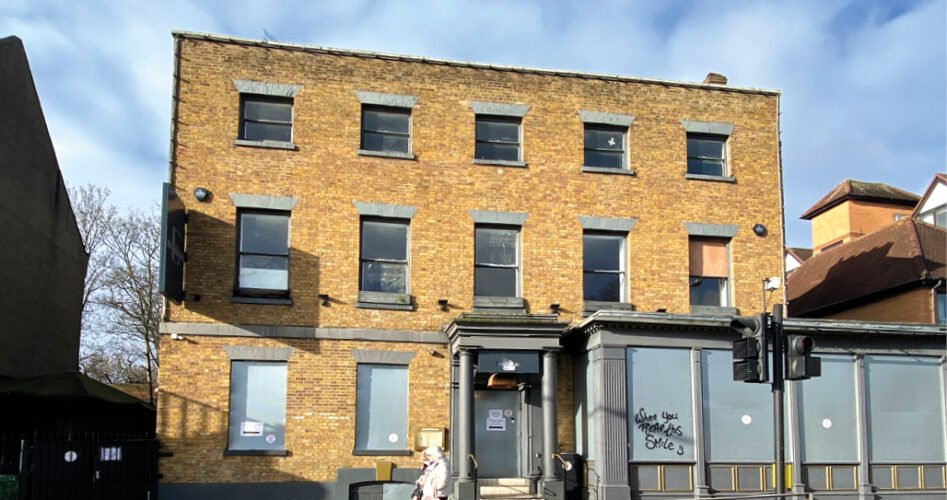
Redbridge Council has issued a statement regarding the HMO conversion of 125 Hermon Hill.

We have inspected the property. It is currently under renovation and is unoccupied. We have advised the owner that using it as an HMO would require planning permission and a licence. They have committed to applying and any proposals will go through the proper planning process, with residents given the opportunity to comment. The council will continue to monitor the site to ensure compliance.”